At Stanford, Nirav Tolia had a football problem. He supported the Dallas Cowboys. Around him was San Francisco 49ers country. In the early 1990s, a connection in his dorm room offered an escape: Usenet, where he could find other Cowboys fans without persuading California to change its loyalties. Geography had finally lost an argument.
He had grown up in Odessa, West Texas, in an Indian immigrant family. The town offered the familiarity of neighbors who knew one another, alongside the experience of being conspicuously different. Online, a person could assemble a community around something as particular as a football team. Years later, Tolia would help build a company around the opposite proposition: perhaps the people worth meeting were already within walking distance.
That turn, from escaping geography to giving it a business model, runs through his career. It also explains why his return to Nextdoor carries more weight than a routine executive appointment. Tolia is trying again at an idea that has occupied much of his working life: making the internet useful to people who share a place.
First, sell the singing
His early business education came with harmonies. At Stanford, Tolia joined the Fleet Street Singers, an a cappella group, and became its business manager. He was responsible for helping something he loved find an audience and pay its way. Pricing, promotion and finances arrived attached to an actual purpose. The balance sheet had backing vocals.
“I was very competitive,” he recalled. A rival collegiate singing group supplied a useful benchmark. There was music to perform, certainly, but there was also a small organization to run. Tolia eventually earned a bachelor’s degree in English. The combination is less peculiar than it first appears: communicate clearly, understand an audience, persuade people to show up.
In 1996, he joined Yahoo as employee number 84. A rapidly expanding internet company offered a close view of what happened when a new medium became a daily habit. Yet success at that scale created its own discomfort. As Tolia later described it, he missed the direct relationship between his effort and the outcome. He wanted more ownership of the work.
Leaving a company on the way up required accepting an awkward possibility: the next thing might go down. In 1999, he co-founded Epinions, where people reviewed products and helped other people decide what to buy. His interest in communities now had a commercial question attached. Could strangers’ experience become useful enough to support a business?
The exit price leaves out the middle
Epinions entered the world during the dot-com boom. Its subsequent history included the bust, retrenchment and a merger. The neat version ends with Shopping.com, where Tolia served as chief operating officer, going public in 2004 and being acquired by eBay for $620 million in 2005. That price belonged to Shopping.com as a whole. It was never a personal payday figure for Tolia.
The less tidy version involves learning how to run a company while the assumptions underneath it were disappearing. A founder who has known only rising markets can mistake favorable conditions for personal brilliance. Epinions gave Tolia experience of the conditions changing. His later accounts of entrepreneurship return repeatedly to the difficulty of surviving that change.
Then came Fanbase, a sports community venture. Here, the emotional connection to his original internet discovery was plain: fans, shared interests, user contributions. The business failed. Familiarity with an audience did not guarantee that a product for it would work.
Tolia considered returning the remaining money to investors. Bill Gurley, the Benchmark investor who had backed him, encouraged another attempt. The next idea would preserve the interest in community while changing the reason people belonged to one. Friends already had Facebook. Professional contacts had LinkedIn. A home address suggested another way to organize the crowd.
with products
in sports
to call home
Ten neighbors, or start again
Tolia and his co-founders began developing Nextdoor in 2010; it launched publicly in 2011. Sarah Leary, Prakash Janakiraman and David Wiesen were part of the founding team. The proposition was understandable enough. Getting it to work meant persuading people to join a service whose value depended on other nearby people joining too.
In an early version, a neighborhood needed ten verified members. A pilot that failed to reach that threshold within fourteen days expired. Tolia later described a first year with only 176 adopted neighborhoods. The unit of progress was a functioning little community. Each new place effectively required the company to begin recruiting again.
Verification, neighborhood boundaries and restricted local conversations introduced obstacles that many internet products tried to remove. They also gave Nextdoor a reason to exist. The person offering advice about a local service had some relationship to the place where that advice would be used. A neighborhood could be small and still contain enough practical knowledge to be worth visiting.
Early growth involved decidedly physical work, including mailed invitations. Software needed the postal service to introduce itself. It is an appealing detail in a technology story: sometimes the route to a new digital habit still runs through the letterbox.
The same proximity that made Nextdoor useful also made its failures consequential. After Oakland groups raised concerns about racial profiling, the company changed its posting process in 2016. Reports about suspicious people required more identifying information beyond race. Tolia said tests showed a 75 percent reduction in profiling incidents. That was a reported result from a particular intervention, rather than a declaration that the problem had vanished.
A platform promising neighborliness has to reckon with how neighbors actually behave. Being nearby can enable generosity; it can also sharpen suspicion. Tolia’s company had to make decisions about the forms people completed, the information they supplied and the behavior those choices encouraged. The mission came down to details on a screen.
“Don’t outsource learning.”
Nirav Tolia, on the early work of building a company
Florence looked like another ending
Tolia’s first term as Nextdoor CEO ended in December 2018. Sarah Friar succeeded him. In 2019, he and his wife, Megha, took their three sons to Florence. He taught through Stanford’s program there and explored a different relationship to work. He also became involved with Hedosophia, an investor in Nextdoor, moving further into advising founders and investing.
To Turner Novak, he later put the expectation plainly: “I didn’t believe that I would come back to Nextdoor.” It is a useful sentence to keep beside a founder’s return announcement. A second tenure can look inevitable once it happens. Here, the person accepting the job had imagined an entirely different future.
The family eventually settled in the Dallas area. Their choices had put family and place at the center of life outside the company. Returning to an operating job meant fitting ambition around those commitments. Tolia has described the decision in terms of the regret he expected to feel if he had a chance to help Nextdoor and declined it.
The company announced his return in February 2024. Following a transition, he became CEO, president and board chair in May. His explanation for leaving the first time had included an acknowledgment that the company needed more from its leadership. Coming back therefore involved a test of his own development as well as the product’s.
Some connections require a table
There is a smaller expression of his interest in community: CEO dinners. Tolia has written about hosting gatherings without a press audience or a set agenda, giving founders and operators room to discuss difficulties. The host of a neighborhood network also wanted a neighborhood of people who understood his own unusual job.
In Texas, he and Megha became co-founding directors of SMU’s William S. Spears Institute for Entrepreneurial Leadership in September 2023. They delivered the university’s commencement address together in May 2024. The work brings their business experience into contact with students and the surrounding entrepreneurial community.
His public life also includes appearing as a guest investor on Shark Tank. Television makes the investment decision entertainingly compact. His company history supplies the slower version: the idea changes, the first attempt fails, another conversation produces a reason to continue. There is considerably less applause during that part.
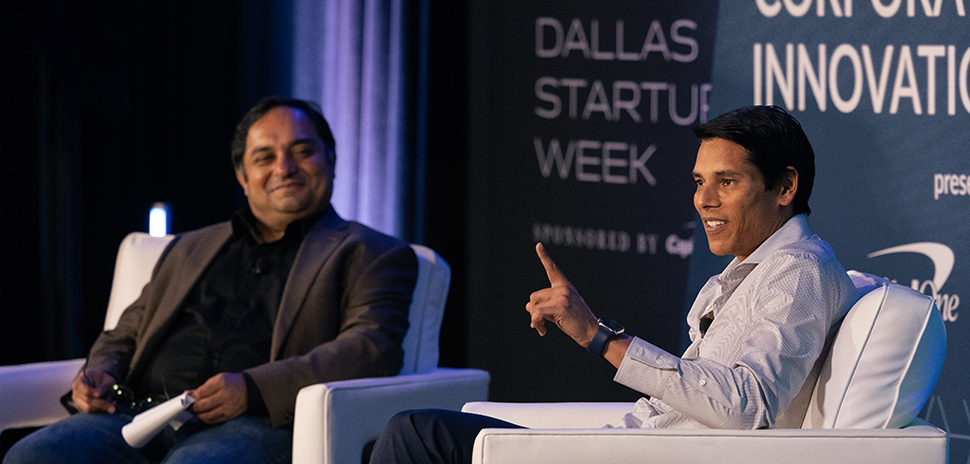
The app has to earn tomorrow’s visit
The task on returning was concrete. Nextdoor needed to become more useful in ordinary daily life. Its July 2025 redesign emphasized local news, alerts and recommendations. Partnerships with thousands of local news providers acknowledged that residents alone could not supply every kind of information a neighborhood needed.
Tolia said he wanted people to find enough value to open Nextdoor every day. “And that isn’t the case today,” he added at the time. For a returning founder, that admission mattered. Affection for the original idea could not substitute for a reason to use the current product.
By the second quarter of 2026, the company reported $75 million in revenue, up 15 percent from a year earlier, and 22.9 million platform weekly active users. Its net loss narrowed to $2 million, while adjusted EBITDA reached a positive $10 million. Those last two figures measure different things; the adjusted result does not erase the net loss.
15% annual growth
active users
Net loss and adjusted EBITDA are separate measures. Figures rounded as reported in the August 2026 results.
The latest version of his old question concerns trust in recommendations. In October 2026, Nextdoor announced Fave Award winners chosen through roughly five million neighbor votes across about 750,000 businesses. The ambition has a recognizable connection to Epinions: help someone make a decision using somebody else’s experience. Now the relationship includes a shared neighborhood.
Tolia’s career began with the pleasure of finding people far away who cared about the same thing. His present work asks whether a useful relationship can begin closer to home. The test is wonderfully unceremonious. Someone needs a recommendation. Someone nearby knows the answer. After all the founding, leaving and returning, the product still has to make that introduction worth the trouble.
Follow the conversation
More from Tolia, and longer conversations about the work.