Andy Kurtzig spent a month building a website for people to resell digital music. Then iTunes launched, and he read the licensing agreement. His proposed market disappeared into the fine print. In a 2012 Stanford talk, the JustAnswer founder described the project, FileFun, as dead on arrival. It is a small, awkward story with a useful sequence: build first, check the constraint later, start again.
That is a good entry point to Entrepreneurial Thought Leaders, or ETL. Famous guests draw attention. The decisions buried inside their stories give you something to work with. A failed assumption can be more portable than a triumphant founding myth.
- Free entrepreneurial talks, published as podcasts and videos.
- Produced by Stanford Technology Ventures Program, through eCorner.
- Used by students, founders, and 500-plus educational institutions.
- Best approached with a specific question and a small test afterward.
The expensive part is your attention
ETL begins as a Stanford seminar associated with MS&E 472. Experienced entrepreneurs and innovators share what they learned while developing, launching, and scaling ideas. Recordings make those encounters available outside the university. You can listen on Apple Podcasts or Spotify, watch on eCorner or YouTube, and read transcripts where available.
The public material costs nothing to access. STVP invites gifts to support its educational work, including ETL. The underlying arrangement is university-produced public education: a room, an invited speaker, a recording, and distribution to people who could never fit inside that room. For the listener, the scarce resource is the hour.
That places ETL beside free startup courses and founder-interview shows, with a particular advantage: a long-running academic setting and a reusable archive. Y Combinator’s Startup School offers a structured course, progress tools, and co-founder matching. ETL gives you cases to investigate. Your choice depends on whether you need a sequence of lessons or a particular decision to examine.
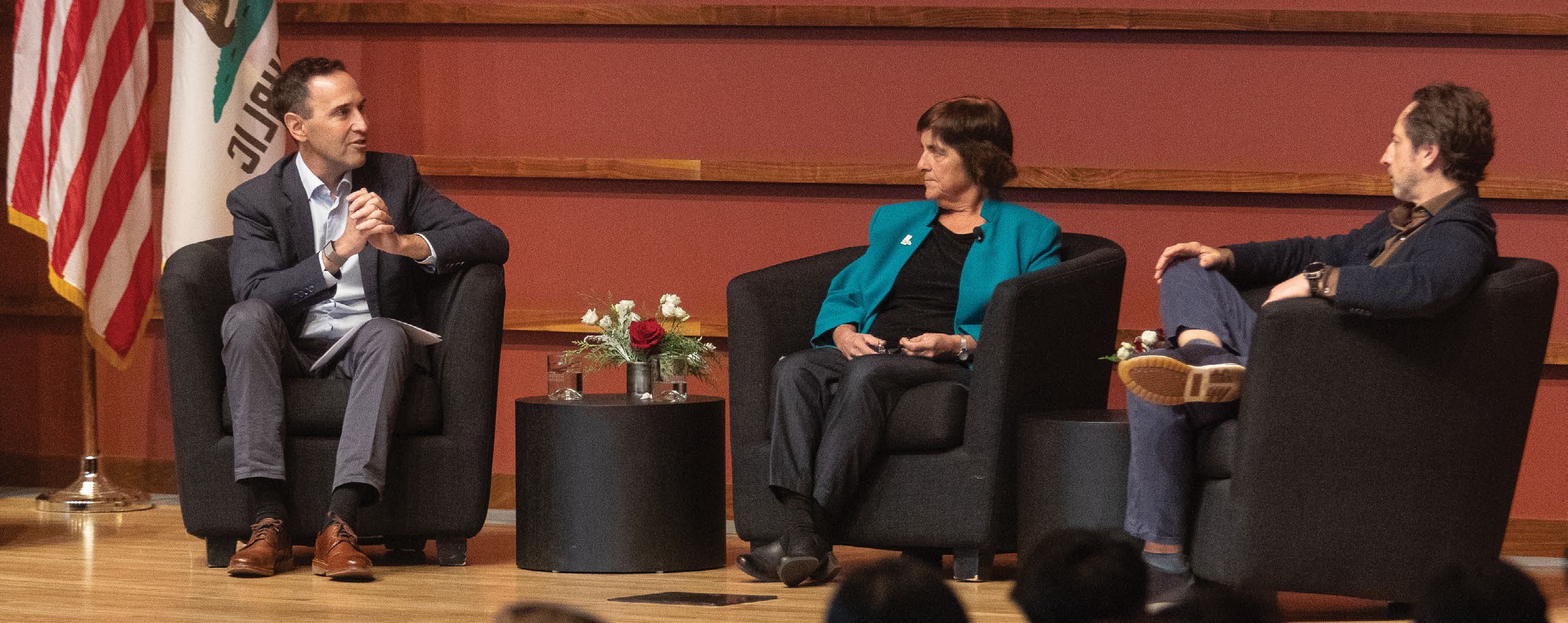
The lecture hall travels
The seminar’s historical organizer archive includes speakers in autumn 1997. Apple lists the podcast’s active years beginning in 2005. Those dates describe different layers of the operation: the live encounter and the feed that lets it travel. A talk can become an audio episode, a full video, a shorter clip, or material for another teacher’s classroom.
STVP’s 2025 annual report. Channel subscribers include content beyond ETL.
Distribution is part of the product. STVP’s 2025 annual report says more than 500 educational institutions use ETL content. That matters because a recording can serve two audiences at once: the individual with headphones and the instructor looking for a decision students can argue about.
In September 2024, STVP moved eCorner into its main website to bring series, research, educational programs, and events together. The following month, it announced a pause in new ETL episodes and used the podcast feed for “ETL Looks Back” selections. Existing recordings stayed available. The archive gave the series useful work to do between new conversations.
Copy the question before the answer
Return to Kurtzig. After FileFun came another project, Darester, an auction for dares. Customer behavior made him reconsider the business. JustAnswer emerged from a different problem: his pregnant wife wanted answers to medical questions without waiting for her next appointment. These are guest experiences, but they illustrate the kind of detail ETL can preserve: a constraint discovered late, an uncomfortable observation, and a need close enough to notice.
The transferable question is simple: what evidence could make you stop? Copying the website would miss the lesson. Checking permissions before development, or watching what customers actually do, would be more useful.
“We have had a long list of failures at the same time, so part of it is just trying.”
Sergey Brin / ETL Centennial conversation, 2025
During the Engineering Centennial conversation, Google co-founder Sergey Brin sat near the original Google server. His remark about failures gives the familiar success story a less tidy texture. A listener can ask which risks were affordable, what technical knowledge made them possible, and which advantages would be hard to reproduce elsewhere.
In May 2026, Fellow founder Jake Miller discussed customer experience, product roadmaps, and distribution with Stanford’s Perry Klebahn. Fellow began with the Duo Coffee Steeper after Miller’s d.school Launchpad experience. The episode description reports products in 50 countries. Coffee equipment supplies a welcome change of scale from Google: a physical object, a customer experience, and a route to market.
Bring one problem. Leave with one test.
Here is an editorial way to use the archive. Before choosing a speaker, write down the decision you face. Perhaps nobody returns after trying your product. Perhaps your next hire could solve three different problems. Search for that problem, then listen for what changed the speaker’s mind.
Keep four notes: the decision, the evidence, the constraint, and the outcome. Pause when the speaker jumps from a messy situation to a clean lesson. What happened in between? Then turn one claim into an experiment you can afford. Compare another episode before treating the first speaker’s answer as a rule.
There are limits. A retrospective account cannot establish that one choice caused success. A well-connected founder’s options may differ from yours. A hardware business and an online service have different costs and feedback cycles. If you need customer demand, legal permission, or a working prototype, listening will not supply it. The story can sharpen the question; you still have to obtain the evidence.
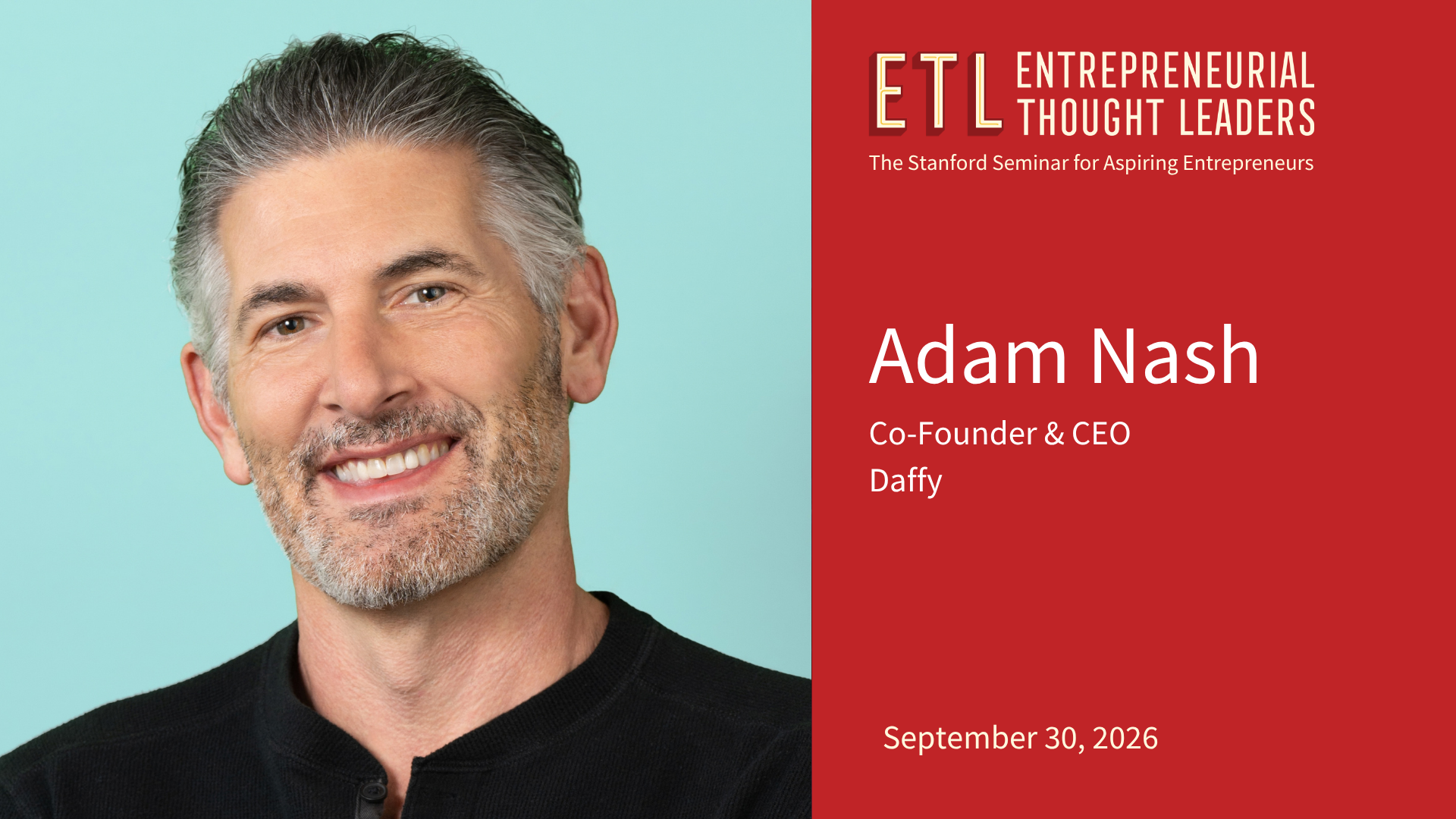
ETL continues to add conversations. Its October 8, 2026 episode features Daffy co-founder Adam Nash on five practical product-leadership lessons, drawing on his career. The full talk runs 46 minutes. That is a manageable commitment. Bring a problem worth those minutes, and the free Stanford seminar becomes considerably more useful.
Press play. Bring a notebook.
Explore the library, follow the program, or start with a conversation.