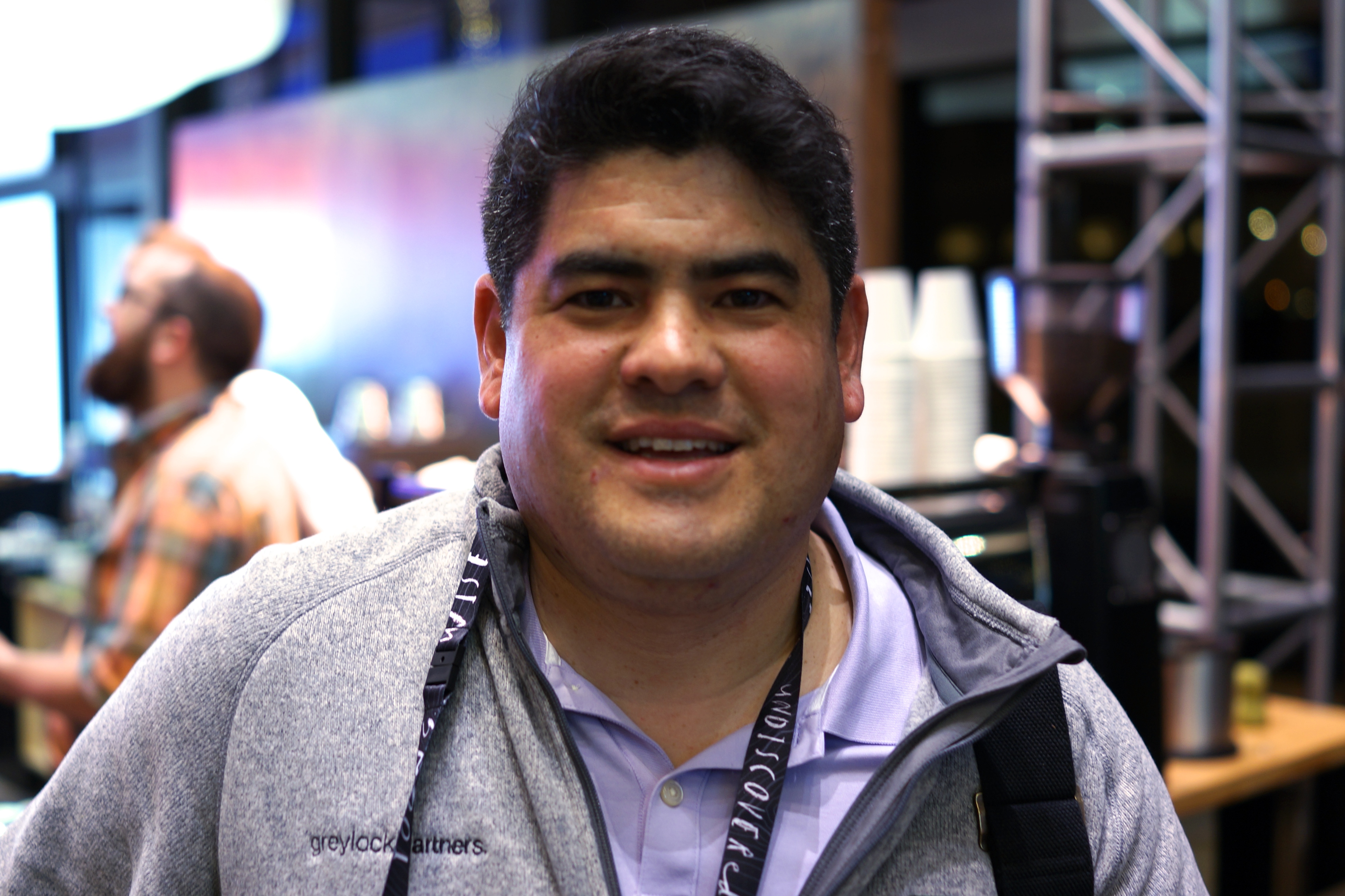
In 2004, David Sze wrote an investment memo for a company called LinkedIn. He never used the words "social network." The concept was so new it didn't have a name yet. He backed it anyway - $10 million for a Series B when the site had roughly one million users and most people still thought online professional profiles were a strange American oddity. Twelve years later, Microsoft bought LinkedIn for $26.2 billion.
This is what pattern recognition looks like before the pattern is visible to anyone else.
"Every social network on Earth pitches me, and I say no to nearly every single one of them."
- David Sze
Sze operates from a deceptively simple premise: when world-class people do interesting things, that's a signal. He is not a financier who learned to like technology. He is an operator - with stints at Electronic Arts, HBO, and Excite - who learned to recognize the fingerprints of companies that would reshape how people spend time, build identity, and connect with each other. He joined Greylock Partners in January 2000, just as the internet's first bubble was getting ready to pop, and spent the next decade building the firm's consumer internet franchise from scratch at a firm that had spent forty years backing enterprise software.
He describes the early years as having to convince colleagues that consumer internet was "not voodoo and magic." The argument apparently took.
2004
LinkedIn has 1 million users. Sze writes the investment memo. Never uses the phrase "social network."
01
2006
Facebook is a closed college network. Sze leads a $27.5M round at a $500M valuation. The partnership is skeptical.
02
2012
Facebook IPOs above $100 billion. Forbes puts Sze at #4 on the Midas List. The partnership is no longer skeptical.
03
The Operator's Edge
Running Things First, Then Backing Them
The detail that separates Sze from most of his peers is a resume that reads backwards. Before he was putting money into companies, he was building them. He ran product strategy at Excite and Excite@Home during the first search wars of the late 1990s. Before that, he deliberately took a pay cut to join Electronic Arts because he loved technology. It cost him money in the short term. It gave him something rarer: a visceral understanding of what consumer product-building actually feels like from the inside.
At Yale, in the mid-1980s, he ran a VCR tape rental service from his dorm room at Branford College. Not the romantic founding mythology of a garage startup - a practical, scrappy, technology-enabled consumer business. The instinct to find where people spend time and build something around it was already there at nineteen.
"The deals that have strong believers and at least one domain expert in favor - yet generate a lot of concern - those investments actually end up being the best."
His time at Excite is worth pausing on. Search in the late 1990s was a knife fight. Excite competed directly against Yahoo, AltaVista, and a small startup out of Stanford called Google. Sze was SVP of Product Strategy when Excite@Home went under in 2001 - one of the most spectacular implosions of the dot-com era, losing 99% of its value before filing for bankruptcy. He then joined Greylock and spent the next decade turning that first-hand experience of scale, collapse, and rebuild into investment conviction.
The Facebook bet in 2006 is the one that made his reputation. The company had seven million college students and a strict policy against letting non-students in. Sze and Greylock put in $27.5 million at a $500 million pre-money valuation - a number that felt absurd to most observers at the time. He sat on the board as an observer from that Series D through the IPO in 2012. What he saw in those years - the news feed launch, the mobile pivot, the international expansion - was the playbook for every social platform that came after.
"When you rest on your laurels is right when you have the risk. It exists for every company, no matter how big."
- David Sze
The Portfolio
Companies Built on Connection
Look at the companies Sze backed and a thesis emerges: he bets on platforms where the product becomes more valuable as more people use it. LinkedIn. Facebook. Pandora. Discord. Roblox. Nextdoor. Musically (which became TikTok). These are not isolated bets - they are a coherent theory about where human attention consolidates online. He calls it network effects, media, and mobile converging. What he means is: find the places where people are genuinely changing how they live, and back the infrastructure underneath it.
Discord & The Contrarian Bet
When the Skeptics Were Loudest
In 2016, when Greylock backed Discord, the platform was primarily known as a voice chat tool for gamers - a niche within a niche. The broader investor community was focused on mobile messaging apps eating the world. Sze saw something different: a platform where communities form around shared interests, not just shared contacts. Discord now has over 500 million registered users. It has become the default gathering place for crypto communities, sports teams, study groups, and software developers - a social graph built not around who you know, but around what you love.
The Discord bet captures something essential about how Sze operates. He describes the best investments as ones where there are strong internal believers but significant concern elsewhere in the partnership. The controversial deals, the ones that require defending - those tend to be the ones that matter. This is a discipline, not a personality trait. Most investors claim to be contrarian. Few have the stomach for it when the specific deal is sitting in front of them.
"The best opportunities are often ones where you're being contrarian. That doesn't mean being contrarian for contrarian's sake, but it means you're thoughtful about the risks of following the crowd."
- David Sze
Beyond the Portfolio
Trusteeship, Legacy, and a Family of Firsts
Sze's life outside the cap table is quietly remarkable. He is a Successor Trustee at Yale, his undergraduate alma mater, appointed in 2018. He sits on the board of Rockefeller University, one of the world's premier biomedical research institutions, where he noticed that Rockefeller's approach to science - invest in people and have the humility to not always know where discoveries will come from - mirrors exactly how he thinks about venture capital. He advises McLaren Racing, because apparently backing billion-dollar technology companies wasn't quite enough.
The family history behind David Sze is worth telling. His grandfather, Szeming Sze, was one of the principal architects of the World Health Organization, founded in 1948. His great-great-grandfather, Alfred Sao-ke Sze, was the first Chinese student to attend Cornell University, and later served as China's ambassador to the United States. His sister Sarah Sze is a celebrated contemporary artist and professor of visual arts at Columbia University. His father emigrated from Shanghai; his mother is of Anglo-Scottish-Irish descent. The Sze family is one of those quietly extraordinary American stories where each generation seems to have wandered into history-making as a habit.
The Sze Family Tree
Great-great grandfather
Alfred Sao-ke Sze - First Chinese student at Cornell University; later China's ambassador to the United States
Grandfather
Szeming Sze (1908-1998) - Distinguished diplomat and physician; one of the principal architects of the World Health Organization (1948)
Father
Chia-Ming Sze - Architect who emigrated from Shanghai
Sister
Sarah Sze (b. 1969) - Celebrated contemporary visual artist; Professor of Visual Arts, Columbia University
David Sze grew up in Massachusetts, attended Buckingham Browne & Nichols School in Cambridge where he first tinkered with TRS-80 computers in the school's computer club. He studied Economics and Political Science at Yale, graduating in 1988. He spent two years in management consulting before the pull of technology became too strong. Stanford Business School gave him the MBA credential. Electronic Arts and Crystal Dynamics gave him the product DNA. Excite gave him the experience of operating at scale - and watching scale collapse.
He joined Greylock on January 1, 2000. The timing was impeccable in the worst possible way. Within fifteen months, the NASDAQ had lost nearly 80% of its value. The internet's first wave was over. Sze spent the early part of his Greylock tenure watching companies die and waiting for the ones that would be different. His conviction was that consumer internet had not failed - it had been oversold, and would return stronger. He was right.
"If you just care about investing, quite honestly, you shouldn't be doing what we do. You should go and be an investment banker, or a Wall Street analyst, or a hedge fund person."
- David Sze
The Philosophy
Learning How to Think, Not What to Think
In a 2026 interview for his old high school's alumni publication, Sze was asked about artificial intelligence and education. His answer was characteristically direct: "Learn how to think, not what to think." For a man who backed platforms that have fundamentally changed how an entire generation forms opinions, connects with others, and consumes information, this is not a casual observation. It is a considered position from someone who has watched network effects reshape human cognition up close.
He has been frank about his own limitations. He acknowledges that you will strike out a lot in venture capital - the nature of the business demands it. He is skeptical of investors who claim they would have backed every great company in retrospect. He is equally skeptical of anyone who claims certainty about where the next wave is coming from. What he trusts is a framework: find operators building for genuine human needs, with the kind of product instinct that comes from caring about the people using it, and the kind of network dynamics that compound over time. Then hold.
After twenty-five years at Greylock, David Sze has moved into an advisory partner role - the firm's way of acknowledging that someone has earned the right to operate on their own terms. He remains on the boards of Discord and Nextdoor. He continues to engage with founders building at the intersection of AI and consumer behavior. He has two children who graduated from Yale. He advises a Formula 1 racing team. He is a trustee of one of America's great universities.
He is, by any reasonable measure, a person who figured out how to be useful at exactly the right moments. That's not a matter of luck. It's a matter of having spent decades learning how to recognize what matters before most people know they should be paying attention.
1984
Graduates from Buckingham Browne & Nichols School in Cambridge, MA - first encounters computers via TRS-80 machines in school computer club
1988
BA in Economics & Political Science from Yale University (Branford College) - runs a VCR rental business from his dorm room
1988-1991
Management consulting at Marakon Associates and The Boston Consulting Group
1991-1993
MBA from Stanford Graduate School of Business
Mid-1990s
Joins Electronic Arts and Crystal Dynamics - deliberately takes a pay cut because he loves technology. Also works at HBO.
1996-2000
Excite and Excite@Home - rises to SVP of Product Strategy. Witnesses the internet's first boom and spectacular bust firsthand.
Jan 2000
Joins Greylock Partners as a Partner - begins building the consumer internet investment franchise from scratch
2004
Leads Greylock's $10M Series B in LinkedIn (1M users). Board member through the 2011 IPO.
2006
Leads Greylock's $27.5M investment in Facebook at $500M pre-money. Board observer 2006-2012.
2009
Leads $35M growth investment in Pandora. IPOs in 2011 at $4.2B market cap.
2011-2012
LinkedIn IPO (#9 Midas List 2011). Facebook IPO (#4 Midas List 2012). Elected to Rockefeller University board.
2012-2017
Senior Managing Partner at Greylock
2016
Greylock invests in Discord and Musically (later TikTok)
2018
Appointed Successor Trustee at Yale University
2020s
Transitions to Advisory Partner. Continues as active board member at Discord and Nextdoor. Joins Committee of 100 (2022).
2026
Receives Distinguished Alumni Award from Buckingham Browne & Nichols School