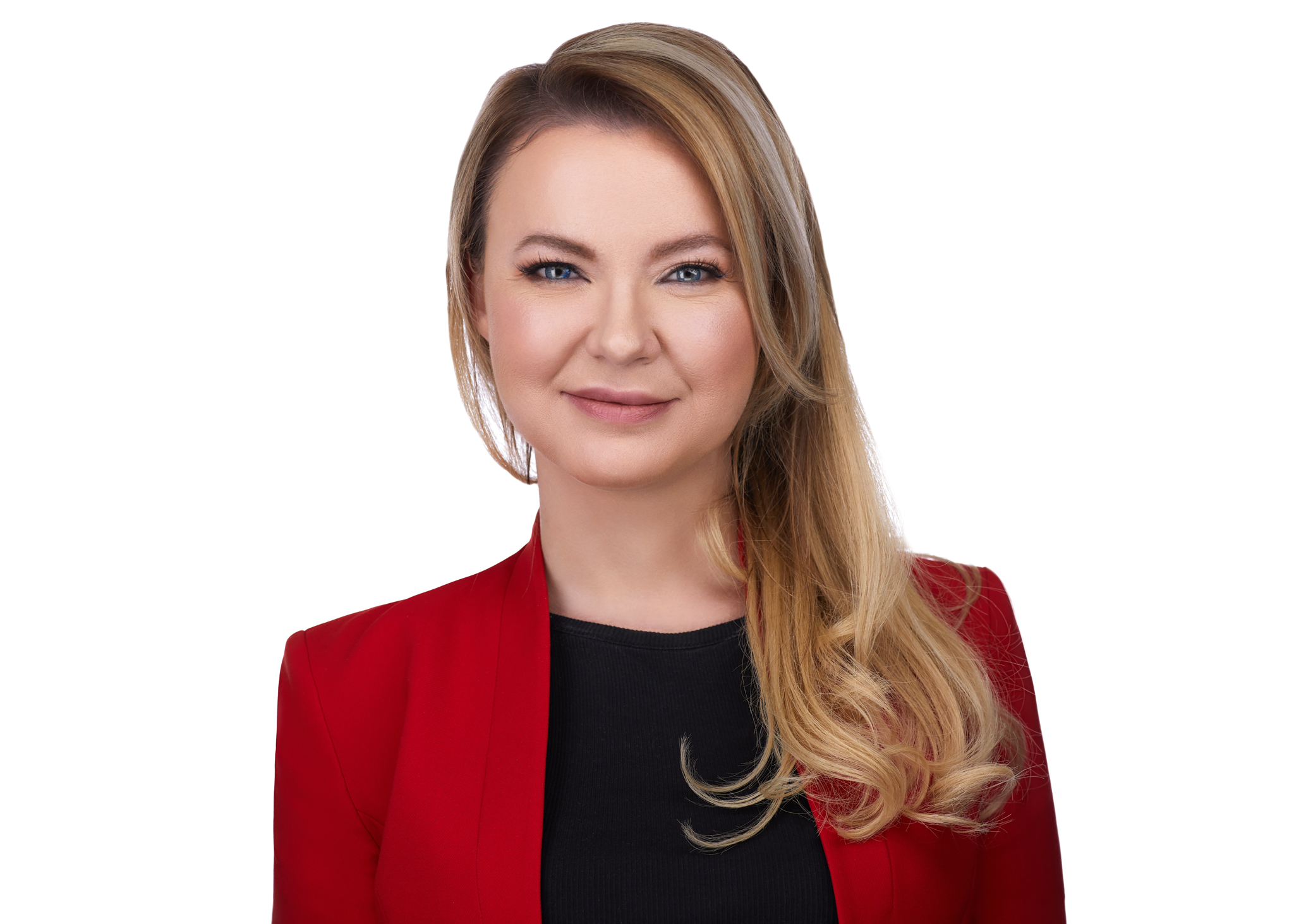
Profile
The Specific Number
Not "dramatically more efficient." Not "significantly faster." Natasha Alexeeva has settled on 85%. That is the efficiency gain her AI platform Friendly promises insurance and reinsurance companies - and, more to the point, the standard she holds every feature to before it ships. Eighty-five percent is both a product target and a worldview.
In an industry where a single disability claim can involve hundreds of handwritten physician notes, faxed forms, scanned financial records, reinsurance treaty clauses, and third-party adjudication workflows, the baseline is chaotic enough that 85% looks almost modest. Friendly's platform processes 7,000 pages per hour at 95% accuracy. For most claims analysts, that's a career's worth of paperwork in an afternoon.
"The claim process is littered with disjointed processes and third-party providers. Friendly's intuitive solutions help our clients increase productivity and profitability."
- Natasha Alexeeva
From Moscow, With Code
Natasha Alexeeva grew up in Moscow and spent the late 1990s learning computer science at Lomonosov Moscow State University - one of Russia's most rigorous technical schools. She graduated in 2003. By 2005 she was already building software professionally at Catfish Software, moving through client engagement, consulting, and technical program management across a string of companies: Rodopi, Claritas (a Nielsen company), Mitchell International, Kaiser Permanente.
At Kaiser Permanente, she was straddling two worlds - technology and healthcare operations - a pairing that would stay with her. By 2010, she was at Stanford, completing an MBA in Finance and a California Entrepreneurship Program certificate. She graduated in 2012, briefly led a team at Visa, and then did what Stanford Entrepreneurs do: she started something.
The Telemedicine Chapter Nobody Talks About
Before insurance, there was telemedicine. In 2013 - years before Teladoc became a household name - Natasha founded GoGoHealth and pioneered what she termed "EMR-integrated asynchronous telemedicine." The core idea: let patients communicate with doctors without requiring both parties to be online simultaneously, with the patient's electronic medical record woven directly into the interaction.
It was ahead of its moment. The infrastructure wasn't ready. The regulatory pathways were murky. But the underlying instinct - that healthcare moves too much paper, too slowly, with too many intermediaries - proved durable. She ran GoGoHealth for four years, then made an interesting detour.
The Amazon Years
In 2017, Natasha joined Amazon Web Services in a role with a quiet but significant title: New Service Incubation. This is the part of AWS that asks "what should we build next?" - not ship maintenance, not feature iteration, but genuinely greenfield. It's where Amazon's deepest technical resources get applied to unsolved problems.
She stayed two years. Then she left to solve one herself.
"AI is going to turn the entire insurance industry on its head in the next five years as more use cases come to light across all lines of business."
- Natasha Alexeeva, CEO of Friendly
Building Friendly
Natasha founded Friendly in 2019 in San Francisco. The company - formally Friendly Health Technologies - targets the exact slice of insurance that everyone in the industry quietly acknowledges is broken: the document layer. The claims. The treaties. The underwriting records. The thick stacks of unstructured text that sit between a policy event and a decision.
Friendly's platform uses deep learning to ingest documents from any source, classify them, extract structured data, score confidence, flag anomalies, and produce decision-ready outputs - all while maintaining a full audit trail. The architecture is explainable by design, which matters enormously in insurance and reinsurance, where regulators can (and do) ask exactly why an automated system made a specific recommendation.
The flagship product, Omniscient, handles reinsurance treaty analysis - extracting key data from treaties the same way a senior analyst would, but at machine speed. For reinsurers managing hundreds of treaties in multiple languages across multiple jurisdictions, the value is not marginal. It's structural.
Clients, Partners, Scale
Friendly's client list includes Swiss Re, PPS, and Group Health - names that don't take vendor calls from unproven startups. Getting there from a 2019 founding date with a team of 47 reflects both the quality of the technology and Natasha's willingness to compete in regulated, high-stakes environments where most AI startups don't bother.
The UK market expansion - announced in 2024 - signals ambition beyond the US insurance market. Reinsurance, by its nature, is global. So is Friendly's trajectory.
Building the Leadership Team
In early 2025, Natasha moved deliberately to strengthen Friendly's commercial and domain expertise. Paul Goldenberg joined as Chief Revenue Officer in April. Michelle Young - a partnership development and risk management veteran - joined as SVP Business Development and Strategy. In May, Friendly brought in Fionna, a former Gen Re expert, to build out the claims team.
"Our focus has traditionally been on the strength of our solutions, so it's great to bring someone onto the team with Michelle's industry connections and an external, growth mindset. Friendly is at the leading edge of AI implementations in the insurance industry."
- Natasha Alexeeva, CEO of Friendly
The hires aren't coincidental. Friendly has built the technology. Now it's building the commercial infrastructure to scale it.
Regulated Is The Point
One of the stranger choices any AI founder can make is to deliberately target regulated industries. Most choose the path of least resistance: marketing tech, productivity software, media. Natasha went the other way. GoGoHealth: regulated healthcare. Friendly: regulated insurance. The pattern suggests something more than coincidence.
In an interview for the Innovation Odyssey podcast, she discussed the strategic logic explicitly: regulated industries are exactly where automation has been slowest to arrive - and where the gap between current workflows and what technology can deliver is the widest. That gap is Friendly's market.
Compliance-aware AI is also defensible in a way that generic productivity AI is not. When Friendly builds explainability into every recommendation, that's not a feature - it's a moat. Competitors who skip the audit trail will eventually face the regulator. Friendly's clients already don't have to worry about it.
The 85% Again
It's worth returning to the number, because it isn't arbitrary. Insurance underwriting teams and claims analysts - the people Friendly's platform is built for - are not slow because they lack intelligence or effort. They're slow because the documents they work with are genuinely hard to process at scale: multiple formats, inconsistent quality, varying languages, proprietary templates, and legal language that shifts meaning between jurisdictions.
Getting to 85% efficiency isn't about removing people from the process. Friendly's explainable AI keeps humans in the loop, using confidence scoring to route edge cases to analysts while automating the high-confidence majority. The analyst reviews less. Decides more. The throughput compounds.
That's the model. And it came from someone who learned to code in Moscow, ran a healthcare startup in California, incubated new services at Amazon, and decided the most interesting problem left was the one everyone else had given up on.