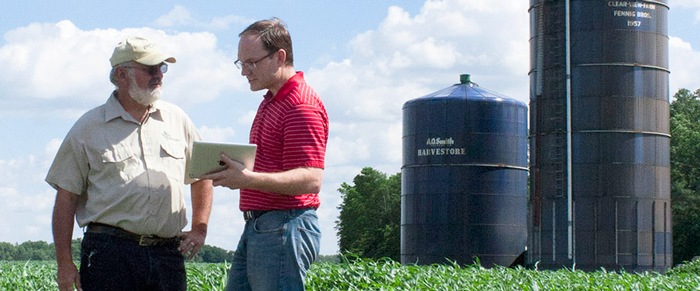
In 1995, Steve Fennig began mapping yields on his family’s Indiana farm. The premise was sensible: remember what happened in each field, and next year’s decisions should improve. Yet a map cannot explain itself. Someone has to connect the farmer’s history with knowledge about the seed, the soil and the choices still available. The Fennig family would wait fifteen years for that connection.
- MyFarms connects field records with farm decisions and supply-chain reporting.
- Its bargain: give growers useful tools in return for their participation.
- Trust and complete records matter as much as the software.
In 2010, Steve’s son Chris started MyFarms. Today, its cloud software serves farmers, agricultural retailers, processors and brands. The interesting part is the space between those customers. A farmer wants a better planting decision. A processor wants to know what crop is coming. A brand wants environmental information. They may all need information from the same field, for quite different reasons.
The awkward person holding the data
Chris had worked in radio-frequency identification and supply-chain technology before bringing those skills home to agriculture. He understood that sharing information could make a commercial relationship work better. He also understood why a farmer might hesitate. Yield records reveal something valuable about a business. Handing them to the company that sets your input prices deserves some thought.
MyFarms positions itself as an independent technology provider. It does not need to sell a farmer fertilizer to sell useful software. In its published principles, the company promises flexibility: “We believe computers should work for you, not the other way around.” A recommendation remains a recommendation. The farmer can change it.
That puts MyFarms in a particular corner of agricultural technology: software connecting growers with the organizations they already work with. Field to Market’s 2022 partner materials placed it alongside Agrible, Truterra and John Deere Operations Center. Those are overlapping routes into agricultural data, sometimes alternatives and sometimes connections. MyFarms’ argument rests on tailored workflows and its position between commercial partners.
First, have lunch with the seed company
Consider Burrus Hybrids. Its problem was to combine product research with what growers knew about individual fields. MyFarms describes starting with conversations, mockups and a workshop involving customers and account managers. Coding followed agreement on the design. The resulting seed-placement system arrived in December 2011, ten weeks after design approval.
There is a useful method hiding in that modest sequence. Ask how the decision happens before designing the screen. A seed recommendation combines scientific knowledge, local experience and a conversation with someone the farmer trusts. The software has to accommodate all three. An elegant calculation that ignores the conversation can still be the wrong product.
A field-specific recommendationReviewed by the grower
Weaver Popcorn needed a different answer. Its crop forecasts traveled through spreadsheets emailed from field managers to a central office. MyFarms connected contracting and scouting to individual fields. The point was operational: let observations reach decision-makers while those observations can still influence buying decisions. Here the competitor was a familiar office habit.
Give the farmer something back
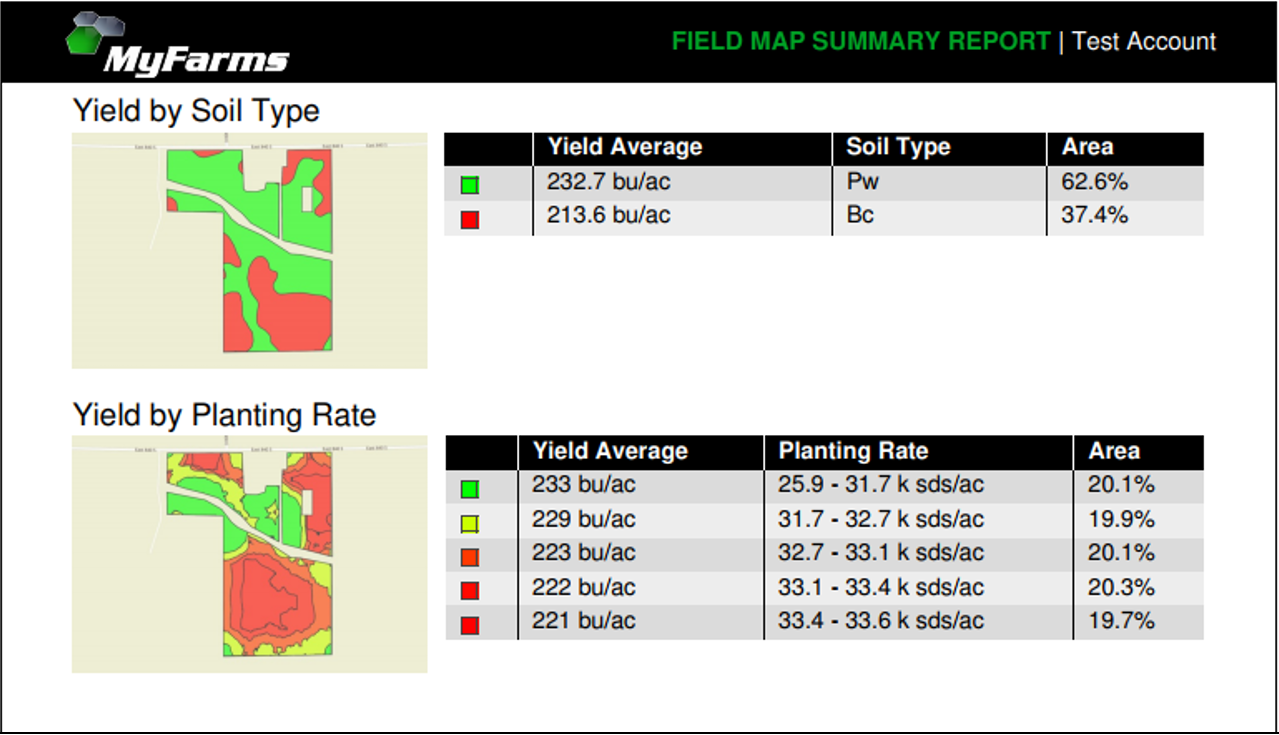
The grower tools make that exchange tangible. MyFarms can turn planting, fertilizer and spraying plans into purchasing quantities. It analyzes uploaded yield maps and supports seeding plans built around soil types or management zones. Planning records can also travel into the Fieldprint Platform. The attraction is doing something useful with information already being entered.
For brands, the output changes. MyFarms describes aggregate reporting on yield, erosion, greenhouse-gas intensity and irrigation water, with farmer and field identities kept confidential. That is the same general exchange viewed from the other end: make production information useful to a buyer without turning every grower into a public case study.
Wrangler supplied a concrete example in 2018. The jeans brand funded cotton-specific functionality and 125 grower subscriptions for that season. Participating farmers received access at no cost under the arrangement. Wrangler gained infrastructure for understanding cotton production. The business model is visible here: an organization downstream can pay for technology used upstream.
Before asking for another field of data, offer a useful decision in return.
The practical lesson of the model
The missing-data test
Good incentives do not guarantee usable evidence. Tyson’s 2020 progress report records that a MyFarms pilot enrolled 11,000 acres in 2019, then removed them in 2020 because of insufficient data. Reuters subsequently reported that Tyson discontinued the pilot in 2021. An enrolled acre and an acre backed by adequate records are different things.
That episode supplies an important limit. Software cannot analyze records it never receives. MyFarms’ nitrogen-tools FAQ requires field boundaries, application events and yields; economic analysis needs costs too. The more varied the field management, the more work data entry can take. Copying a workflow makes sense only when somebody can supply the information and sees enough value to keep doing it.
From crop decisions to conservation contracts
More recent work shows another use for that infrastructure. Ohio’s H2Ohio program uses MyFarms for contracts, practice tracking and verification. Local conservation districts describe growers and advisers working with field maps, rotations and nutrient plans. The software sits inside the administration of conservation, where a completed practice has to become a usable record.
103 growers supported with MyFarms in Ingredion’s sourcing project, as recorded by Field to Market. Project participation is not a measurement of environmental improvement.
The transferable idea is straightforward: start with a decision people already need to make, then make the reporting serve it. MyFarms’ story suggests that a data-sharing request becomes more persuasive when the person doing the sharing gets a practical benefit. Back on the Fennig farm, the original ambition was to make the next decision better. Every additional audience introduces another reason to ask who benefits.