CERES AI RAISES $13M SERIES D - NOV 2025 RAMSEY MASRI APPOINTED CEO - NOV 2022 TIME MAGAZINE TOP GREENTECH 2024 17 BILLION PLANT-LEVEL MEASUREMENTS 32 MILLION ACRES ANALYZED GLOBALLY 40+ CROP TYPES MONITORED CERES IMAGING REBRANDS AS CERES AI - AUG 2024 FIRST AI BOARD MEMBER IN AGRICULTURE HISTORY OPERATIONS IN 4 CONTINENTS $109.8M TOTAL FUNDING RAISED CERES AI RAISES $13M SERIES D - NOV 2025 RAMSEY MASRI APPOINTED CEO - NOV 2022 TIME MAGAZINE TOP GREENTECH 2024 17 BILLION PLANT-LEVEL MEASUREMENTS 32 MILLION ACRES ANALYZED GLOBALLY 40+ CROP TYPES MONITORED CERES IMAGING REBRANDS AS CERES AI - AUG 2024 FIRST AI BOARD MEMBER IN AGRICULTURE HISTORY OPERATIONS IN 4 CONTINENTS $109.8M TOTAL FUNDING RAISED
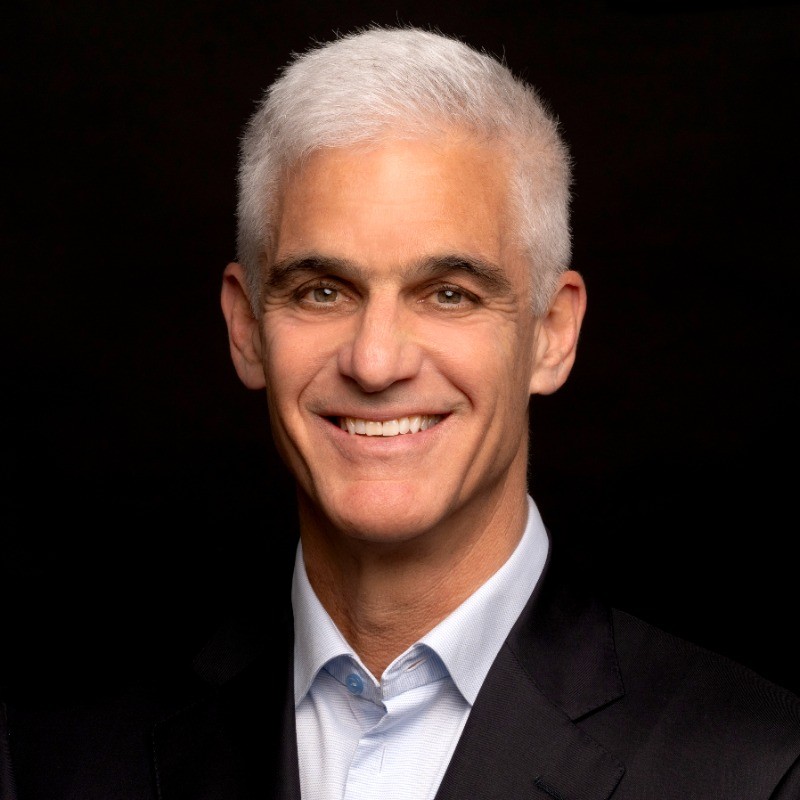
Ramsey Masri, CEO of Ceres AI
Profile

Ramsey Masri

CEO, Ceres AI  |  Farmer. Technologist. Evangelist.

He grew up on a 70,000-hectare farm in Peru, spent 20 years tending his own Napa Valley grapevines, and tracks 17 billion plants. He's not a disruptor. He's a farmer who learned to code - and then built the intelligence layer the whole agricultural world had been waiting for.

CEO Agtech Pioneer Oakland, CA Ceres AI UC Berkeley
Share: LinkedIn X / Twitter Facebook
17B+ Plant-Level Measurements
32M Acres Analyzed
40+ Crop Types Covered
$109M Total Funding Raised
20 yrs Grape Farming in Napa

The Green Fields of Peru

Most tech CEOs can describe their enterprise software in vivid detail. Ramsey Masri can describe the smell of cotton in bloom, the precise soil conditions that stressed a potato crop, and what it costs a grower when the rains don't come on schedule. That's because he didn't start in venture capital or a Stanford lab - he started in the fields.

His Swiss grandfather emigrated to Peru, seeking opportunity in Latin America the way many pioneers do: overland, underfunded, and with a specific idea about what the land could produce. What the family built was no small hobby farm. The operation stretched across approximately 70,000 hectares, growing corn, cotton, potatoes, and citrus. And in a detail that says everything about how this family approached business, they didn't just farm - they built schools and medical facilities for the workers who made the land productive.

This is where Ramsey Masri learned what food actually costs. Not in dollars - in weather, in labor, in heartbreak when a crop fails. It's the kind of education that no MBA program can replicate, and it's the education that makes him a genuinely unusual presence in the agtech world.

"You can't farm without a loan, and you can't get a loan without insurance."
- Ramsey Masri, CEO of Ceres AI

Learning from the Masters

After earning his BA in History and English at UC Berkeley, Masri spent his first career decade at Oracle. This was Oracle in its prime - the company that was rewriting the rules of enterprise software and doing it with a swagger that Silicon Valley hadn't quite seen before. His managers included Tom Siebel, Ray Lane, and Larry Ellison himself.

The education was unconventional in the best possible way. These weren't incremental, cautious executives. They were strategists who thought three moves ahead and expected everyone in the room to keep up. Masri would later describe this era as teaching him an "anticipatory" rather than reactive management style - a habit of asking not what is happening now, but what will be inevitable in 18 months.

From Oracle, he moved through a string of growth-stage companies, accumulating experience in international expansion - South America, Asia Pacific, Europe. He built teams across continents and learned to find common ground between cultures that approach risk, capital, and time differently. This matters more than it sounds. Agriculture is inherently local. It maps to specific soils, specific weather systems, specific cultural relationships with land. Any technology that wants to serve farmers globally has to earn trust locally.

Tracking 65 Million Drivers, Then Plants

Before Ceres, Masri was COO at Zendrive, a San Francisco company with an interesting proposition: use driving behavior data to help insurers price risk better and, in doing so, make roads safer. Zendrive tracked 65 million drivers across 3 billion miles. The core insight - that granular behavioral data can fundamentally change how risk is priced - would travel with Masri directly into agriculture.

At Zendrive, he also sat on advisory boards for Constellation Network, Arkose Labs, and RTI Cable, building a network across financial services and technology that would later prove invaluable when Ceres started pitching agricultural lenders and insurance companies on a new category of risk data.

The throughline from Zendrive to Ceres AI is remarkably direct: both businesses are fundamentally about using high-quality granular data to change how large financial institutions price and manage risk. One works with cars. One works with crops. The economic logic is identical.

"We speak both the language of farming and finance. Our technology is designed to meet the needs of all stakeholders."
- Ramsey Masri

Ceres AI - Agriculture's Intelligence Layer

When Masri joined Ceres Imaging as CEO in November 2022, the company was already a decade old, born at Stanford, and had built a dataset that nobody else had. Twelve billion (now seventeen billion) plant-level measurements. Not satellite averages, not county-level estimates - individual plant data across 32 million acres and more than 40 crop types on four continents.

The technology starts with aerial and spectral imagery. Planes and sensors collect data at resolutions that let the system count individual plants, detect stress before it's visible to the naked eye, estimate water demand with precision, and flag disease or pest pressure weeks before it becomes a crisis. The result is a layer of intelligence that sits between the physical world of farming and the financial world of loans and insurance policies.

Masri saw immediately that the company was undervalued as a pure precision agriculture tool. The real opportunity was financial services. "You can't farm without a loan, and you can't get a loan without insurance," he told PYMNTS in 2024. By building that bridge - creating a platform that speaks fluently to both farmers and the institutions that finance them - he repositioned Ceres not as a farm management app but as critical infrastructure for agricultural finance.

The rebrand from Ceres Imaging to Ceres AI in August 2024 made that strategy explicit. The name change announced something that had been true for years: this company had never just been about images. It had always been about intelligence.

Ceres AI: The Platform Behind the Platform

17B+ data points
Plant-level measurements in database
32M acres
Globally analyzed across 4 continents
40+ crop types
Covered by AI platform
$109M raised
Total capital raised to date
59 employees
Lean, expert team in Oakland
$13.5M revenue
Annual revenue reported

The Farmer Who Knows the Tech

One of the quiet frustrations in agtech is the proliferation of solutions built by people who have never had to wake up at 4 a.m. to check irrigation lines. Masri is acutely aware of this dynamic. "Farmers don't want to become their own system integrator," he's said - a sentence that captures the problem with most agricultural software in eleven words.

The technology has to simplify, not complicate. Masri's Ceres AI builds tools that translate complex spectral and AI analysis into actionable recommendations: where to apply water, where to reduce fertilizer, where disease risk is rising. The farmer or the financial analyst doesn't need to understand the model. They need to trust the output, and they need the output to be right.

Farm yield optimization has increased nearly 70% over the past two decades, Masri has noted - not through more chemicals, but through better science. At the same time, a concerning demographic cliff looms. Where three of four farming children once stayed on the farm, now only one of four does. The farms that remain are larger, more complex, and increasingly managed with fewer people. The only way that math works is with better data and automation.

His own experience as a California grape grower since 1999 - tending his Napa Valley vineyard through good years and drought years while running technology companies - gives him the standing to make this case in a room full of working farmers. He doesn't have to explain why a late frost in March or an August heat dome is catastrophic. He's lived it.

"Farmers don't want to become their own system integrator."

"AI and machine learning are not new technologies. They've been around for over 20 years, but only recently have they became mainstream."

"Agriculture is entering its AI era. Our goal is to help create the agricultural intelligence layer to enable faster and smarter decisions."

"Climate change demands a revolution, so the insurance industry can become more resilient and better meet the needs of farmers."

Series D, TIME Magazine, and the First AI Board Member

The August 2024 rebrand came with a Series D funding round led by Remus Capital, the AI-focused investment firm whose CEO Krishna K. Gupta joined as Ceres AI chairman. Gupta's framing of the opportunity is telling: verticalized AI built on proprietary data is where the real value lies, not in generalist large language models. Ceres AI had been building exactly that kind of verticalized intelligence for a decade before it became fashionable.

In November 2025, the company raised another $13M to accelerate its "AI for AI" (Agricultural Intelligence) platform. And in a move that got genuine attention, Ceres appointed what it described as the first AI board member in the agricultural industry - an AI system named Arista that contributes data-backed input to leadership decisions. Masri's comment on the appointment was characteristically direct: "Appointing an AI board member is more than a symbolic gesture - it's a functional and strategic step."

In 2024, TIME Magazine named Ceres AI to its list of Top GreenTech Companies in America - recognition for a company that has been quietly building the infrastructure of sustainable agriculture for over a decade while others were still announcing pilots.

🌾

"This is a marathon, not a sprint: pace yourself accordingly." - Ramsey Masri's leadership philosophy, formed across 30 years, two continents, and two careers in farming and tech.

Cool as a Cucumber, Hard as a Seed

People who work with Masri describe him as "cool as a cucumber" - an assessment that seems especially fitting for someone whose product literally watches plants grow. He runs on transparency and directness, preferring to surface problems immediately rather than let them compound. His leadership style is flat and team-oriented; the hierarchy serves the mission, not the other way around.

Mountain biking is where he does his best thinking. Discipline runs through everything he does - rigorous exercise, careful diet, a refusal to let the urgency of startup life collapse into chaos. "This is a marathon, not a sprint" is his operating philosophy, and it shows in the company he has built: 59 people, $109M raised, operating globally, still focused on the core data product rather than chasing the next shiny trend.

As a father, the environmental stakes are personal. Sustainable farming is not an abstract corporate value for Masri - it is a legacy question. What kind of food system, what kind of land, does the next generation inherit? The answer drives the work.

Things You Should Know About Ramsey Masri
  • His Swiss grandfather built one of Peru's largest farming operations, spanning roughly 70,000 hectares
  • The family built schools and medical facilities for farm workers - a form of stakeholder capitalism before the term existed
  • He's been tending Napa Valley grapevines since 1999 - over 25 years of personal farming experience
  • Before tracking plants, he tracked 65 million drivers across 3 billion miles at Zendrive
  • Spent his early career learning strategy from Larry Ellison, Ray Lane, and Tom Siebel at Oracle
  • UC Berkeley graduate with a BA in History and English - a humanities degree running an AI company
  • Mountain biking is his primary thinking and decompression practice
  • Ceres AI's database of plant-level measurements is unique in the world - no other organization has built anything comparable

The Timeline

Early Life
Grows up on the family's vast agricultural operation in Peru, learning farming from the ground up across corn, cotton, potatoes, and citrus crops
UC Berkeley
Earns BA in History and English - a grounding in how systems and stories work before he builds his own
1990s - Early Career
Spends first decade at Oracle under Larry Ellison, Ray Lane, and Tom Siebel. Learns anticipatory strategy and international business
1999
Begins growing grapes in California's Napa Valley - a farming life running in parallel with his tech career for the next 25+ years
Pre-2022
Serves as COO at Zendrive, overseeing a platform that tracked 65 million drivers across 3 billion miles for insurers. Builds expertise in risk data and financial services
November 2022
Appointed CEO of Ceres Imaging. Brings together farming experience, data analytics background, and financial services expertise in a single role
2023
Leads Series C funding round by Remus Capital; expands company into agribusiness financial services
August 2024
Leads rebrand from Ceres Imaging to Ceres AI; Series D funding; company named to TIME Magazine's 2024 Top GreenTech Companies in America
November 2025
Ceres AI raises $13M to accelerate AI for Agricultural Intelligence platform; appoints Arista as the first AI board member in agriculture industry history

Links & Sources