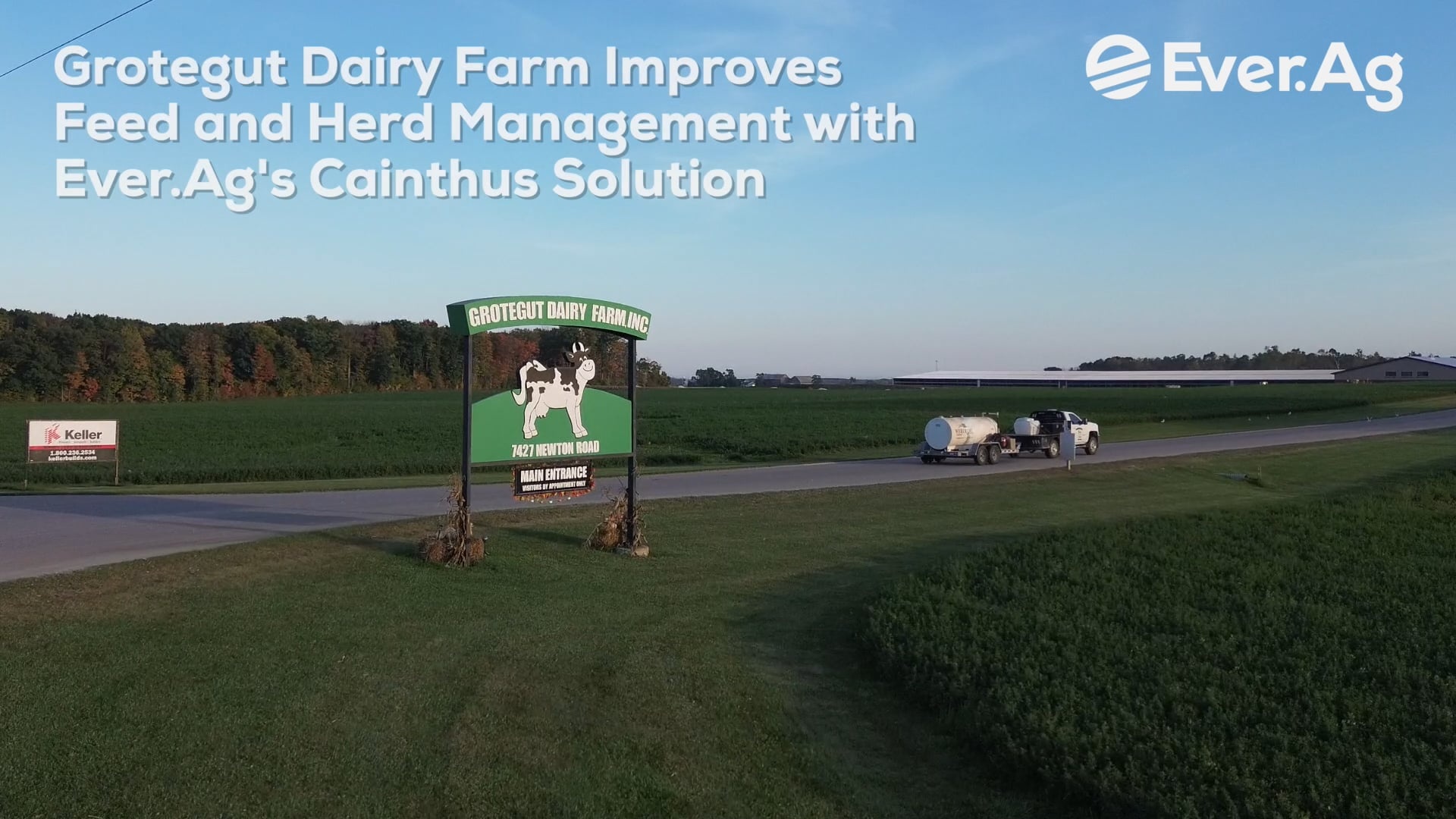
At Grotegut Dairy Farm, the question was disarmingly ordinary: what do the cows do all day? The Wisconsin dairy had 3,500 of them. A manager could walk through the barn and see whether feed was available. What a walk could not establish was how long the feed had been missing before anyone arrived.
- Ever.Ag connects farm, freight and factory decisions with software and operational services.
- Its customers buy help with specific problems: feeding, hauling, inventory and production planning.
- The useful lesson: measure one expensive gap, fix it, then earn the bigger assignment.
Ever.Ag’s Cainthus cameras supplied a more continuous account. The dairy used the information to adjust feeding and compare cow comfort across barn designs. There is something pleasingly practical about that application of computer vision. Before predicting the future, establish what happened during lunch.
“It’s always been difficult to know what the cows do all day.”Eric Grotegut · livestock operations manager
This is a useful entrance to Ever.Ag, a company whose catalogue can otherwise resemble an agricultural equipment shed: dispatch, payroll, agronomy, manufacturing, feed management, analytics. The common subject is the interval between an event and somebody doing something about it.
01 / A tanker earns the next assignment
Consider Foremost Farms. At its biggest balancing plant, outbound demand could swing from three loads to thirty with 36 hours’ notice. Ever.Ag combined its freight platform with hauler procurement and revised contracts. Its published case reports a 30% reduction in haul rates on that initial assignment.
That result changed the size of the conversation. Foremost expanded the relationship into a broader supply-chain program, setting a $5 million to $7 million savings goal. The distinction matters: a target for the larger program is different from money already saved. The work included routing, payment structures and daily operational responsibilities.
The broader lesson is one a manager outside agriculture can copy: begin with a bounded expense, establish the baseline and let a measured improvement justify expansion. Asking people to trust an entire transformation is expensive. Giving them a result to inspect changes the negotiation.
02 / A company assembled around the handoffs
Ever.Ag’s shape reflects its history. Dairy.com dates to 2000. It acquired manufacturing-software specialist Data Specialists in 2018 and Dublin’s Orbis MES in 2020. In 2022, Dairy.com, ever.ag and EFC Systems came together under the Ever.Ag name, joining dairy supply-chain systems, risk expertise and agricultural business software.
Those businesses served different desks in the same economy. A cooperative needs to pay producers. A processing plant needs to trace material. An agricultural retailer needs to know whether an order has become an invoice. Acquiring specialist companies gave Ever.Ag experience in those separate jobs. Connecting the jobs is the continuing commercial proposition.
Different products. Shared need: put usable information in the next person’s hands.
Merchant Ag handles business management for retailers and cooperatives. FieldAlytics covers digital agronomy, from field information to work orders. The FieldAlytics integration with Razor Tracking adds fleet visibility. In dairy, Mobile Manifest replaces paper load records; other tools cover plant operations and cheese production. Customers can also hire managed services for work such as dispatch and payroll.
For a purchasing team, the economic test extends beyond the software bill. Count the implementation effort, training and time spent maintaining the information, then compare them with the operating cost being reduced. That is our suggested buying discipline, rather than an Ever.Ag pricing formula. A smaller invoice can still buy an expensive distraction if nobody changes the daily routine.
This is a business selling software and expertise to other businesses. Its homepage reports more than 40,000 users worldwide. At Southern States, the Merchant Ag customer account describes more consistent workflows and consolidated reporting across retail locations. The buyer is often an organization coordinating many people, rather than a farmer shopping for one clever app.
03 / The spreadsheet meets the meat counter
At Australia’s Coles, the problem arrived in beef, lamb and pork. Meat planning had depended on spreadsheets, manual coordination and institutional knowledge. Ever.Ag’s sales and operations planning platform brought operational data and business rules into a model. The June 2026 announcement reported planning shrinking from hours to minutes.
The important detail is the business rules. Experienced planners carry knowledge about what can be made, moved and sold. Putting those constraints into software makes them available beyond the person who remembers them. Coles and Ever.Ag described value-based optimization as a next step, incorporating profitability alongside volume. That remains a stated direction, rather than a completed outcome.
Alternatives exist. Milk Moovement, for example, sells dairy logistics and producer-payment software. Ever.Ag’s pitch spans more workflows and combines products with operational help. That breadth deserves a practical buying test: which systems connect for your particular job, and who takes responsibility when information stops moving?
04 / AI gets a job description
The acquisition of Austin Data Labs, announced in 2023, added data-science expertise. In April 2026, Ever.Ag introduced Everett, its Ag Decision Engine, initially for dairy. By July, the rollout had reached agribusiness. Described capabilities included invoice processing and summaries inside existing products. The proposition is AI close to the work, where an employee can act on its output.
The company itself was changing too. In August 2026, it completed the sale of its risk-management business to Stone Point-managed funds, stating a sharper focus on software, AI and technology-enabled services. In September, Rhonda Bassett-Spiers became CEO, succeeding Scott Sexton, who moved into an advisory role.
For a buyer, the sensible starting point is still modest: one decision, an accountable operator and a measurable result. Our reading of these cases is that success depends on usable data and permission to change the process. A recommendation cannot widen a receiving bay or make a hauler accept a contract. Someone must do that work. Back in the barn, a camera can tell you the feed is gone. The cow still needs somebody to bring lunch.