Christine Moseley was standing knee-deep in romaine leaves when the economics of the salad aisle began to look peculiar. The farm had harvested the hearts. Much of the rest of the plant lay on the ground. Here was food someone had planted, watered and grown, with no buyer waiting for it. Moseley had recently worked in a business paying handsomely for produce. The distance between those two realities would become her company.
In her account of that visit, about a quarter of the romaine plant was being harvested and three-quarters left behind. Those proportions describe the harvest she witnessed, rather than every lettuce farm. But the question it raised traveled well: why buy a vegetable for its looks when the next thing you plan to do is put it through a juicer?
“This is perfect romaine,” she remembered thinking. The leaves had failed a commercial audition. They had not ceased to be useful. A blender, mercifully, has no opinion about cheekbones.
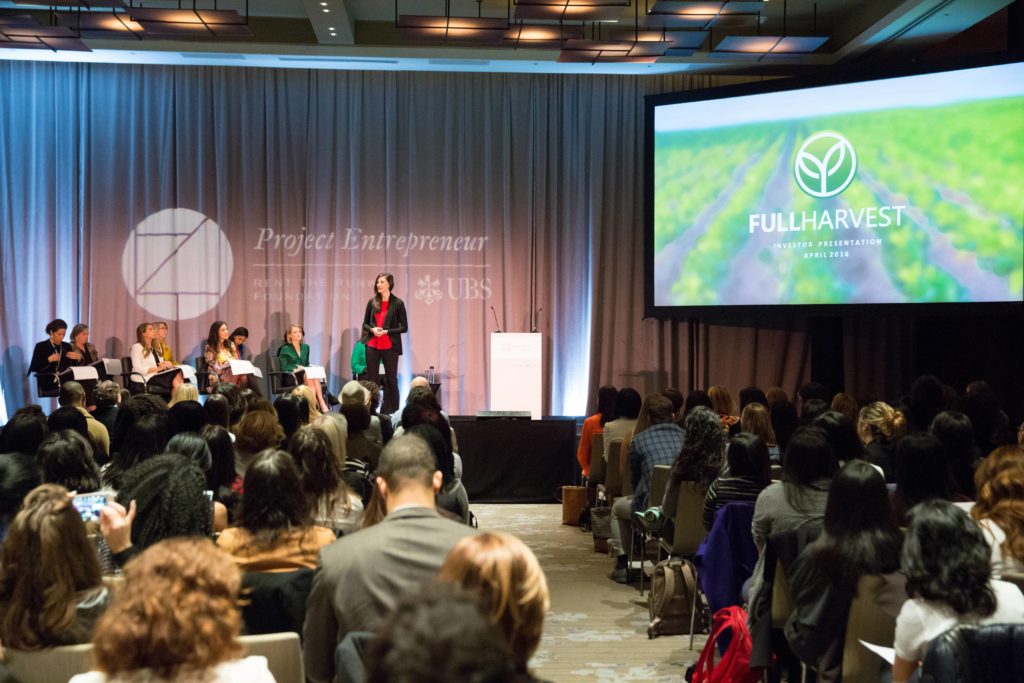
Full Harvest grew from Moseley’s effort to find those leaves a customer. She spent a decade leading the business, building an online marketplace between growers and commercial produce buyers. Now she has handed over the CEO role and remains on the board. Her story contains two interesting decisions: seeing a business in what other people walked past, and deciding when someone else should run it.

The expensive juice and the inexpensive leaf
Before the lettuce field came the juice bottle. At Organic Avenue in New York, Moseley led strategic projects and business development as the food and beverage startup expanded. It was a useful position from which to inspect an awkward piece of arithmetic: juices could cost as much as $13, while their ingredients were being purchased to exacting cosmetic standards before being processed.
She had already worked in logistics at Maersk and gained marketing experience at Procter & Gamble. She held an MBA from Wharton. The food system’s inefficiencies were familiar enough to annoy her, yet unfamiliar enough at the farm end to warrant a closer look. She moved to California and began visiting growers.
What she found challenged an easy explanation of waste. Farmers were responding to buyers who wanted particular shapes and specifications. Selling an additional crop required another customer, another negotiation and another set of arrangements. A field full of edible produce did not automatically come with an economical way to sell it.
Moseley’s answer was to connect the grower with a different kind of purchaser. A company making juice, soup or another processed product might have a use for produce that would struggle to find a place on a grocery display. The farmer could receive additional revenue; the buyer could obtain an ingredient at a lower cost. The transaction had to make sense to both.
A founder before the first harvest
Long before she tried to reorganize produce buying, Moseley started Carolina Music Outreach at the University of North Carolina at Chapel Hill in 2002. The organization became Musical Empowerment. College students taught music to children who otherwise might not have access to lessons, bringing together willing teachers and families with an unmet need.
It is a revealing early project. You can see a resemblance to the later business without pretending that piano lessons and celery are interchangeable. Both involved making a connection that an existing system had left undone. Both required more than pointing at the gap. Someone had to arrange a repeatable way for people on either side to participate.
The nonprofit’s life continued well beyond her campus years. It hired its first executive director in 2015 and subsequently expanded to other universities. UCLA launched a chapter in 2025. The survival of that first organization adds a different measure to her career: something she began as a student was still finding new teachers and children more than two decades later.
Her business biography can obscure the performer behind it. She grew up playing piano and dancing ballet; her grandmother taught her piano from age five. In a July 2026 conversation, Moseley described growing up with an entrepreneur mother and a father involved in community service. Business ownership and helping other people were both visible at home.
“It’s never going to be a linear path.”
Christine Moseley, on building a business
First, persuade people it is food
The word “waste” was helpful for explaining Full Harvest’s mission and less helpful for explaining its merchandise. Moseley recalled early skeptics assuming she meant rotten food. That misunderstanding turned an introduction into a small education exercise. She was trying to sell edible surplus and imperfect produce, and had to establish what those words actually meant.
The distinction mattered commercially. A buyer responsible for a production run needs ingredients that meet its requirements. A grower needs confidence that a new sales channel will justify the effort. A charming account of an oddly shaped vegetable cannot do the work of a dependable transaction.
Full Harvest developed a marketplace around those practical concerns. Buyers and sellers could connect online, with logistics and other procurement work brought into the process. Moseley’s ambition reached beyond the original sale: digital records could give a traditionally fragmented market more useful information about availability and demand.
That was a less photogenic undertaking than holding up a crooked carrot. It also suited someone whose background included the movement of goods. Inventory must be described, orders coordinated and payments handled. Perishable produce adds a deadline to every unresolved detail. A software interface earns its place by helping people complete that work.
A market for a crop depends on matching it with a buyer who can use it.
Growing meant getting less picturesque
In December 2021, Full Harvest announced a $23 million Series B led by Telus Ventures. The funding brought institutional support to an idea that had once required explanations about whether its inventory was edible. Investors included organizations with interests in technology, agriculture and impact, giving Moseley a constituency beyond the original customers.
Capital, however, was only one ingredient. The company needed tools that made farm sales easier. In November 2022, it acquired FarmersWeb, a provider of farm sales and inventory management software. Its capabilities included order management and payments. These are the parts of a business that rarely inspire a dinner-party anecdote and regularly determine whether anyone places a second order.
In May 2023, Full Harvest widened its marketplace to include USDA Grade 1 produce alongside surplus and imperfect crops. Retailers, food service companies and other buyers could use a broader offering. For a business associated with produce rejected for its appearance, welcoming conventional grades might initially seem an odd development.
The reasoning followed the original problem. Buyers and growers often deal in several grades. Putting more of that business online could make the marketplace more useful and give participants a fuller view of what was available. Moseley was pursuing a more efficient trading system, which required meeting customers across more of their purchasing needs.
A claim worth putting on the package
There was another problem to solve once rescued produce reached a manufacturer. How could a customer know that an ingredient would otherwise have gone unused? A story about avoiding waste needs a way to distinguish rescued supply from an ordinary sale.
Full Harvest created its Verified Rescued Produce program. Danone used verified ingredients in its Two Good Good Save yogurt line. The partnership carried the business out of the procurement department and onto a consumer product, where an ingredient’s history could become part of the reason to buy it.
Verification gave Moseley something more specific to discuss than a general intention to do good. It connected a claim to the produce being purchased. “Consumers trust it” was the purpose she emphasized when discussing integrity in the movement. The distinction is useful: a commitment becomes more persuasive when there is a process behind it.
Recognition followed along the way. Full Harvest won the food category in Fast Company’s 2020 World Changing Ideas awards. Moseley appeared on Inc.’s Female Founders lists in 2019 and 2025. The latter recognition cited revenue growth from the produce procurement business. The honors were markers of a company moving beyond the novelty of its original pitch.
Leaving the chair, keeping a seat
In 2026, Moseley announced that Sumer S. Johal would become Full Harvest’s CEO and that she would continue supporting the company from its board. At the transition, she reported more than $100 million in cumulative revenue. That is a total accumulated over the company’s life, rather than a claim about annual sales.
A decade of building, measured across the company’s life.
Her next stated interest was helping women founders and executives with fundraising and scaling operations. Those are subjects she had spent years handling herself. Her speaking work had already included women’s leadership and fundraising, alongside food waste and agricultural technology. The move gives that experience another possible audience.
It also changes how the opening scene reads. The founder who could see value in leaves left behind now has to consider where her own experience can be useful next. She remains connected to Full Harvest while making room for another leader and another kind of work.
The lettuce field offered a wonderfully inconvenient observation: useful things can sit in plain sight because nobody has arranged the right connection. Moseley spent ten years turning that observation into transactions. Whatever she builds next, she has already given the humble romaine leaf a considerably more interesting business biography than anyone expected.