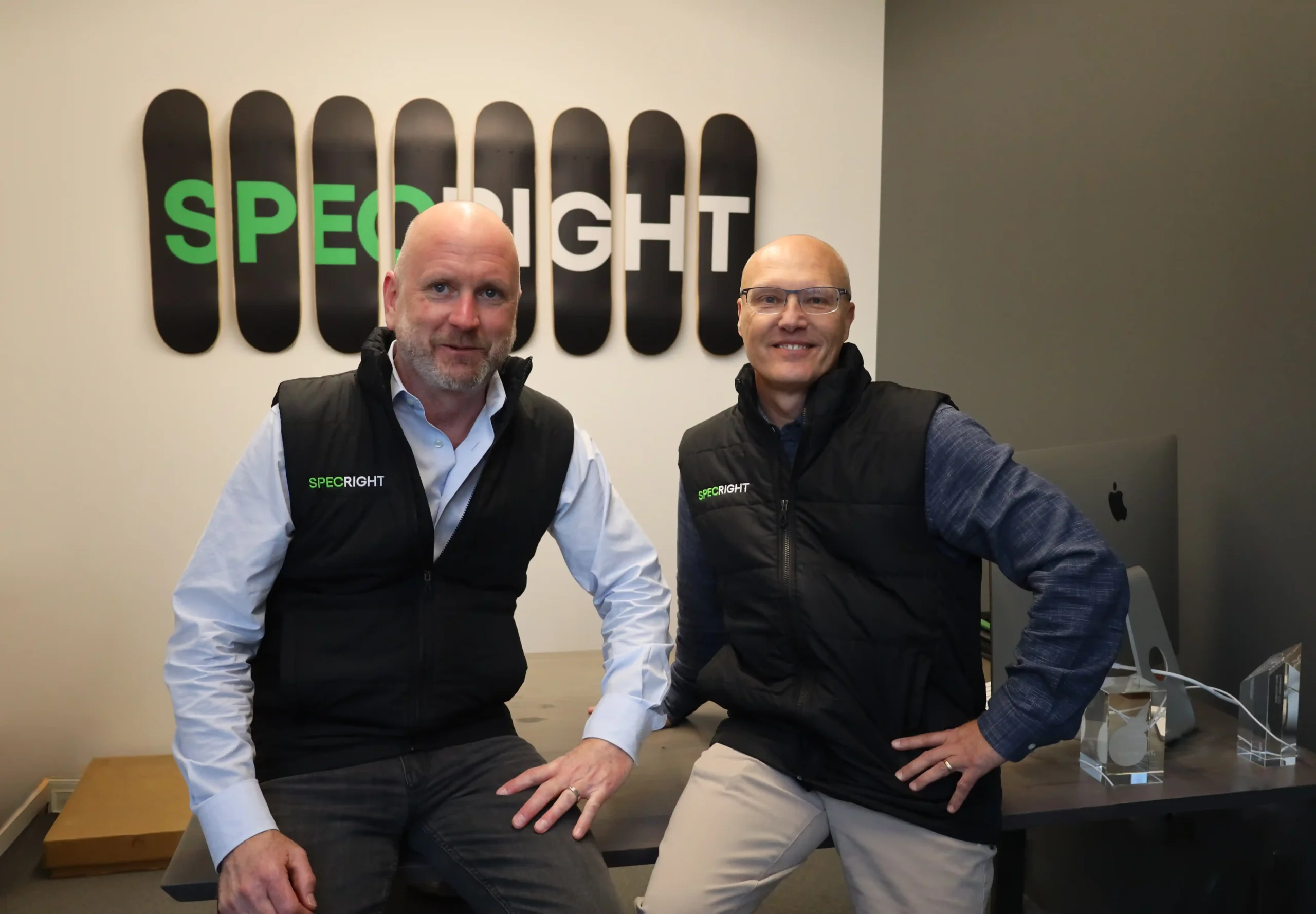
The Spec Whisperer
Somewhere between the Bill of Materials and the barcode, every physical product tells a story most companies have never bothered to read. It lives in spreadsheets, buried in emails, scattered across supplier portals and paper binders. Michael Boese joined Specright in April 2025 to end that mess - and he has been building toward exactly this kind of problem for 25 years without knowing it.
Boese came up as a Mechanical Engineering graduate from the University of Washington, which means he understands the language of physical things: tolerances, materials, dimensions, load-bearing constraints. Then he went to Duke's Fuqua School of Business as a Fuqua Scholar - the program's nod to its top students - and pivoted into enterprise software. It is a combination that keeps paying off in a company whose entire thesis is that physical product data deserves the same rigor as financial data.
His record before Specright reads like someone who keeps picking up broken companies and leaving them valuable enough for someone else to buy. At Taleo, he ran global partner and channel strategy and led six acquisitions - including Vurv and Learn.com - helping build what would become Oracle's talent management flagship. At SAP, he sat in the Office of the CEO as VP of Corporate Strategy, watching how global software bets get made from the inside. At Certent, a fintech equity management company, he served as CEO for six years and drove 25% compound annual revenue growth.
"The opportunity is enormous and I know by partnering with our customers and technology partners we will continue to transform how companies make amazing, sustainable things."- Michael Boese, on joining Specright as CEO
In between, he co-founded Plantt, a SaaS garden goods marketplace - a detour into consumer e-commerce that Monrovia, a major plant nursery, thought valuable enough to acquire. Then he ran Hearsay Systems as CEO for four years, taking a digital compliance platform for financial advisors from mid-stage to acquisition by Yext for north of $125 million, growing the team by 50% along the way. Three exits. Three different categories. One consistent pattern: find operational complexity, apply software discipline, grow the team, hand off a better business.
Now he runs Specright, a company founded in 2014 by packaging veteran Matthew Wright, who spent decades at International Paper and Temple Inland before deciding that the way brands manage product specifications was, in his word, broken. Wright built the category. Boese arrived to scale it.
What Specright sells, precisely, is the replacement for spreadsheets as the place where product specs live. Every formula for a beverage. Every material in a cosmetics package. Every supplier tolerance for a food container. Every regulatory certification for a medical device. Instead of those specifications living in disconnected silos, Specright's platform becomes the single version of truth - with version control, audit trails, supplier collaboration portals, AI-powered document ingestion, and real-time analytics baked in.
Four of the top ten US retailers trust Specright to manage their product data. Over 5 million products sit on the platform today.
Boese inherited a company already moving fast. Specright grew 407% between 2020 and 2023, hit $22.4 million in ARR in 2024 (up 47.9% from $15.2 million the prior year), and landed at #287 on the Deloitte Technology Fast 500. In 2025, Gartner named the company a Cool Vendor in AI and Data Tools for Packaging. That recognition carries weight in an industry where Gartner is still the map most enterprise buyers use to find new software.
His first moves at Specright were precise. He identified three priority areas: scaling customer operations with improved service models, accelerating product innovation in packaging and PLM with tighter AI integration, and protecting the culture that drove the company's growth in the first place. He talks about culture the way engineers talk about load limits - not as aspiration, but as constraint. Get it wrong and everything above it fails.
"By infusing AI into every part of our platform, we're enabling companies to not only digitize their data but also derive continuous value from it - unlocking new levels of quality, sustainability, and speed to market."- Michael Boese, on Specright's AI strategy
On AI, Boese is specific rather than vague - which is a useful tell. Specright is deploying AI in three distinct modes: Intelligent Document Processing (IDP), which ingests unstructured spec documents from suppliers and turns them into structured data; SpecGPT, a chat interface that lets users query their specification repository in plain language; and an R&D Workbench that accelerates product formulation by surfacing relevant historical spec data. These are not features bolted onto an old architecture. They are native to a platform that was built from the start to manage structured specification data at scale.
The regulatory tailwinds are real. Extended Producer Responsibility (EPR) laws require brands to report packaging composition with precision. The EU's Packaging and Packaging Waste Regulation (PPWR) mandates recyclability data by material type. Sustainability reporting standards require supply chain traceability at the ingredient and material level. For most brands, meeting those requirements with spreadsheets is not just inefficient - it is impossible. Specright was built for exactly this moment.
Boese is managing the EMEA expansion personally, with a new London office opened in 2025. The move signals that the company is done being a US story. The specifications problem is the same whether your product is made in Ohio, Germany, or South Korea - and so is the market.