product-lifecycle-management
(22)
The Laboratory Had Plenty of Data. It Just Couldn’t Remember.
Uncountable began with cold calls, consulting work, and an awkward truth: laboratories generate priceless knowledge, then bury it in spreadsheets. Its answer is a single memory for the experiment, the sample, the batch, and the decision that followed.

The Architect Who Gave a Cloud Company Permission to Exist
Before Propel had customers, offices or a name worth remembering, an investor wanted one answer: could Ron Hess build it? His yes became the hinge of a decade-long wager on product data in the cloud.
K3 Cut Away the Conglomerate. What Remains Is Fashion's Operating System.
After years of selling everything from manufacturing software to retail systems, the British company has made one blunt choice: build the missing fashion layer inside Microsoft Dynamics 365.

Josh Epstein Turns Engineering Complexity Into a Story People Can Use
A math-trained marketer who protects his mornings for whiteboards, Epstein has spent nearly three decades making dense enterprise technology legible. At Aras, his subject is the digital thread - and the next test is whether AI can be trusted with it.

Aras fired its sales team and made the software free. Airbus came calling.
The Andover software maker spent seven slow years selling PLM the usual way. Its 2007 reset - free software, paid certainty, and customizations that survive upgrades - turned a near-stall into an enterprise foothold.

Dario Ambrosini Learned Marketing by Misunderstanding One Word
A finance graduate who preferred customers to transactions, Dario Ambrosini built a SaaS career around translation: between numbers and narrative, engineers and buyers, and now search engines and AI.
Propel Put the Product Record on Salesforce. Now It Wants AI to Do the Chasing.
The Redwood City software company made one unfashionable bet in 2015: the product record should live beside the customer record. A decade later, that shared data model is the pitch - and the price of making it real can run from five figures to nearly seven.
Revalize Bought the Software Under the Factory Floor. Now It Has to Make the Pieces Fit
Revalize stitched together 19 specialist brands to give manufacturers one route from sketch to quote. The opportunity is large; so is the integration job.

Xavor Spent 30 Years Fixing Enterprise Plumbing. Now It Wants to Put AI in the Pipes
The Irvine-to-Lahore engineering firm built its reputation on the systems nobody brags about - PLM migrations, access workflows and data plumbing. Its next act is a useful test of whether enterprise AI works better when the boring foundations come first.
The Software Behind the Factory Floor Is Learning the Factory
Aptean built a large enterprise-software business by going where generic suites get awkward: recipes, lots, shop floors, fleets and regulated workflows. Now it is connecting that collection with AI - without pretending every factory works the same way.
L&T Technology Services
It is not the household name behind your car, your MRI machine, or your factory floor - but the outsourced engineering brain that helped design them just might be.

Catherine Kniker
Catherine Kniker began by decoding crashed computers. Now the Irish-born PTC executive is working on a larger systems problem: helping manufacturers connect product data, business strategy and sustainability before the first part reaches the factory floor.
PTC
For four decades, PTC has sold the software behind the objects people rarely think of as software projects. Now it is simplifying its portfolio around a bigger bet: that clean, connected product data will become the operating memory for industrial AI.

Kellwood Company
Kellwood Company is an American apparel design, sourcing, manufacturing and marketing firm founded in 1961. It builds and operates women's, juniors' and girls' fashion brands - including Democracy, Jolt, Briggs New York, Rewind, My Michelle and Wit & Wisdom - and provides private-label and full-package product development, sourcing, quality assurance and distribution services for major retailers such as Nordstrom, Macy's, Kohl's, Dillard's, Target and Costco.

Tim Rumer
Tim Rumer is a sporting goods executive who serves as Senior Vice President of Business Development at Mizuno USA in Peachtree Corners, Georgia. A left-handed pitcher drafted by the New York Yankees out of Duke University in 1990, he spent eight professional seasons in the minors and reached Triple-A before trading the mound for the boardroom. At Mizuno he climbed from business unit manager to product and lifecycle leadership - including a stint running ball glove development - and now steers partnerships and growth across the company's team sports and golf divisions.

Garth Coleman
Garth Coleman is the CEO of Canvas GFX (Canvas Envision), a Boston-based manufacturing software company building tools that turn engineering data into interactive, 3D visual work instructions for frontline factory workers. A mechanical engineer by training with an MBA from Babson, he spent roughly 19 years at Dassault Systemes leading global strategy for 3D visualization, PLM, AR/VR, and generative AI before taking the top job at Canvas. He champions a 'connected knowledge' approach to manufacturing, arguing that the industry modernized its products and processes but left the people on the floor relying on static PDFs and printed checklists.
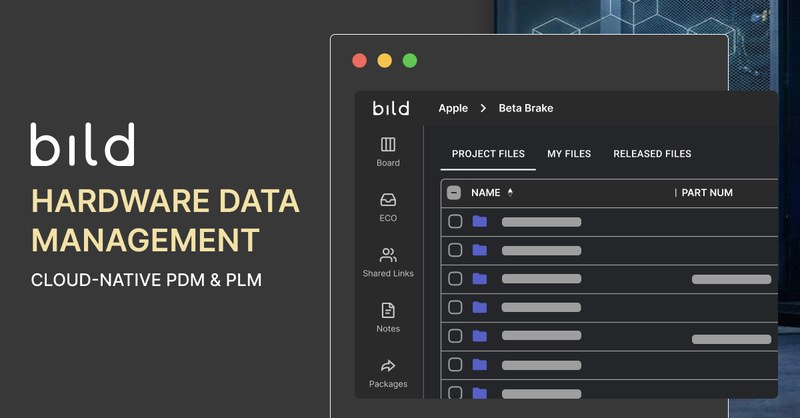
Bild
Bild is a San Francisco cloud PDM/PLM platform that moves hardware design collaboration off email, spreadsheets, and shared drives and into the browser. Founded in 2021 by ex-Apple engineering program manager Pradyut Paul, it gives mechanical and hardware teams version control, check-in/check-out, bill-of-materials, change orders, and secure supplier sharing across multiple CAD formats, plus an AI suite for diffing and searching designs.
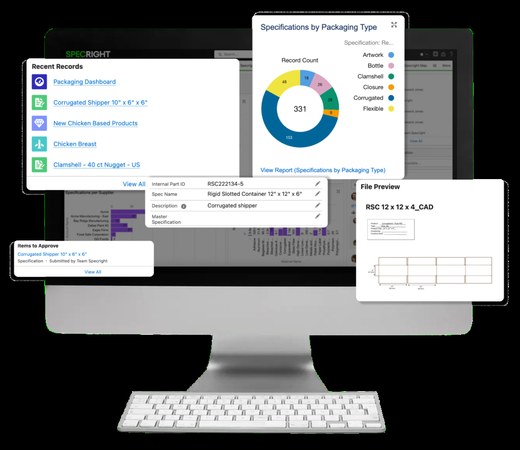
Specright
Specright is the first cloud-based, patented platform for Specification Data Management - the digital backbone that captures the DNA-level data of products, packaging, formulas, and bills of materials in a single source of truth. Founded in 2014 by packaging veteran Matthew Wright, it helps the world's largest brands and challenger startups cut costs, accelerate innovation, and reduce waste by replacing scattered spreadsheets with connected, auditable specification data. The platform now hosts more than 5 million products and is layering AI across formulation and spec-first PLM workflows.

Foundation EGI
Foundation EGI is an MIT CSAIL spinout building what it calls Engineering General Intelligence: a domain-specific, agentic AI platform purpose-built for industrial engineering and manufacturing. Instead of treating engineering as text, it encodes the rules of physics, geometry, materials, and manufacturing constraints into a domain-specific language, turning messy specs and CAD models into auditable, executable workflows for technical drawings, process planning, product catalogs, and multilingual documentation. The company raised an oversubscribed $23M Series A in July 2025, bringing total funding past $30M.

QbDVision
QbDVision is an Austin-based software company building the first cloud platform for Digital CMC (Chemistry, Manufacturing, and Controls), giving pharmaceutical and biotech teams a structured, single source of truth for product and process knowledge. By operationalizing Quality by Design principles, the platform replaces scattered documents and spreadsheets with connected, machine-readable data that accelerates drug development, tech transfer, and regulatory submissions. Founded in 2015 as CherryCircle Software, QbDVision now serves several of the world's largest biopharma organizations and CDMOs.

Mok Oh
Mok Oh is the co-founder and CEO of Foundation EGI, a startup building what it calls the world's first Engineering General Intelligence platform - an AI system that turns messy engineering instructions into machine-executable workflows for design and manufacturing. A serial entrepreneur with an MIT Ph.D. in computer graphics and vision, he previously founded EveryScape (a Street View for building interiors), served as Chief Scientist at PayPal where he built the data science org, and was CTO of Mercari US. Foundation EGI, spun out of MIT research, raised a $23M Series A in 2025, bringing total funding past $30M.
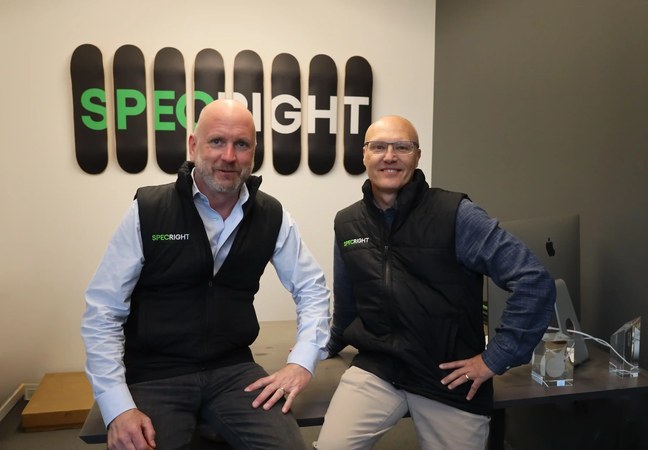
Michael Boese
Michael Boese is the CEO of Specright, the first cloud-based Specification Data Management platform, appointed in April 2025. A seasoned enterprise software executive with 25+ years across Oracle, PeopleSoft, SAP, Taleo, and multiple startup CEO roles, Boese brings a track record of scaling B2B SaaS companies through operational discipline and product innovation. Under his leadership, Specright is accelerating its mission to digitize product specifications across global supply chains, with $42M in total funding, $22.4M ARR, and ambitions to infuse AI across its platform to help manufacturers, retailers, and brands make better, more sustainable products.