Profile • Sporting Goods • Baseball
Tim Rumer
A left-handed pitcher who chased the majors for eight seasons, then built a career at the company that makes the gloves. Today he runs business development for Mizuno USA.
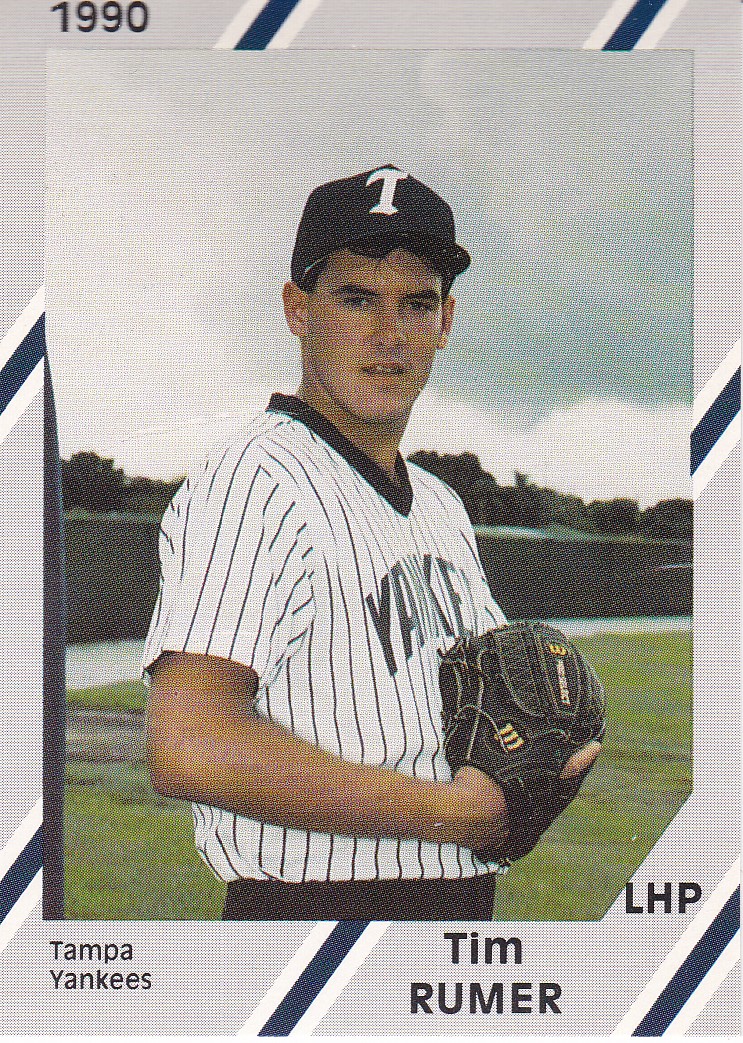
A left-handed pitcher who chased the majors for eight seasons, then built a career at the company that makes the gloves. Today he runs business development for Mizuno USA.
Every June, a few thousand young ballplayers learn where their names land in the draft. In 1990, Tim Rumer expected to hear his called somewhere around the tenth round. The New York Yankees took the Duke left-hander two rounds early, in the eighth, 219th overall. It was the kind of pleasant surprise that sets a life in motion.
Rumer was built like a pitcher a scout draws up on a napkin: six foot three, 205 pounds, throwing from the left side. Born in Philadelphia in the summer of 1969, he had pitched for the Blue Devils before signing his first professional contract and reporting to the rookie-level Gulf Coast League. That first clubhouse turned out to be a small piece of baseball history. Among his new teammates was a skinny, quiet reliever from Panama named Mariano Rivera.
Rivera, of course, would go on to Cooperstown as the greatest closer the game has known. But in those early Florida summers, the spotlight belonged to someone else. Years later, in his 2014 memoir The Closer, Rivera remembered his teammate plainly: Tim Rumer was "the club's pitching star, one of the best guys in the Gulf Coast League." When a Hall of Famer writes that sentence about you, it stays true no matter what the box scores decide next.
What the box scores decided was hard. Rumer spent eight professional seasons grinding through the minor leagues, climbing as high as Triple-A with organizations including the Yankees and, later, the Tampa Bay system, where he pitched for the Durham Bulls and helped the club to its first-ever Championship Playoff appearance. Triple-A is one phone call from the big leagues and, for many, a phone call that never comes. Rumer's didn't. He reached the top rung of the ladder and never got the last step up.
Here is where most baseball stories end and a different one begins. Plenty of players leave the game when the game leaves them. Rumer did something rarer: he stayed inside it, just from the other side of the counter. He joined Mizuno, the Japanese equipment maker whose gloves are worn by big leaguers he had once hoped to join. The kid who dreamed of the majors ended up helping build the very tools of the trade.
He did not walk in at the top. He started as a business unit manager and moved through the org chart the way he had once moved through the minors - one level at a time, earning the next. Director of Product Management. Director of Product Lifecycle Management. By 2014 he was Mizuno's director of product development for ball gloves, talking to MarketWatch about how a glove actually gets made. Then Vice President of Team Sports. And now Senior Vice President of Business Development, steering partnerships across the company's diamond sports and golf divisions from its headquarters in Peachtree Corners, just outside Atlanta.
Along the way he became something of an operations reformer. When Mizuno overhauled how it managed product data, Rumer was candid about the old way of doing things. "We used to have what I called the 'ta-da moment,'" he said. "Product managers would work on their collections and then reveal them at the last moment." The fix was less theatrical and more useful: centralized information that designers, developers and product managers lived in every day. The result read like a stat line he could be proud of - category managers handling up to 75 percent more styles, and a 10.2 percent jump in diamond sports items in a single year. "We can manage more categories with fewer people," he said. "Hands down."
There is a neat symmetry to it all. Baseball is a sport obsessed with equipment - the break-in of a glove, the pop of a ball, the weight of a bat. Rumer spent his twenties trusting that gear to carry his ambitions, and he has spent the decades since making sure it carries someone else's. The partnerships have kept coming: a comprehensive tie-up with Prep Baseball Report, and in late 2024, a multiyear deal naming AW Sports the exclusive Mizuno distributor in Mexico. In September 2025, when Mizuno reshuffled its golf leadership, it was Rumer offering the vote of confidence: "We are confident that Chris, Tim, and Tyler will continue to strengthen Mizuno Golf in their new roles."
It is tempting to read a stalled playing career as a disappointment. Rumer's arc argues otherwise. The discipline that carries a pitcher through eight seasons of bus rides and bullpen sessions turns out to be the same discipline that carries an executive up a corporate ladder: show up, do the work, take the next rung. He never reached the show. He never left the game either. For a kid who was drafted two rounds early and dreamed of a big-league glove, ending up as the person who helps make them is not a bad place to land.
He was a 6-foot-3 left-hander who both batted and threw from the left side.
His first pro clubhouse included future Hall of Fame closer Mariano Rivera.
He expected to go in the 10th round of the 1990 draft - the Yankees grabbed him in the 8th.
His 1992 Classic Best rookie baseball card still trades among collectors.
He once dreamed of wearing a big-league glove; at Mizuno he helped design them.
Mizuno USA is headquartered in Peachtree Corners, Georgia, just outside Atlanta.
He is a sporting goods executive and former professional baseball pitcher who serves as Senior Vice President of Business Development at Mizuno USA.
No. He was drafted by the New York Yankees in 1990 and played eight professional seasons, reaching Triple-A, but never appeared in the majors.
They were teammates in the rookie Gulf Coast League with the Yankees. Rivera's memoir "The Closer" called Rumer "the club's pitching star."
He leads business development and has previously held roles in product management, product lifecycle management, ball glove development, and team sports leadership.
He attended Duke University, where he pitched for the Blue Devils before being drafted in 1990.