The origin story of MediaValet begins with an unglamorous confession: a photography company had become bad at finding its own photographs. Around 2010, David MacLaren's VRX Studios was carrying roughly 20 terabytes of high-definition media. The archive was no longer a side effect of the business. It was the business's clogged circulatory system. People who were supposed to make and license images were instead tending files.
So the Vancouver team built a cloud-based digital asset management system for itself. Outside companies noticed. MacLaren separated the software operation, sold the photography business and devoted himself to what became MediaValet. The sequence matters: pain first, tool second, market third. No brainstorming retreat was required. The product specification was sitting on the server, taking up 20 terabytes.

A library that remembers the rules
MediaValet is enterprise digital asset management software, or DAM. The shorthand makes it sound like cloud storage with a nicer search bar. The useful distinction is that a shared drive stores files; a DAM stores decisions around those files. Which image is current? Who approved it? Where may it run? When do the rights expire? Which agency can download the original, and which regional distributor should receive a cropped rendition?
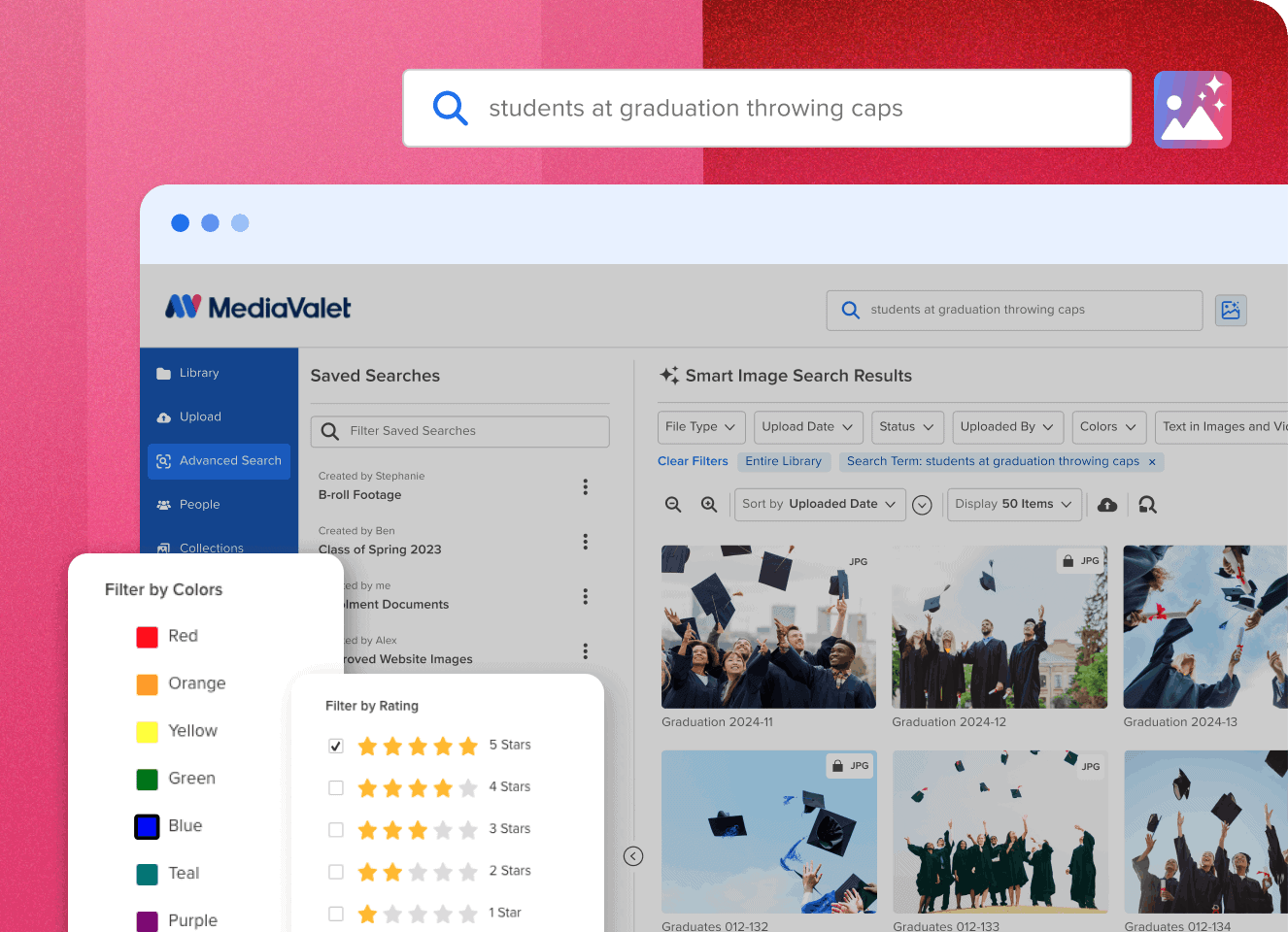
Its core platform organizes images, video, design files and documents with categories, metadata, keywords and AI-generated tags. Natural-language and visual search help retrieve content without an exact filename. Permissions govern access. Version history, rights fields, reporting and content-delivery links carry the asset from archive to channel. Video tooling handles large uploads, previews and transcoding. The company also sells collaborative workspaces, Marq-powered templates and PageProof-powered review and approval.
The content supply chain
The recent direction is outward. Proofing pulls scattered comments and version comparisons into the record. Experience Portals, added after MediaValet acquired Beam from brand consultancy Monigle in 2025, push approved material into curated destinations for employees, partners and regions. The DAM is trying to become a content supply chain: less warehouse, more route map.
What failed first was trust
Storage rarely breaks with a cinematic puff of smoke. The first failure is softer: people stop trusting search. Then they download local copies, rename them, email attachments and create shadow libraries. Approval moves into comment threads. Nobody is sure whether an image is licensed. The archive grows while its practical value shrinks.
Toronto International Film Festival offered an impressive specimen. TIFF had more than two million assets spread across general cloud storage. A deduplication process found 500,000 copies - one quarter of the library. Missing metadata slowed retrieval, teams worked in silos and external sharing became a chore. With MediaValet, TIFF tagged more than 3,500 faces in a few months, removed the duplicates and attached rights information to the files.
At United Way of King County, the old DAM had become so awkward that the team rarely used it. A large financial institution kept running software that had been out of production for years while content leaked into a patchwork that included Dropbox. Vaisala's on-premise DAM worked poorly outside Finland. In each case, the first thing to fail was not the disk. It was confidence that the system would return the right thing quickly.
“Out of 2 million assets, half a million were duplicates.”TIFF's DAM cleanup, as described in its MediaValet case study
What changed minds was measurable waste. Duplicate storage is visible. Hours spent searching can be counted. A licensing error is frightening. Herff Jones saw feedback scattered through email delay work across marketing, sales and service. Sonos embedded license terms and expiration dates into thousands of files so expired assets could not be downloaded. The category becomes easier to buy when “better organization” turns into fewer review cycles, fewer risky files and less production repeated by accident.
A niche with enterprise economics
MediaValet sells annual B2B subscriptions with custom pricing. Storage, modules, integrations, migration and service requirements shape a quote. Its notable wedge is unlimited users, categories, tags, training and support. That is more than a friendly packaging choice. An asset system becomes less valuable when every new salesperson, franchisee or agency partner creates another seat negotiation. Broad access is part of the product's network effect inside one company.
The buyers are typically marketing, creative operations, communications, archive and video leaders in mid-market and enterprise organizations. Public examples range from Experian and Sonos to universities, nonprofits, manufacturers and cultural institutions. Over 500 organizations and more than 70,000 users is meaningful reach, but this is still specialist infrastructure, not mass-market software.
In its final full year as a public company, 2023 revenue rose 28 percent to C$16.4 million and software annual recurring revenue rose 22 percent to almost C$18 million. Gross margin was 81 percent. The adjusted EBITDA loss narrowed 40 percent but remained C$5.8 million; the net loss was C$8.4 million. Growth was real, profitability had not arrived.
That tension set the stage for STG. An affiliate of the software-focused investor bought MediaValet in April 2024 for C$1.71 per share, a transaction reported at roughly C$7.4 million, and the stock left the Toronto exchange. The deal gave MediaValet a private owner and a longer runway away from quarterly small-cap scrutiny. It also makes current revenue and valuation less visible.
The sticker price is only part of what a DAM costs. A serious deployment includes the archaeology: deciding what to migrate, deleting obvious rubbish, designing metadata, mapping permissions and persuading departments to surrender their private folder kingdoms. Then come integrations and change management. MediaValet's public price is a tailored quote rather than a menu, which is normal in this corner of enterprise software. A buyer should compare the contract with the labor already disappearing into searches, recreations, manual resizing, approval chasing and compliance checks. Without that baseline, almost any DAM can be made to look either cheap or extravagant.
Different by adoption, not magic
The competitive shelf is busy: Bynder, Brandfolder, Acquia DAM, Canto, Aprimo, Adobe Experience Manager Assets and Cloudinary all approach overlapping work. Below them sit cheap substitutes such as SharePoint, Box, Dropbox and Google Drive. MediaValet distinguishes itself with its Azure foundation, unlimited-seat model, customer support, enterprise security posture and connectors into creative work. Its “crawl, walk, run” implementation idea is sensible because a perfect taxonomy delivered all at once is usually a taxonomy nobody uses.
Security and service are part of the position. MediaValet advertises 24/7 support, reports 98 percent satisfaction with support, and has completed SOC 2 Type II and ISO 27001 audits. Its Azure deployment spans 61 data-center regions, according to the company, which matters to organizations distributing heavy media across continents. Accessibility is another operational detail: MediaValet says its interface adheres to WCAG 2.1 AA. None of these items makes a photograph more interesting. Together they make a procurement committee less nervous about putting the institutional archive behind one door.
Culture appears in the product packaging too. The company calls itself people-first and talks obsessively about customer adoption. That is not merely soft language when the bleak alternative is shelfware. Unlimited training, broad access and gradual rollout all acknowledge that a technically correct library can still lose to a familiar messy drive. The most important user may not be the administrator who chose the platform, but the hurried salesperson who needs one approved image at 4:57 p.m. and will defect to an old desktop copy after one bad search.
AI search helps, but it is not an absolution. Face recognition and visual-language models can expose content that manual tags missed. They cannot decide who owns the library, whether a license field is authoritative or what should happen when an employee uploads six near-identical finals. MediaValet's durable expertise is the unflashy combination of migration, metadata design, permissions, integrations and adoption.
What a reader can copy
- Audit the pain before shopping: count duplicates, retrieval time, approval loops and rights exposure.
- Begin with one high-value library and a named owner. A small trusted collection beats a giant suspicious one.
- Remove access friction. If ordinary users need a gatekeeper for every file, they will rebuild the shadow drive.
- Put governance into metadata and workflow: expiry dates, approvals and versions should travel with the asset.
- Integrate where work already happens. The best archive is the one that receives the approved file automatically.
When the playbook does not work
A DAM is a poor purchase when the library is small, the team is stable, rights are simple and ordinary cloud search already works. It also fails when no one owns taxonomy, migration or ongoing hygiene. Software can suggest tags; it cannot settle a departmental argument over what “campaign final” means. Unlimited users only help if users are trained, and a portal only helps if someone keeps its approved material fresh.
The most copyable part of MediaValet is therefore not the feature list. It is the decision to turn an internal bottleneck into a product only after outsiders recognized their own problem in it. The company did not invent digital clutter. It noticed that beyond a certain scale, clutter becomes operational infrastructure - expensive, risky and strangely invisible. Somewhere in a marketing department today, three people are recreating an image that already exists. MediaValet's whole business is the bet that eventually somebody will count.