A game artist can spend a month making a character. The character may then acquire a peculiar number of lives: a Maya file on one machine, textures in another folder, a compressed preview in a chat thread, and a newer version with a name that resembles the old one. One wrong choice can send an expensive creature back into production. Ada Liu, who ran a game art consultancy, saw that the glamorous part of the job kept being held hostage by the filing.
Share Creators, the company she founded in 2018, still works in art consulting and production. Its more revealing product is Blueberry, software for keeping creative assets findable and useful after the artist hits save. It began as an internal fix. Clients sent enormous source files across borders; downloads ate into four-week production schedules. Liu told TechCrunch that the available tools were either too expensive or outdated. Her team built one, then clients asked to buy it.
- Share Creators grew from game art services into digital asset management software.
- Blueberry searches, previews, versions and shares large 2D and 3D files.
- Its buyers include game studios and other teams with heavy creative archives.
- A $5 million round in 2023 helped fund the move from internal tool to wider market.
The file that ate four weeks
A conventional folder is excellent at remembering where something was put. It is less skilled at telling a producer whether a figure is the current one, whether its textures belong to it, or whether an outside artist may see it. The trouble multiplies in games. A single character may have concept art, a model, textures, animation and several review versions. A studio may have hundreds of characters. Liu gave TechCrunch a sharp way to price a mistake: a game might have 200 characters, each requiring about 30 days of work. Reworking one because the wrong asset was used is no clerical nuisance.
The first failure, then, was not artistic imagination. It was the handoff. A client supplied raw material, a remote team waited for it, and the clock kept running. The workaround became interesting when customers requested the software themselves. That is the moment Share Creators changed its mind about what it sold: the consultancy had found a repeatable problem inside its own invoices.
“We made our own internal tool… and others soon started asking if we could sell the software to them.”Ada Liu, speaking to TechCrunch in 2023
What Blueberry actually does
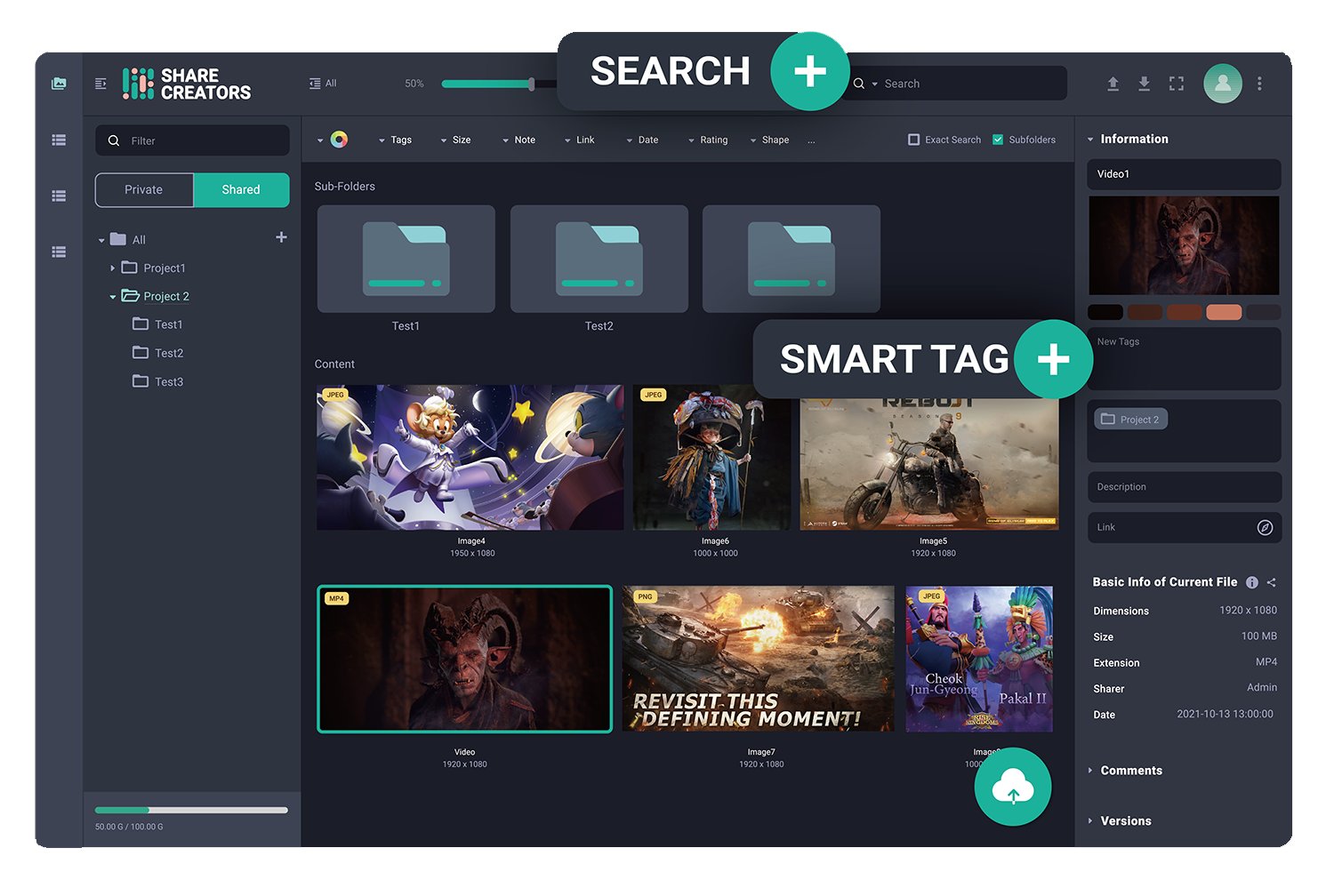
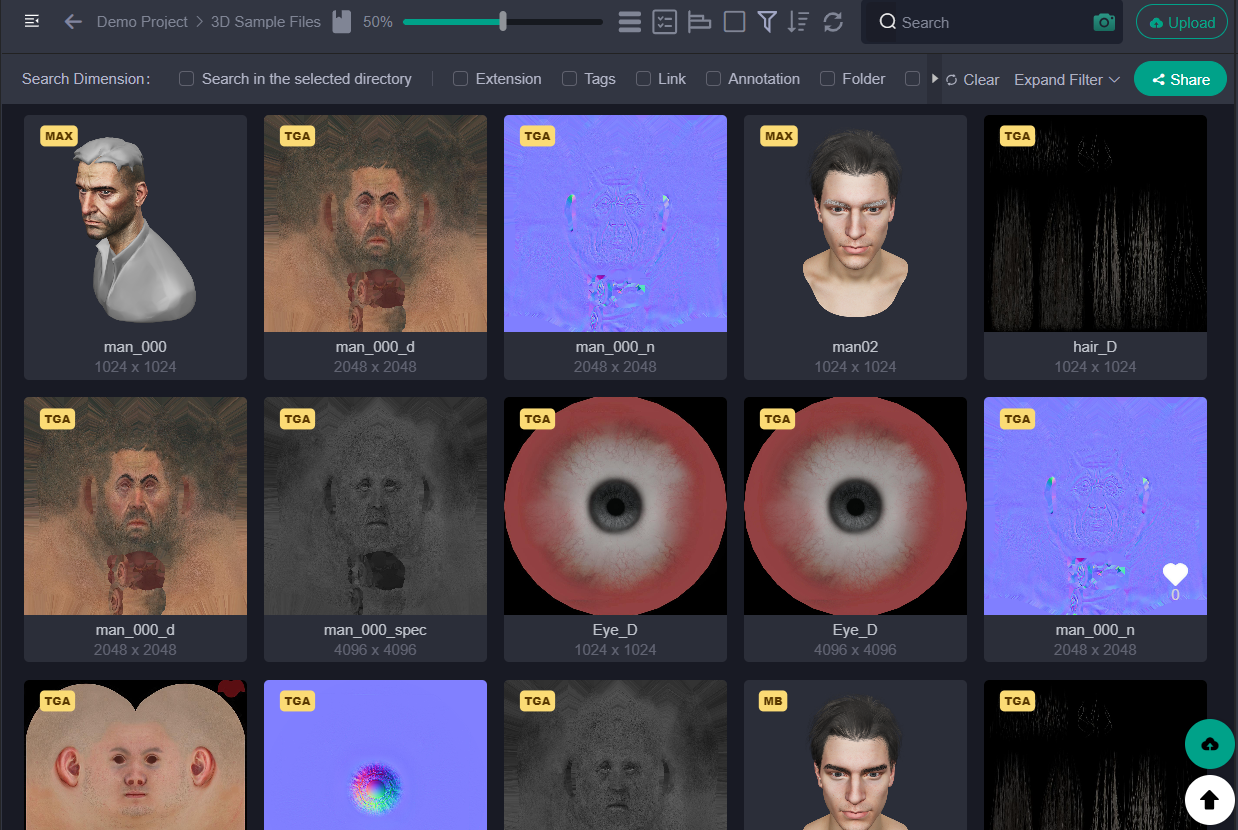
Blueberry is a digital asset management system, the ungainly industry phrase for a library that does more than store files. Share Creators says it can preview more than 100 formats in a browser, including Maya, 3ds Max, FBX and OBJ, alongside ordinary images, video and documents. An art director can inspect a 3D model without installing the software used to make it. A colleague can comment on a particular video frame or mark feedback on a model. That makes review less dependent on the right person having the right workstation.
Search is the second trick. Blueberry uses AI recognition and tags so that a forgotten filename need not render an asset invisible. Users can also search by color, file type, size, date and other attributes. The software offers version comparison, local-to-server synchronization, and permissions for outsiders. Read-only access, watermarks, passwords and expiring shares matter when a studio works with contract artists who need exactly enough access to do a job.
The company also sells Passion, a project and vendor management system covering reviews, vendor ratings and payments. Its art production business remains part of the picture. That combination is the point: the software was informed by people who had to deliver art, not just archive it. Blueberry's integrations extend toward Photoshop, game engines and an API, though the exact availability of any one integration should be checked before a team rearranges its pipeline around it.
What the filing cabinet costs
Share Creators has two very different customers in mind. A small creative team can buy seats on the company's published annual plans. An enterprise may want custom deployment and controls because the art in question is unreleased intellectual property. In January 2023, TechCrunch reported three customized accounts paying more than $200,000 a year apiece and ten customers on regular subscriptions, according to Liu. Those were early figures, not a current customer count. The company said it had raised $5 million that month: $3 million from 5Y Capital and $2 million from Foxit.
Published small-team through Team Pro prices, per seat per month on the company's annual pricing page. A $0.99 casual tier is also listed. Enterprise contracts are quoted separately; these are posted prices, not a promise of today's checkout total.
Published seat prices / month
The competitive set is broad. Dropbox moves files, while products such as Bynder and Adobe Experience Manager Assets organize brand content at scale. Share Creators' wager is narrower: teams with difficult 3D formats, large transfers, iterative reviews and a rotating cast of collaborators need those functions in one place. A marketing department with mostly finished JPEGs may find a simpler DAM sufficient. A studio handling native game files has a different shape of problem.
A software business with paint on its hands
The art side helps explain the company's culture better than a list of office perks would. Share Creators described roughly 150 people across art and software in a post about its Sprout talent program. The program offers artists exposure to different work through rotation. One artist described moving through character design, environment design and rendering. The company has also said its team contributed art to four of the five highest-grossing battle royale games of 2020. Those are company claims, but they describe the kind of production experience that made the asset problem visible in the first place.
Blueberry has since been pitched beyond games: advertising, e-commerce, industrial and architectural design all create files that need review and reuse. The company added AI image generation to the product story, and later promoted a browser-based 3D preview component called the KIWI Engine. In April 2025, Blueberry AI announced that Century Games was using its platform across global game teams. This is an expansion of the original argument, not a new one: as creative work spreads across tools, offices and vendors, the archive becomes part of production.
There is a useful lesson here for anyone building a tool. Share Creators did not begin with a grand theory about the future of creativity. It noticed where paid work stalled: a download, an unsearchable file, a review that required specialist software. It built a fix for its own artists, then treated customers asking for that fix as the signal. The copyable move is to watch the work between the impressive work. That is often where the invoice leaks.
It will not suit every team. The case is strongest when assets are large, formats are specialized, projects run through many hands, and an old file is expensive to remake. For a small group exchanging a few final images, the cabinet may be more elaborate than the monsters require. For the studio whose characters have grown multiple versions and crossed multiple continents, finding the right one is part of making the game.