The proposed passenger was a beagle. The proposed equipment was a pair of wings. Marié Whittington’s four-year-old daughter had an idea, and her mother’s response was to encourage a prototype: sketch it, make something from cardboard, learn what happens. The dog’s aviation prospects were limited. The opportunity to discover something was rather better.
Whittington shared the story while explaining why she values prototyping. It is an unusually domestic introduction to a subject that can otherwise disappear under diagrams. Before a vision becomes a commitment, give it a form that can be questioned. Cardboard has the considerable advantage of being cheap to disagree with.
That habit runs through her work at Pepperplane, the UX and UI studio she co-founded with her sister, Annette Schuman. She works in the space between what someone hopes to build and what another person can actually use. There are ambitions to understand, practical constraints to uncover, and decisions that become harder to reverse once software contains them. A little preparation can spare everyone a surprisingly elaborate pair of wings.
An education in what happens next
Originally from South Africa, Whittington studied Visual Communications Design at Stellenbosch University. Her education dates run from 2006 to 2009. An opportunity with Adii Pienaar, co-founder of WooThemes and WooCommerce, introduced her to UX after university. She describes that encounter as the beginning of her enthusiasm for the discipline.
The distinction matters to the shape of her career. Visual communication asks how something can be expressed. An interface also has to survive being used: someone arrives with a purpose, encounters a choice, and expects the result to make sense. A designer must follow the person beyond the first impression.
Her public portfolio preserves something of that range. It includes branding and website work alongside interface projects. Those different forms of practice sit comfortably together when the question is how to make an idea legible. A logo has one set of responsibilities. A product that asks someone to manage money has another. Attractive work still needs to know its job.
Two sisters, room for real life
Whittington and Schuman founded Pepperplane in 2018. A family relationship became a working partnership. That fact could easily remain a line in a biography. Whittington has given it a more everyday setting by sharing a call in which Schuman was leading a meeting while holding her child.
Her response connected the scene to the studio’s work culture. People bring responsibilities with them, including when the meeting concerns an interface. A business devoted to understanding users has its own opportunities to accommodate the humans making the product. The photograph made the idea concrete without requiring a conference presentation.
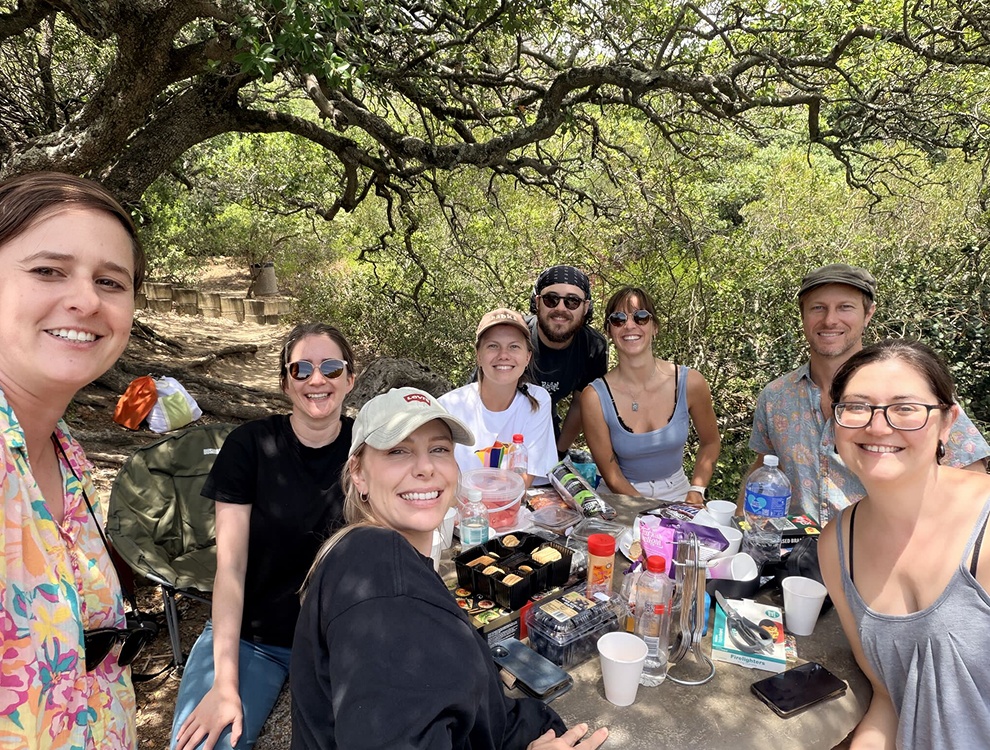
She has also described studio sessions that move from a new colleague’s welcome to discussions of the Pepperplane design system, then wander into conversations about animals. There is room for a tangent alongside the work. The useful detail is the coexistence: a shared system can provide structure while the conversation remains loose enough for people to participate as themselves.
The company has a user experience, too
In an anonymous exercise, Whittington asked her team to describe what they actually did at Pepperplane. She wanted an account from inside the work. The responses emphasized making complex ideas practical and helping a vision become something that functions. That gives a founder useful material to consider before polishing the next description of the business.
There is a design problem inside that exercise. A company can have an official account of itself while its staff experience something more complicated. Asking people separately creates room for those differences to emerge. The answers can reveal where colleagues agree, where the language has become vague, and what they think clients are really receiving.
Her public conversations have also made room for the founder’s operational difficulties. A 2026 Brilliance Talks appearance covered the move from freelance work to running an agency, putting systems around creative work, and recognizing herself as a sales bottleneck. The person who attracts opportunities can become the person through whom too many opportunities must pass.
That is an awkward promotion. A founder becomes responsible for designing conditions in which other people can do good work. Decisions need owners. Information needs a route. Clients need to know what happens next. The business itself starts to resemble a product with several users and a queue of unresolved interactions.
“Being comfortable with change is critical.”
Marié Whittington
Ten people, no shared hallway
By September 2026, Whittington was describing a ten-person remote agency stretching from Cape Town to Charlotte. She is based in North Carolina; her LinkedIn profile lists Concord. The studio’s geography makes a familiar office convenience unavailable: people cannot rely on overhearing the conversation that explains why yesterday’s decision changed.
She describes using recorded explanations, written decisions and short Loom videos to carry that context. A recording can show a problem that would take much longer to type out. A written decision gives a colleague something to return to after the call. These are small choices with consequences for how easily another person can contribute.
The interesting part is what clients receive from the arrangement. When a decision has to be made visible for a distant colleague, it can become easier for the client to inspect too. Questions have a place to land. The reasoning survives beyond the meeting. A project becomes less dependent on the memory of whoever happened to be present.
There is a family resemblance to interface design here. Both require someone to anticipate missing context. A button cannot assume its user attended the planning session. A remote colleague cannot assume the conversation happened within earshot. In both cases, clarity is work someone has to do.
- 01Align &
understand - 02Design &
solve - 03Scale &
support
A conversation becomes a design; the design needs a team that can carry it forward.
A house deposit, one decision at a time
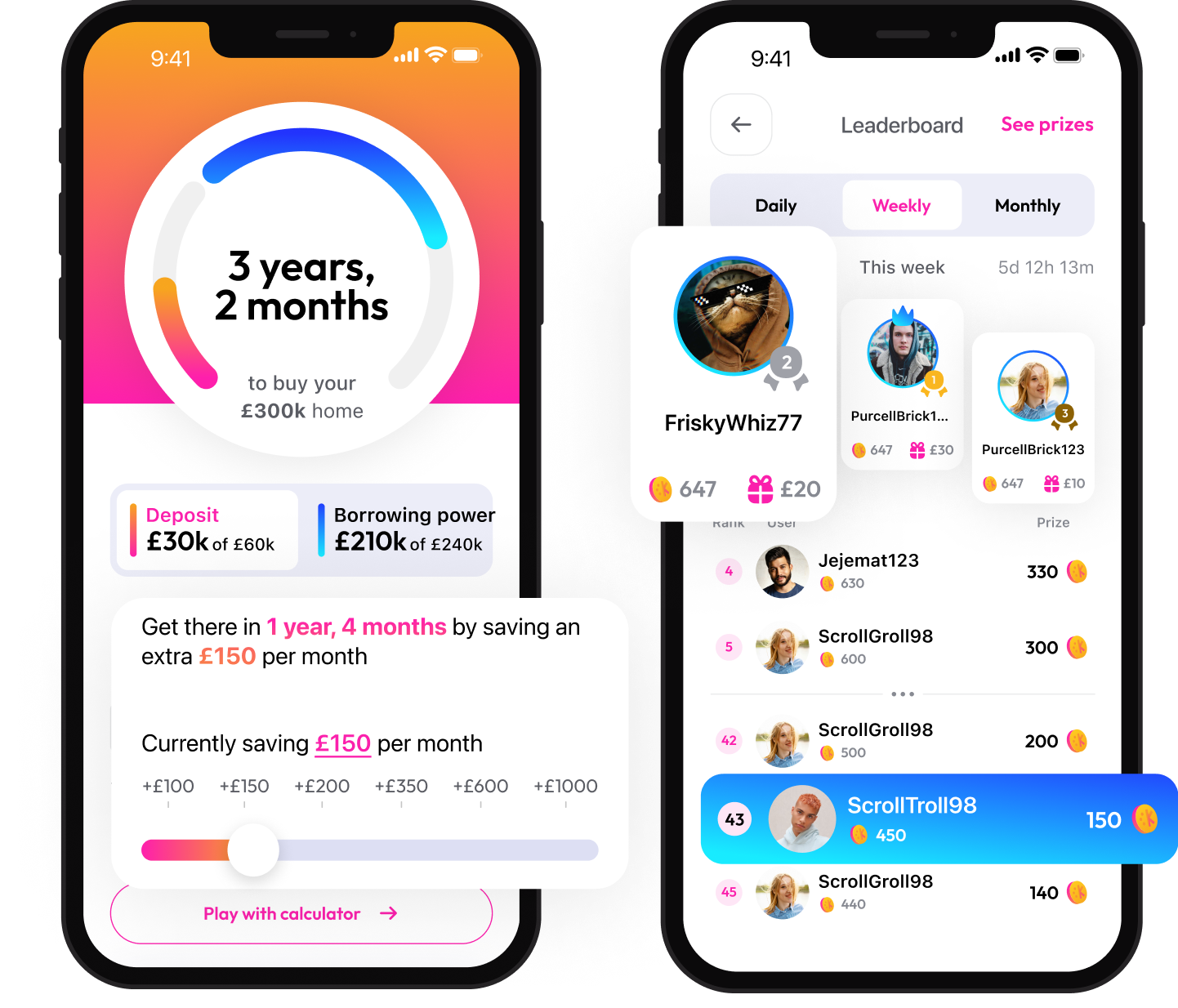
Klink offers a specific example of the work. The app uses goals and game mechanics to help people work toward buying a home. Pepperplane designed its UX and UI, with progress tracking, challenges and other elements intended to make a distant financial objective feel more manageable.
Co-founder Simon Groll names Whittington alongside colleagues Dianne and Marc in his account of the collaboration. He describes a team that helped develop incomplete ideas, worked through difficult UX questions and challenged the brief. He had previously worked with Pepperplane on Keyzy. The relationship continued into a different product with a related concern: helping someone make progress toward a home.
The design task is easy to underestimate. Buying a house is a large ambition; opening an app is a small action. The interface has to make a connection between them without asking the user to hold the whole ambition in mind at every step. A goal, a milestone and a visible account of progress give the person something to act on today.
Faster tools, questions still attached
Whittington’s current experiments bring that same attention to the relationship between design and development. She has described Pepperplane trying hybrid sprints in which code can be explored while design decisions are still open. Technical feedback arrives early enough to influence the proposal, and a designer can respond while there is still room to move.
AI adds another reason to examine that working relationship. When a tool can generate an app quickly, the builder still needs to decide whose circumstances the app should accommodate. A convincing demonstration may leave the awkward cases untouched: the first visit with no data, the failed action, the person who takes an unexpected route.
A listed workshop with Happy Operators, called Vibe Coding, Meet UX, places Whittington inside a live Claude build. The session is designed to move from a brief prompt toward a more deliberate experience, considering the user, the flow, empty states and errors. It also proposes putting the result in front of a real person for a short test.
That last step brings the story back to scale. A tool may produce an elaborate answer before a builder has asked a precise question. A few minutes watching somebody try to use it can supply the question. The ability to make more things gives judgment more occasions to matter.
Whittington’s career now stretches across individual design work, a partnership with her sister, a team distributed across time zones and experiments with new ways to build software. The recurring interest is the person on the other side of the idea. What will they understand? What will they try? What have the makers assumed?
The beagle provides a memorable starting point because the mismatch is so easy to see. Software is often less obliging. Its doubtful wings can look quite convincing on a screen. Whittington’s instinct is to make room for a sketch, a question and a trial before the plan becomes difficult to change. Even ambitious ideas can begin on the ground.