The camera operator was wearing rollerblades. Dale Backus was filming a homemade Doritos commercial at a shopping center in Cary, North Carolina, and wheels were a useful substitute for equipment his tiny production business could not afford. His wife played the woman. A friend played the distracted driver. A bag of chips supplied much of the drama. In 2007, the resulting thirty seconds reached the Super Bowl.
It is an unusually silly beginning for a career in precision hardware. It also makes a certain sense. Backus has repeatedly found himself using something awkward, deciding the awkwardness is unnecessary, and building his way into a different business. First came equipment for filmmakers. Later came an accessory small enough to disappear behind a phone. Along the way, he learned that making a thing compact can require a rather expansive education.
Today, he is the founder and CEO of Ohsnap, the North Carolina accessories company whose sales pitch includes the phrase “phone accessories that don’t suck.” The wording is economical. The work behind it has involved prototypes, manufacturing constraints, repairs, retail distribution and an abiding interest in the objects people touch all day.
A film business discovers its real subject
Backus grew up in North Carolina with technology close at hand: his father worked at IBM. One childhood project was a fan-powered system for alerting him about the mailbox. There is something pleasingly specific about that invention. The world contained a mailbox, the mailbox lacked a feature, and a child decided to improve the arrangement.
He attended Green Hope High School and later started Five Point Productions with his friend Wes Phillips. Their early workplace was a basement. Video production supplied both paid assignments and a steady inventory of missing tools. Making an image was only part of the job. They also needed to see accurately what they had made.
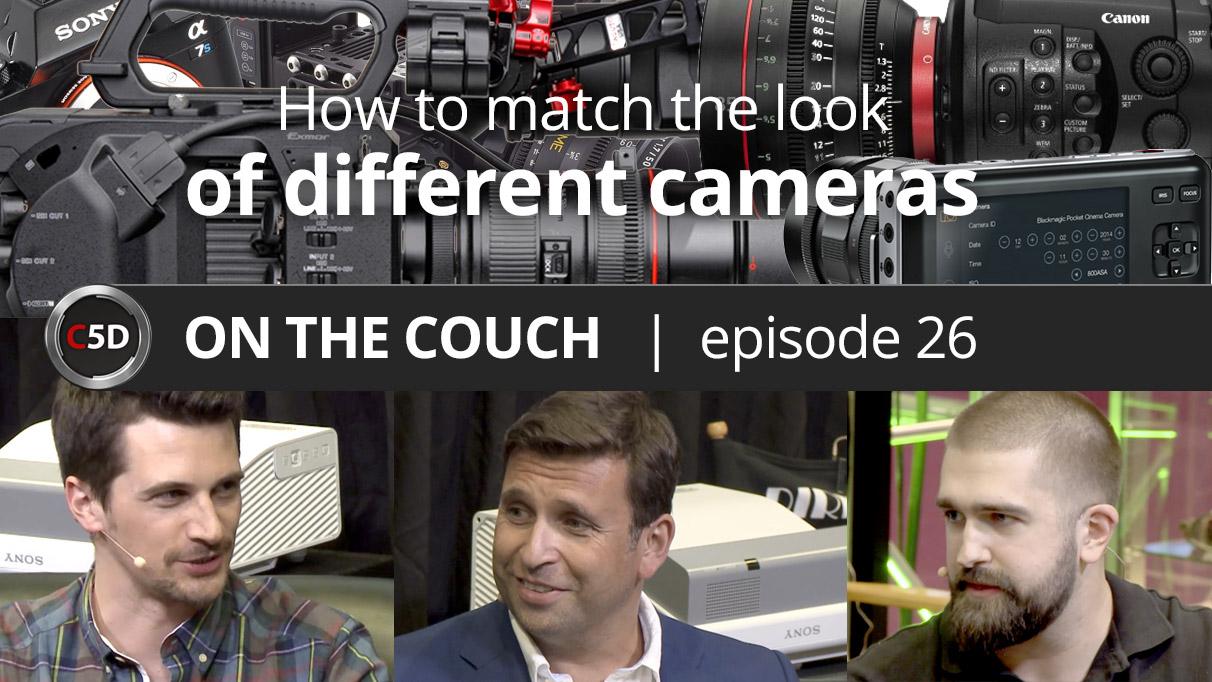
That problem led to SmallHD. Backus and Phillips wanted a useful, affordable monitor for their camera work and built one themselves. The customer and the inventor occupied the same room. A filmmaker could recognize a limitation in the morning and work on a possible solution afterward, without commissioning a presentation about the opportunity.
The Doritos contests helped pay for the transition. After the 2007 advertisement, another winning entry in 2009 brought a $600,000 prize. The money helped finance SmallHD’s growth. A national advertising competition had become a decidedly unconventional source of hardware capital. Most purchasing departments do not have a line marked “win another chip commercial.”
SmallHD’s appeal rested on a practical requirement: a camera operator needs to judge an image while working. By 2019, Backus described a range extending from five-inch DSLR monitors to seventeen-inch production monitors. Outdoor visibility was another recurring concern. A display has a poor claim to usefulness if daylight makes its picture disappear.
In December 2014, Vitec acquired SmallHD. Its announcement reported $8.1 million in SmallHD sales for 2013 and an initial estimated cash consideration of $4.6 million, with additional payment dependent on future performance. Those are company transaction terms. They describe the scale of the business Backus helped build, rather than a personal payday.
The irritation behind the phone
Backus stayed with SmallHD after the acquisition. It was a chance to experience a larger organization after years of building a small one. Eventually, he wanted another product to work on. The next brief would be personal: make something he would use in ordinary life.
At CES, he noticed a phone-grip company selling an accessory built around an elastic band. Its simplicity interested him. A phone was expensive, frequently handled and increasingly large; the device attached to its back could still feel like an afterthought. There was room to spend more attention on a very small surface.
Ohsnap’s own account describes hundreds of prototypes. The ambition was a grip that would be useful when opened and unobtrusive when put away. That description sounds obvious until the requirements begin arguing with one another. A grip needs something for fingers to hold. A pocket rewards flatness. A stand needs stability. The owner expects all of these functions to coexist without requiring a new daily ritual.
This is where Backus’s career becomes less surprising. A field monitor and a phone grip serve different buyers, but both live beside a more expensive device. Both have to earn the space they occupy. The accessory is easiest to appreciate when it removes a chore; it becomes impossible to ignore when it adds one.
“I’m a product designer by trade.”Dale Backus
In his early crowdfunding conversation, Backus explained that he wanted the first grip to carry functionality that might otherwise wait for later versions. He understood the usual argument for shipping a simpler initial product. He also saw the difficulty of asking people to adopt an accessory without enough reasons to keep it attached.
That choice increased the manufacturing challenge. Extra functions have to survive the journey from a working sample to repeatable production at a viable cost. A satisfying demonstration can conceal a lot of unanswered factory questions. The product in a founder’s hand has to become the product in thousands of strangers’ hands.
The part after the applause
Ohsnap launched in 2019. Its first customers then supplied a less welcome kind of feedback: the grip had a failure point and was breaking. International orders made the consequences more expensive because replacements also had to cross borders. The package was small. The obligation was not.
Backus has described redesigning the product and sending replacements to customers. His earlier experience with professional film equipment informed that response. A maker’s relationship with the buyer continues after delivery, especially when the thing delivered stops working.
There is a useful tension here with Ohsnap’s deliberately cheeky advertising. A joke can persuade somebody to watch. A replacement requires the company to remember the person after the joke has ended. The two activities belong in the same business, but they demand different kinds of attention.
Backus’s design interviews return to the connection between product, marketing and operations. These are easy to divide into departments. A customer experiences their combined result: the promise in the advertisement, the object in the box, and the response when something goes wrong. The founder who enjoys designing the object still has responsibility for the other two.
A useful allergy to the CEO costume
His account of an unexpected wardrobe problem supplies a smaller lesson in appearances. Having arrived at work in gym shorts, Backus remembered an important meeting too late to go home. He borrowed a coworker’s trousers for the appointment, then returned them. Corporate polish, briefly, was a shared resource.
He tells the story while arguing for authenticity rather than prescribed executive routines. His approach to difficult problems has another homely reference point: Boggle. Turn the board and a word you missed becomes visible. Changing perspective offers a practical way to keep working when the existing arrangement appears exhausted.
Neither image resembles the usual staged photograph of entrepreneurial certainty. One involves borrowed trousers; the other involves staring at letters. They suit someone whose public story contains a great deal of trial, revision and making do.
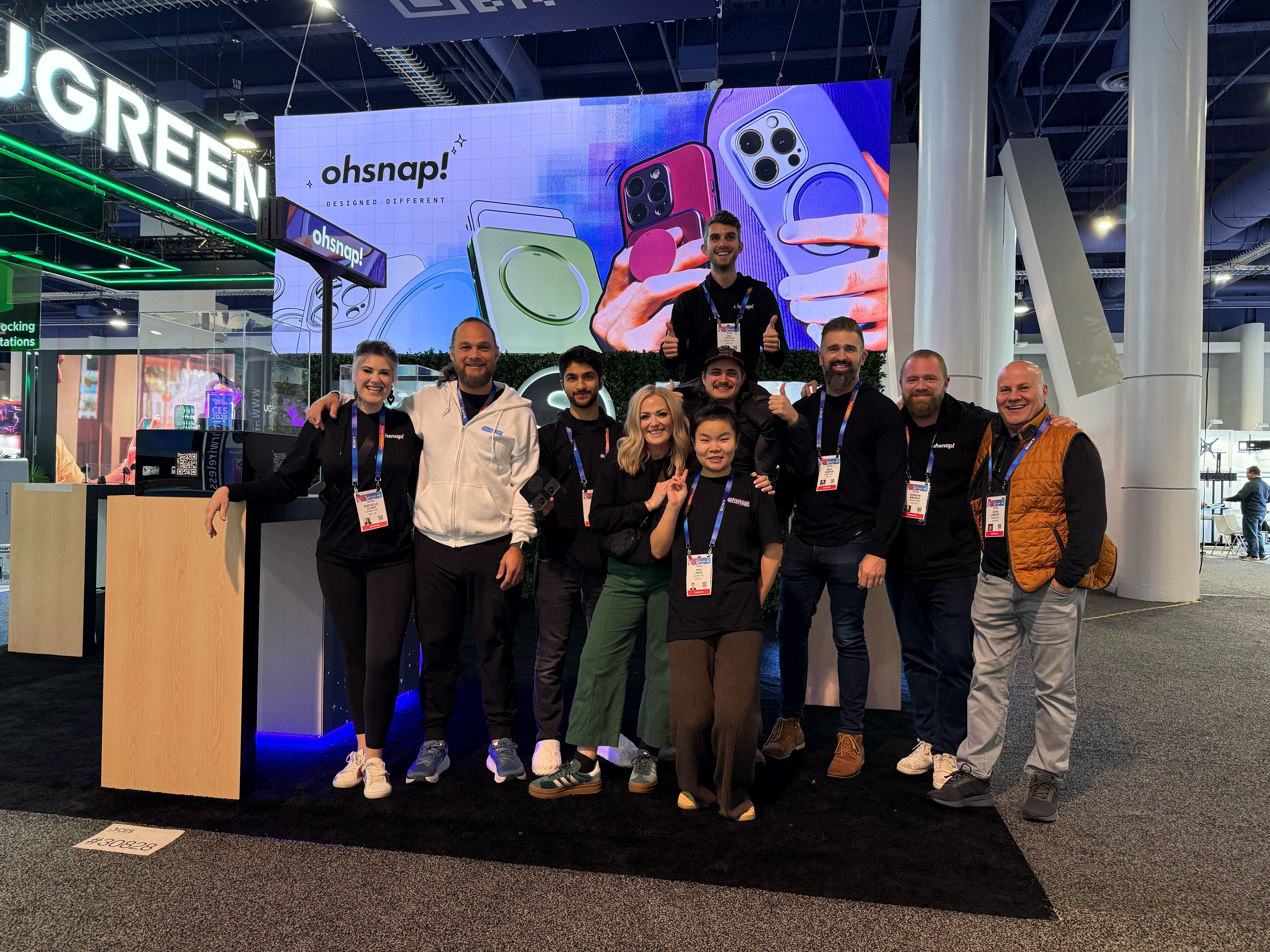
The people around him matter to that process. In hiring, he looks for curiosity and the ability to learn, alongside the skills a particular job demands. His 2024 conversation with designer-recruiter Chris Whyte placed competence and curiosity together. An organization needs people who can do the work and remain interested when the work changes.
A documentary about SmallHD’s early years recorded a similarly close working group. Family members, friends and employees appeared in its credits and production story. Backus’s career has depended on collaborators from the start, beginning with Phillips. The familiar image of a solitary inventor misses an awful lot of names.
Another inventor enters the picture
MCON widened Ohsnap’s brief from holding a phone to playing games on one. The original concept came from Josh King, who built early prototypes and partnered with Ohsnap to develop the controller. That distinction matters: Backus’s newer role includes helping another inventor get an idea into production.
The mechanism attaches magnetically to a phone and opens into a gaming controller. Closed, it aims to remain portable; opened, it provides physical controls. It is another compact object asked to change jobs without inconveniencing its owner. For Ohsnap, it also introduces the demands of a different product category.
16,734 backers · $25,000 original goal
Campaign funding, not company revenue or profit.The campaign finished in February 2025 with $1,776,917 pledged by 16,734 backers. In January 2026, Ohsnap announced MCON’s availability for purchase. The progression gives Backus another product to carry beyond the compelling demonstration and into the less photogenic work of ongoing delivery and support.
He has also talked publicly about eventually selling Ohsnap. In late 2025, he floated 2028 as a possible point to consider an exit, dependent on performance. It was an aspiration with conditions, rather than a completed deal. Building a company and deciding when to leave it are separate design problems.
For now, his career remains attached to a familiar question: could this everyday object work better? A mailbox, a camera display, the back of a phone. Backus keeps choosing places where a person has already learned to tolerate a small inconvenience. Then he gives that inconvenience rather more attention than it expected.
Keep following the thread
- Ohsnap: Backus’s founder note ↗
- Dale Backus on LinkedIn ↗
- Watch: I Made This For Crew interview ↗
- Watch: the early SmallHD documentary ↗
- Listen: WHY DESIGN? with Chris Whyte ↗
- Read: the first Ohsnap crowdfunding conversation ↗
- Read: product design and customer service ↗
- Read: Backus on building and starting again ↗
- Read: Ohsnap’s next chapter ↗
- Explore: Ohsnap company profile ↗
- MCON campaign record ↗
- MCON launch announcement ↗
- SmallHD acquisition announcement ↗
- Camera matching with Backus and Philip Bloom ↗