In 2009, Joy Busse’s design agency had a problem familiar to anyone who has signed a commercial lease: the work could slow down, but the rent had excellent attendance. Client assignments had thinned. Overhead carried on. Busse Design had already survived the dot-com bust. This time, the team found a different expense to remove.
The studio went. The people stayed. It is a small business decision with the shape of a design problem: look again at what the thing is supposed to accomplish, then reconsider which parts it actually needs. An agency needs people who can work together. The office is a possible arrangement.
Busse had founded the consultancy in 1999. The decision a decade later offers a useful entrance to her career because it puts the practical choices ahead of the professional vocabulary. User experience can sound like an occupation devoted to moving buttons around. Here was a founder moving the company around its people.
“rather than laying people off, we laid our studio off.”
Joy Busse, reflecting on the 2009 move
The office had become optional
The distributed arrangement had particulars. Employees worked from different locations around the Bay Area. They had computers, large monitors and reliable internet connections. Dropbox, GoToMeeting and Apple’s messaging tools helped them exchange work. They could still meet in person. The distance was manageable because the working relationships already existed.
What makes that history interesting is its scale. This was a small group of experienced colleagues, adapting a business they knew. Their confidence in one another was an operating condition. A founder could relinquish the daily sight of everyone at a desk because seeing someone work and trusting their work are rather different managerial pleasures.
That choice becomes more revealing beside her later thinking about leadership. In 2022, she argued that managers need to understand how work feels at different levels of an organization. Casual conversations require deliberate effort when colleagues rarely encounter one another. A survey can collect answers; a conversation allows the next question.
There is a demanding version of remote work in that argument. Removing the office leaves leaders responsible for the connections the office once helped produce. The calendar invitation has to do some of the watercooler’s former job. Freedom from the commute does not automatically create a team.
A hummingbird with a technical assignment
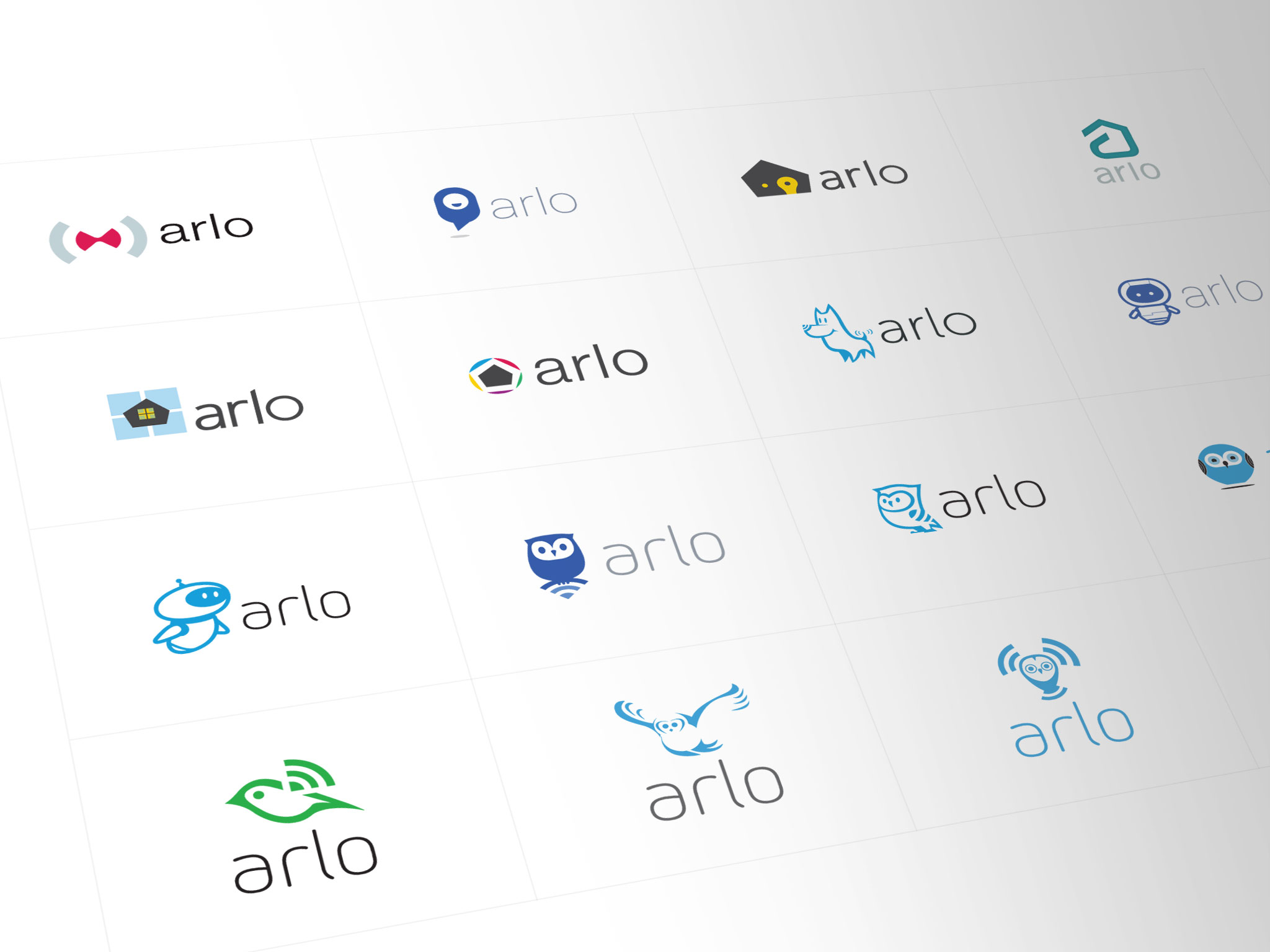
The consultancy’s work made similar demands on interpretation. When NETGEAR wanted an identity for Arlo, its new smart-home product family, the name was already chosen. Busse Design’s task was to give it a personality: approachable, credible and reassuring. A piece of networking equipment was being asked to introduce itself politely.
The team explored animals and personified houses. The eventual hummingbird combined a friendly character with a visual explanation: its wings suggested Wi-Fi, carrying the wire-free proposition into the mark. The drawing had a job beyond being agreeable. It helped say what the product could do and how the company hoped people would feel about using it.
A different client required almost the reverse treatment. Baynote had a recommendation engine that retailers struggled to configure without professional help. The consultancy found that important terminology spoke to developers. Merchandisers needed a conceptual structure that matched their own work. A powerful engine had acquired a language problem.
The team developed an application map, worked through configuration flows and used a clickable prototype in customer interviews. Visual design followed that structure. The sequence matters: understanding the task came before deciding how the finished application should look. Attractive screens alone would have left the original misunderstanding intact.
Eleven weeks, several kinds of translation
Monotype presented another sort of communication problem. Its brand research found that users did not clearly understand the company’s identity and offering. Busse Design was brought in for a responsive website and revised visual identity. The first phase had an eleven-week schedule, with DevBridge developing the content-management system and Libretto working on content.
A site map separated what belonged in the first release from what could follow. Wireframes covered desktop, mobile and tablet layouts, even giving the content team word counts to write against. Three visual directions gave the client choices within a structure already worked out. Typography, of all businesses, still needed someone to organize the words.
For the Council on Accreditation, the design team reorganized the application around process steps. It separated reviewing standards from supplying accreditation information, reflecting the order in which people worked. An overview showed users where they were. Less text and clearer visual waypoints helped turn a complicated procedure into a navigable one.
These engagements belong to a team portfolio. Their interest for a profile of Busse lies in the recurring kind of problem her business accepted: a system could contain the necessary capabilities while making the person using it do too much interpretive labor. Finding a useful structure was part of the design assignment.
Then the designer lets things get strange
There is another Joy Busse to meet alongside the founder and design leader. On her art site she uses the name Joy Annett Busse. Her biography describes professional design as a way to bring structure to complexity. In her art, she deliberately leaves room for outcomes she has not planned.
Nature supplies textures, patterns and unexpected forms. Corrosion and weathered surfaces can become something worth looking at closely. She names her pieces while encouraging viewers to make their own stories from them. The person who helps software communicate clearly is quite willing to let a picture remain mysterious.
Her artistic life also has a collective dimension. Five Ton Crane lists her among its artists and links to her personal site. The group brings together artists, builders, engineers, educators and technologists to make public artwork. Its very name acknowledges a practical fact about ambitious ideas: sometimes someone has to help with the heavy lifting.
In 2018, Busse participated in Women Who Work Together, an exhibition of fourteen artists from the collective at Oakland’s Lost & Foundry Gallery. Sean Orlando selected the artists, and Jan Watten curated the individual works. The setting places her among makers whose shared work crosses the boundaries between visual art and construction.
The following year, her announcements featured Traces at Warehouse 416. Its accompanying text considered the marks people leave on a place amid economic exclusion, gentrification and environmental change. Here observation could end in an open question. The viewer was allowed to linger rather than complete a task and leave.
Her writing about product vision gives that interest in interpretation a workplace application. In 2023, she described visual prototypes as a way for teams to develop a shared understanding before development made changes harder. A verbal agreement can conceal several different pictures. Showing the picture gives people something concrete to discuss.
It is an unglamorous source of disagreement: everyone can use the same words and imagine a different product. A prototype exposes those differences early. In that setting, the designer’s visual skill serves the meeting as much as the eventual interface. People need to understand one another before the software can help its users understand anything.
A library needs people to agree
Busse’s career subsequently took her through Autodesk and VMware, and into the senior director of UX role at Cribl. The work moved deeper into enterprise products: infrastructure, cloud management, observability and developer tools. These are products where users may be technically fluent and still deserve a coherent experience.
A Tanzu Observability project shows how she approached the organizational side. The product needed closer alignment with VMware’s Clarity design system, but its different interface framework complicated adoption. The team set up a four-day virtual offsite, splitting time between full-group discussions and smaller groups that suited different time zones.
They worked on a shared Figma library, reviewed changes and recorded decisions. Personal presentations helped colleagues know one another better. Six more weeks of meetings followed before the updated library was released. A four-day sprint makes a satisfying calendar entry; the follow-through is where the library becomes usable.
- AuditFind inconsistent patterns
- Work togetherFour-day virtual offsite
- ReviewContinue for six weeks
- MaintainKeep decisions accountable
In her 2023 writing, Busse also considered how technical products should distribute complexity. Core tasks could sit in the graphical interface, with advanced capabilities available through APIs and command-line tools. That arrangement gives different users different ways into the same system. Simplicity requires choices about where things belong.
Before the machine makes the screen
By August 2026, her attention had turned to AI-assisted product creation. A three-part series addressed an old design concern under faster conditions: a plausible interface can arrive before anyone has established that it solves a useful problem. Busse argued for involving UX in those early decisions, while the assumptions are still changeable.
Her proposed involvement varied with the work. Straightforward tasks could use reusable guidance; more complex work needed structured framing and research; strategic bets called for deeper partnership. The point was to apply design judgment where it could influence what got made, before an attractive demonstration hardened into a product commitment.
The next installment treated design systems as infrastructure that people and AI tools could both use. Terminology, interaction behavior, patterns and maintenance needed to accompany visual components. The third explored interactive personas grounded in research, with a clear boundary: they should help teams examine evidence and uncertainty without replacing primary research.
Across these changes, the question of what to preserve keeps returning. In 2009, the team was worth preserving even when the studio became unaffordable. In a brand, a workflow or a component library, the useful relationships need deliberate attention. Now software can appear with remarkable speed. Busse is still asking people to look closely before deciding what belongs.