Most software waste begins with a sentence that sounds perfectly responsible: “Let’s start building.” The developers open tickets, the roadmap gains reassuring rectangles and a product slowly hardens around an idea nobody has properly tested. Pepperplane, a small UX and UI studio with roots in Johannesburg and a base in North Carolina, makes its living interrupting that sequence. Its preferred opening move is not a mock-up. It is a question: what problem are we solving, for whom, and what evidence says this is the right version of it?
That sounds like ordinary design doctrine until money and deadlines enter the room. Pepperplane’s argument is commercial. A rough wireframe is cheap to abandon. A coded feature, threaded through a live product and defended by the people who built it, is not. The studio’s website now reports more than 350 shipped projects, a 5/5 client rating and over nine years helping software teams. The interesting number is not the pile of screens. It is the amount of engineering effort those screens were meant to spare.
01 / The interventionThe screen is the receipt, not the purchase
Pepperplane sells UX research and strategy, interface design, prototypes, design systems, branding and usability testing. But listing those services misses the shape of the work. A typical engagement moves from a briefing and strategy session into discovery, user journeys, rough prototypes, polished interface work, then testing and revision. The studio also offers UX assessments for existing products and ongoing support for teams that need a remote design function without hiring one.
The first failure it is hired to confront is often not visual. It is misalignment. A founder sees a growth feature; operations sees a new exception queue; developers see dependencies; the customer sees another unfamiliar button. Pepperplane puts those interpretations on the same table early. Its own writing describes the moment when two teams discover that they have been using the same word for different workflows. That is not glamorous portfolio material, but it can prevent an entire sprint from becoming an expensive translation exercise.
- Brief the outcome
- Research reality
- Map the journey
- Prototype cheaply
- Design the system
- Test and iterate
“The polished screens are the smallest part of the story.”Pepperplane, on the work before UI
Cobble, a social-planning app, offers the clearest example. Pepperplane interviewed users, compiled the findings, ran workshops with the client, drew detailed wireframes and iterated with stakeholders. The first assignment produced a user report and recommendations. The relationship then expanded into design work on priority areas and, eventually, a new experience for a future version of the app. What changed the client’s mind was not a dramatic reveal. It was accumulated evidence that the old experience could be reconsidered coherently.
Klink arrived with a different knot: make the long, anxious process of saving for a home feel actionable. Pepperplane helped turn incomplete ideas into a mobile experience that uses goals and game mechanics to encourage better saving and spending. Co-founder Simon Groll said the team did more than execute - it challenged the brief and helped refine the product. That sentence explains Pepperplane’s desired position in the market. It does not want to be the pair of hands that colors a settled answer.
02 / Complexity, translatedForex, health studies and a Bible with a sandbox
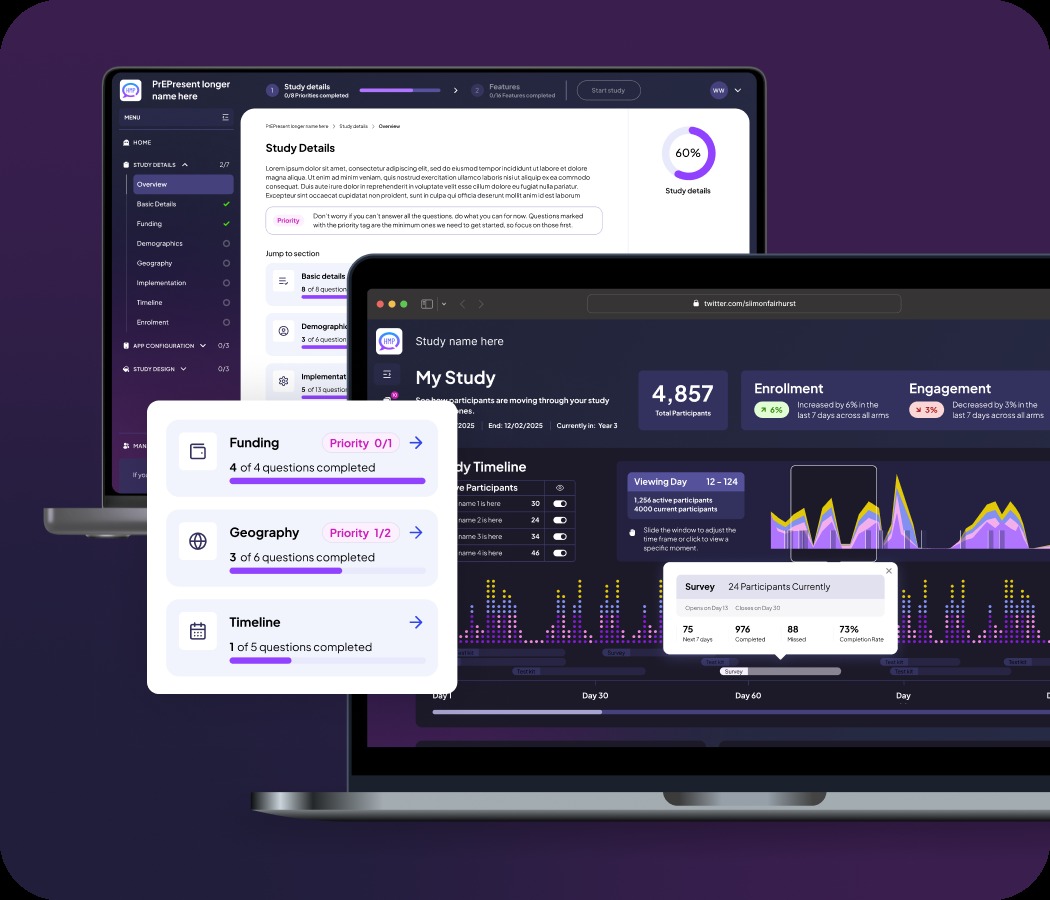
The portfolio ranges widely, but the recurring problem is easy to spot: products in which complexity leaks onto the user. Future Forex needed to make an opaque and intimidating financial process feel transparent. HealthMpowerment helps research teams turn grant-funded digital health studies into participant apps backed by an administrative portal. AURA coordinates people, properties and emergency responders. Airluum tries to organize memories that arrive as conversations, photographs and half-remembered family stories. Each product has more states, consequences or emotions than a pleasant landing page can solve.
Pencil Bible may be the most charming demonstration. The iPad app lets readers write, highlight and doodle beside scripture with an Apple Pencil. More annotation tools created more freedom, but also more ways for a hesitant user to worry about making a mess. Pepperplane’s answer was Playground Mode, a sandbox for trying pens, shapes, highlights and colors before touching the real page. The lesson travels well: when experimentation carries perceived risk, do not add another tooltip. Make mistakes harmless.
That work also shows what Pepperplane can and cannot credibly promise. Good UX can reduce hesitation, reveal priorities and make complicated tasks intelligible. It cannot rescue a product with no demand, a business that will not expose its assumptions, or a team unwilling to put prototypes in front of actual users. The studio’s method depends on access: to customers, stakeholders, constraints and the people who will build the result. Starve the process of those inputs and it collapses back into decoration.
03 / The small-studio wagerRent judgment instead of adding headcount
Pepperplane is privately held and bootstrapped. LinkedIn lists between two and 10 employees; a founder profile puts the team between five and 10. The company does not publish a rate card. It sells scoped projects and longer partnerships, invites prospective clients to a free 30-minute strategy call, and advertises a limited number of free assessments each month. In other words, the assessment is both a useful diagnostic and a low-friction way to prove how the studio thinks before a buyer commits to a larger brief.
Its customers tend to be founders, product owners, development agencies and creative studios whose software ambitions exceed their design capacity. That puts Pepperplane between three common alternatives: hire a permanent in-house team, commission a full-service agency, or hand isolated tasks to freelancers. The studio’s pitch is narrower. It can join the working team, supply research and product judgment, build the design system and stay through iteration, without asking the client to construct a design department first.
Repeat work is its strongest evidence. A StackPath executive said he relied on Pepperplane across three companies and much of a decade, including when an internal team needed overflow help. European web agency Amyma said Marié Whittington and Annette had created designs for more than 100 of its clients over seven-plus years. Demand Conversion described Pepperplane as a partner from the naming and brand through the full digital customer experience. These are not vanity trophies. They describe a business built around becoming familiar enough with a client to ask better questions the next time.
Before approving a feature, write down the user, the observable problem, the business outcome, the cheapest prototype and the evidence that would kill the idea. If the team cannot agree on those five lines, the interface is premature.
The remote structure helps. Pepperplane says its team spans multiple time zones, with public locations in South Africa and Charlotte, North Carolina. Remote work gives clients broader coverage, but it also forces the studio to make decisions visible through workshops, journey maps, prototypes and design systems. Those artifacts are not administrative exhaust. They let a founder, developer and researcher inspect the same proposed behavior without relying on whoever speaks loudest in a meeting.
04 / AI changes the bottleneckFaster production makes better questions worth more
The design market is being squeezed by templates, no-code builders and generative tools that can produce plausible screens in minutes. Pepperplane’s response is not to pretend the tools do not work. Whittington says the studio has been experimenting with hybrid design-and-development sprints, where buildability can be tested before decisions are final and feedback no longer waits for a ceremonial handoff. If screens become cheaper, then choosing the right screen becomes the scarce skill.
That is an attractive thesis, with a catch. Research-led design takes participation. A client expecting instant certainty may resent interviews and workshops. A tiny, low-risk marketing site may not justify a multi-stage discovery process. A heavily regulated product still needs legal, security and domain expertise beyond interface design. And when a company already has mature research and design operations, Pepperplane must complement them rather than recreate them. The studio works best where the cost of building the wrong thing is meaningfully higher than the cost of pausing to investigate.
Pepperplane’s own change over time reflects the argument. Earlier public descriptions emphasized a broad creative menu - illustration, print, animation, front-end development and branding. Its current positioning is much tighter: UX design for software teams, with research and strategy at the front. The multidisciplinary ability remains, but the sales story now begins with wasted sprints and unclear direction. That is a useful narrowing. Buyers do not wake up wanting a design system. They wake up wanting the product meeting to stop producing five definitions of the same feature.
The reader can borrow the method without hiring the studio. Talk to users before naming features. Put operations and engineering in the same discovery room. Draw the journey before decorating the screen. Build a disposable prototype. Give anxious users a playground. Define the evidence that would change your mind, then go looking for it. Pepperplane’s paper-plane metaphor is cute, but the practical idea underneath it has weight: the cheapest flight correction is the one made while the aircraft is still cardboard.