A tax consultancy is an unlikely place to look for a story about design. Its raw materials are obligations, calculations and deadlines. Yet that is where John Keese’s portfolio gets interesting. Between 2019 and 2022, he led an account and delivery team working with Ryan. In February 2025, his online résumé records a different relationship: VP of User Experience at the same firm. The former client had become the next chapter.
That sequence gives the company listing called Freelance Web Developer a more useful identity. The linked website is Keese’s personal design portfolio, covering independent work and a career inside other organizations. Read it as the record of a practitioner who moves between making interfaces and helping teams make decisions. The interesting product is the way those two activities connect.
- The work. UX research, product design, interfaces and design leadership.
- The range. Consumer shopping, retail delivery and enterprise software.
- The turn. A consulting engagement at Ryan preceded an executive role there.
Seven apps, one relationship
Keese’s Ryan account describes more than three years, 26 consulting team members and at least seven applications. He interviewed clients across eight states. Those numbers describe an engagement, rather than the size of his freelance business. They also suggest a different unit of design: several products, multiple stakeholders and a relationship that has to survive beyond a presentation.
Engagement scope reported in Keese’s portfolio.
For a buyer, the distinction matters. A single screen can look persuasive in isolation. A family of applications has to agree about navigation, language and familiar actions. The practical question becomes whether the next team can build on the last team’s decisions. Ryan’s current website places tax technology alongside its advisory services, making software part of how the firm delivers its expertise.
A screenshot was already a shopping list
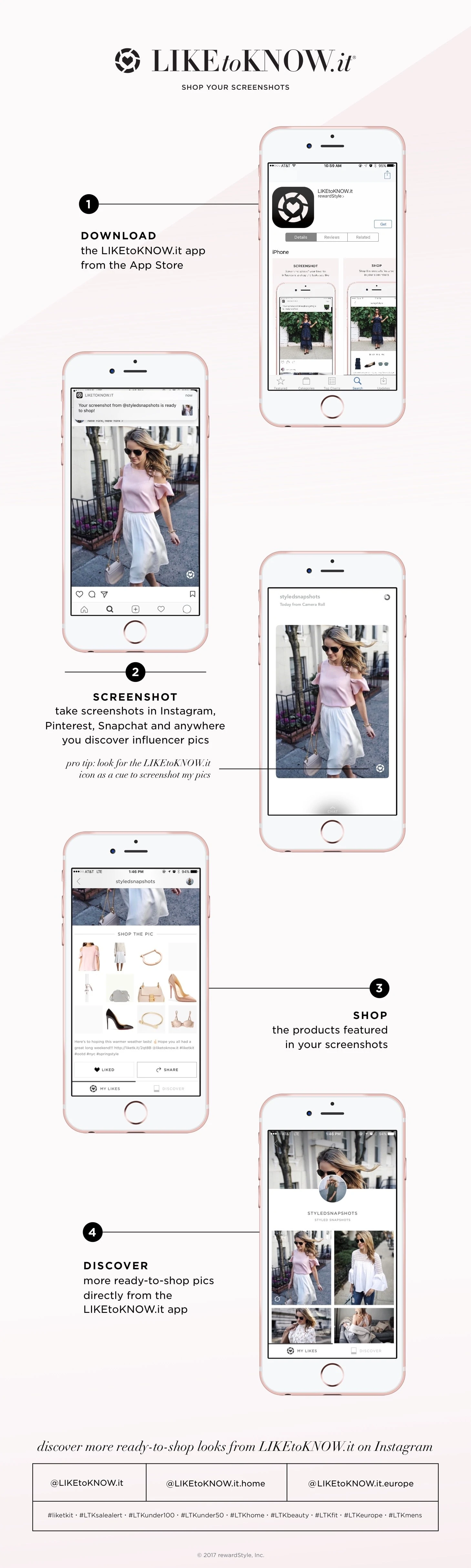
Earlier, Keese worked at rewardStyle, contributing to LIKEtoKNOW.it’s shopping app. Its 2017 launch turned a familiar phone gesture into a route to products: take a screenshot of an enabled image, then find its shopping details. A launch-day guide from Styled Snapshots walked readers through the process. The action was ordinary enough that the explanation could start with something shoppers already did.
There is an appealing lesson here for anyone commissioning an app. Before asking people to learn a new routine, look at the workarounds they have invented. A saved picture can contain a wish, a reminder and a purchase question. Giving that picture somewhere useful to go is a smaller behavioral leap than persuading somebody to begin an entirely unfamiliar ritual.
Open the 2017 app walkthrough
The commercial customer and the person tapping the screen are different audiences. LTK’s own account describes a business that helps creators earn commission from recommendations. The shopper needs a clear route to an item; the creator needs that recommendation to remain economically useful. Keese’s contribution sits inside a team-built product serving both sides. The transferable idea is to examine whose needs each step actually serves.
Make the next screen belong
At 7-Eleven in 2017 and 2018, Keese describes creating a visual style consistent with the retailer’s branding and applying it across screens already underway and those still to come. The assignment concerned ordering and delivery. Its understated achievement was coherence: many moments in an interface needed to feel as though they belonged to the same business.
This is where a design system earns its place in a budget. In principle, reusable patterns reduce the number of decisions a team must reopen. They can also make exceptions easier to spot. That is an editorial reading of the work, rather than a measured saving from this project. The useful buying question is specific: which recurring decisions will this system help our teams settle?
- 01UnderstandResearch the task
- 02MakeDesign the interaction
- 03RepeatShare useful patterns
A way to interpret the portfolio, not a proprietary process.
A strong opinion needs an exit
Keese’s published philosophy gives this approach some texture. Curiosity comes first. He describes holding informed opinions while remaining ready to abandon them when better information arrives. He pairs discussion and testing with a bias toward action. That is a useful operating tension: enough conviction to make something, enough humility to revise it.
“Listen, consider, act, measure, and adjust”
John Keese / Philosophy
For a reader trying to copy the approach, the sequence is manageable. Ask what someone is trying to accomplish. Build a small representation of the proposed answer. Put it in front of the people involved. Compare what happens with what the team expected. Decide what to change. These are suggested applications of his philosophy, not a claim that every portfolio project followed an identical method.
The approach requires access to people and permission to alter the work. Where a contract fixes every decision before research begins, new information has little room to matter. Where nobody owns the shared patterns after delivery, consistency can erode. A buyer should therefore discuss participation, decision authority and upkeep alongside the visible deliverables.
The service includes the team
The market position is broader than the listing’s name suggests. A freelance developer, a specialist product studio and an internal design team can all be alternatives, depending on the assignment. Keese’s record crosses individual contribution, research, interface design and leadership. His services belong in that space between making a digital product and improving the organization’s ability to keep making it.
This is a services proposition: clients commission expertise and project work. A useful brief would separate discovery, prototypes, production design and team support, then attach responsibilities and acceptance criteria to each. Treat that as purchasing advice, not a published package. The portfolio’s engagement counts describe effort and scope; they do not establish what another project should cost.
Research without the research department
In May 2025, AIGA Dallas listed Keese as moderator for a discussion on conducting UX research without a dedicated researcher. The topic neatly extends the story. Research becomes something a working team must learn to do, rather than an activity reserved for a separate department. His public hiring post likewise framed the task around improving life for team members and customers.
That leaves a useful test for any design commission. After the attractive screens arrive, can the team explain its choices, question them and improve them? Keese’s portfolio invites that question because its most interesting chapter continues inside a former client. For the buyer, the next conversation should begin with the problem the organization wants to understand.
Follow the work
Explore Keese’s portfolio, his career timeline and leadership philosophy. Find him on LinkedIn and X.
Revisit the 2017 app walkthrough, explore LTK today and Ryan’s tax technology business, or read the AIGA Dallas event listing and Keese’s design-team hiring post. His animation talk slides explore motion in interfaces.