The route to a large marketing job can begin with a very small form of defiance. Lina Polimeni wanted music and film. She had grown up in Rome, studied political science in Italy and crossed the Atlantic for graduate business school in California. The entertainment industry, however, appeared to run on connections she did not have. So she cold-called an internship at the Motion Picture Association, got it, and kept looking for a way to make creativity carry real weight.
The eventual route was pharmaceutical sales. A how-to book promised a quick path into the field. Polimeni has said it took five months rather than the advertised few days, but the effort produced two offers. One came from Eli Lilly and Company. She joined in 2004, planning to move toward marketing, and headed to Indianapolis.
More than two decades later, that detour looks like an apprenticeship. As Lilly’s Senior Vice President and Chief Marketing Officer - Consumer, Polimeni now leads a brief that spans the corporate brand, product advertising, media, sponsorships and entertainment partnerships. The person who once stood outside Hollywood’s network now works across film festivals, awards shows, sports and documentaries. She did not find a shortcut into culture. She learned how a complex company moves, then widened the places where it could speak.
A classical education in making a scene
Polimeni’s attraction to story started before the job titles. In Rome, she followed a classical secondary-school track shaped by Latin, ancient Greek, drama and art. She wrote constantly. At 11, some of her work appeared in Italian newspapers. She also assembled cousins for homemade shows. There was always, in her telling, a show.
That background gave her a broad definition of creativity: the ability to look at present reality and imagine how it could be different. It also gave her a taste for scale. Her father, a military commander and engineer, used to tell her that she was incapable of average efforts. The phrasing carried both pressure and permission. Years later, Polimeni would describe the work she is best at in four blunt words: “My strength is in revolution.”
“My strength is in revolution.”Lina Polimeni on creative leadership
Inside Lilly, revolution arrived as a series of operating assignments. She helped stand up social media in a regulated pharmaceutical environment and established a Multicultural Marketing Center of Excellence. She served as regional brand leader for Cialis across Australia, Canada and Europe. She worked on direct-to-consumer campaigns, consumer marketing in the diabetes business and the launch of Taltz with consumers. Each role added a different muscle: listening in the field, translating across markets, building a capability before it had a familiar box on the chart.
Culture is a room, not a backdrop
The corporate brand work brought those lessons together. Lilly began appearing around the Olympics and Paralympics, the Oscars, the Grammys, Sundance and primetime sports. Polimeni’s logic is disciplined. A large cultural moment supplies reach, but reach alone is not a strategy. The message also has to belong in the conversation people are already having.
That distinction explains one of her more unusual projects. Lilly commissioned research with the USC Annenberg Inclusion Initiative into how common conditions appear in popular film and television. The work found a wide gap between everyday life and what reached the screen. Polimeni then helped move the finding from report to production: creator guidance, partnerships with entertainment companies and the Vital Stories program for emerging filmmakers.
Three shorts from that program premiered at the Tribeca Festival in June 2026. Participants received workshops, mentorship, development support and a practical toolkit. Creative choices remained with the filmmakers. That last detail matters. If a company wants better stories, control can become the enemy of the result. Lilly’s role was to supply knowledge and resources, then leave room for characters to be full people rather than instructional devices.
The same approach runs through her advertising philosophy. She wants the corporate brand to earn trust across time, while each appearance justifies itself in the moment. Her stated ambition is simple: make Lilly a brand people love and trust. The interesting word is brand, without a qualifying category attached. It is a bid to be judged by the same standards as every other participant in culture: clarity, relevance, emotional truth and the ability to make someone care.
The work also depends on an unglamorous skill: staying present through review. Pharmaceutical creative passes among marketers, medical experts, scientists and lawyers before the public sees it. Polimeni has described coming out of those conversations energized enough to start them again. The shared subject gives disagreement a center. Marketers bring what they know about people’s hopes and fears. Scientists bring what the evidence can support. Review becomes a place to improve the translation rather than sand away every edge.
Her collaboration with Wieden+Kennedy sharpened that model. Polimeni has called it the most involved she had been in the full creative process during her first 20 years at Lilly. Instead of receiving a polished set of options at the end, client and agency worked inside the uncertainty together. It is a revealing preference. Her taste runs toward teams willing to get their sleeves into the unfinished work, where a large idea can still be argued with, rescued or rebuilt.
The compass and the room
Polimeni’s leadership language combines movement with orientation. She defines a leader as someone who helps a group see one destination and want to go there together. The dream must be tangible. The team must have agency. Ambition without companionship is merely a private performance.
Her own symbol for orientation is a compass. When she left Italy, her father gave her a sea compass and told her that a parent could offer a harbor, but the voyage and the sense of north had to be hers. Polimeni later made that idea permanent: a compass tattoo beneath “Tu,” the Italian word for “you.” It is an unusually compact management diagram. Know the destination. Know the people traveling with you. Know which direction remains yours.
A leader translates an imagined destination until the team can see it, test it and choose to move toward it.
Advice develops talent. Sponsorship puts a name into the consequential conversation before the candidate enters the room.
That second principle has become one of her most portable ideas. Women, Polimeni argues, are frequently over-mentored and under-sponsored. Mentors offer counsel. Sponsors take a reputational risk: they recommend someone for an opening, push a name forward or vouch for ability before every box has been checked. Her point is not to retire mentorship. It is to notice when advice has become a polite substitute for access.
Polimeni serves on the MMA board, the ANA Media Committee, the Adweek Diversity and Inclusion Council and the ColorComm board. She has also worked as an executive mentor. The board seats and mentorship matter less as résumé ornaments than as extensions of her operating belief: the door should remain open behind a leader. In a long career inside one institution, building successors is one way to keep the institution from becoming static.
A 23-year overnight story
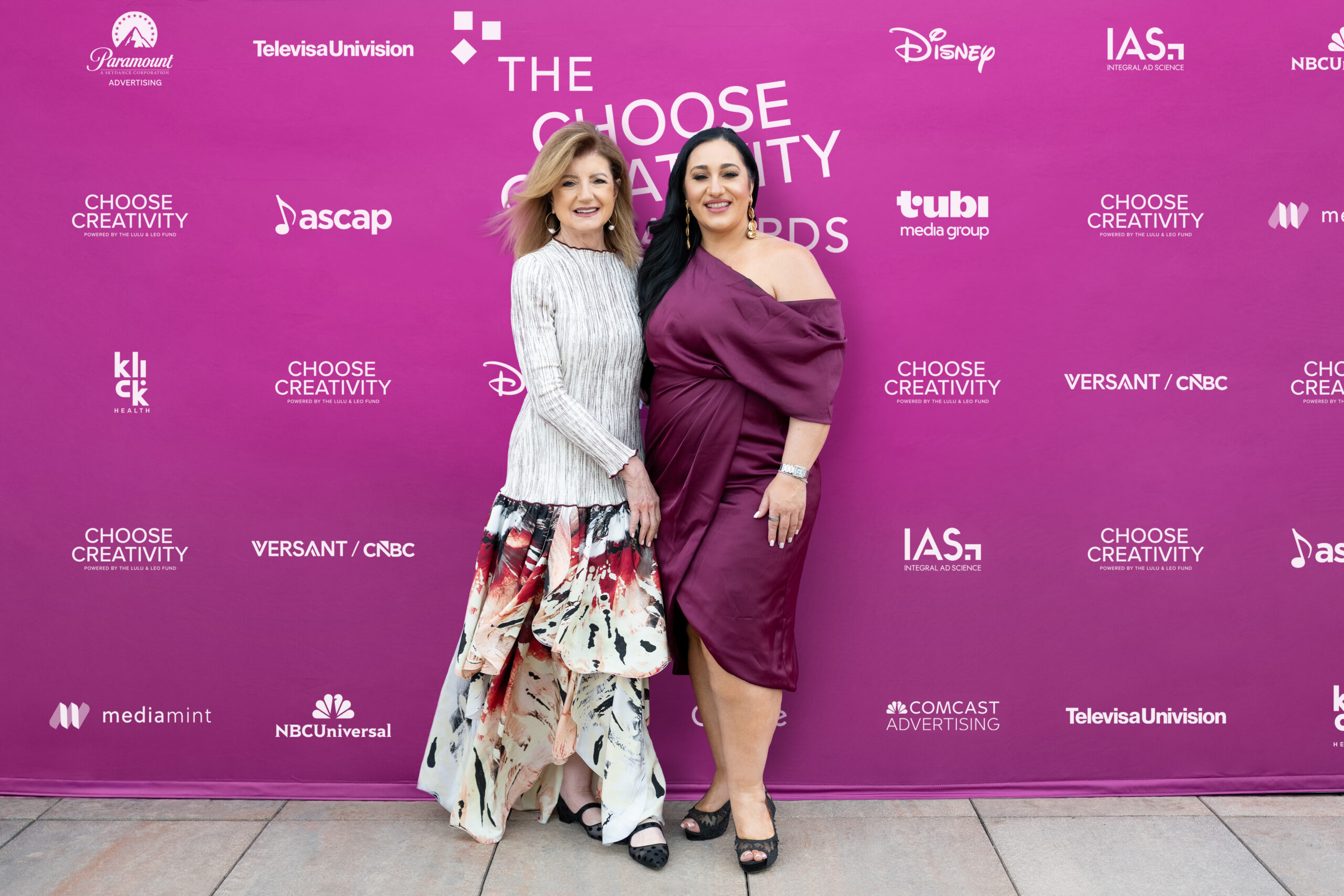
Industry recognition has accumulated: Ad Age Woman to Watch, MM+M Woman to Watch, Campaign US’s 2025 CMO 50, Fierce Pharma’s 2025 Fiercest Women in Life Sciences and the 2026 Choose Creativity Award for Inspired Leadership. She has served as a juror for Clio Health and Cannes Lions. The work her teams led has received multiple Effie Awards.
Awards can compress a career into a flattering instant. Polimeni’s path resists that edit. It includes sales calls, capability building, multinational brand work, regulated reviews and the slow negotiation required to place new ideas inside an old company. Even her original entertainment ambition came back sideways. She did not become the filmmaker she once imagined. She became an executive who can fund research, convene studios and help emerging filmmakers put more recognizable lives on screen.
There is something useful in that loop. A career does not always return the first dream in its original packaging. Sometimes it returns the underlying desire at a scale the younger version could not yet name. The child in Rome wanted to write, stage shows and imagine a reality bigger than the one in front of her. The executive in Indianapolis still does that. Now the cousins have been replaced by agencies, scientists, filmmakers, athletes and a global marketing team.
Attention is rented. Trust is accumulated.The operating logic behind the cultural brief
The next chapter is less about adding another venue than deepening the contribution. Vital Stories is continuing to support its first projects as they move toward longer-form development. Lilly’s cultural calendar will keep offering crowded rooms. Polimeni’s challenge is to enter those rooms with work that holds up after the event ends.
Her career offers a grounded lesson for anyone trying to make a large organization more imaginative. Big change rarely begins with permission to reinvent everything. It begins with a role that teaches the customer, another that reveals the system, and a leader willing to connect them. Keep the dream large. Make the route legible. Find sponsors, then become one. And carry a compass for the moments when success creates more directions than clarity.