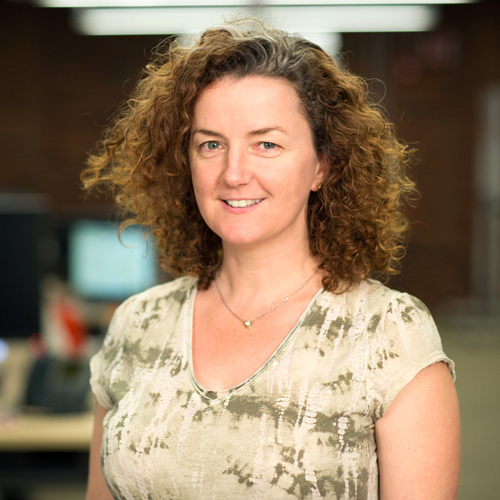
The Cassandra of 140 Characters
In August 2007, Laura Fitton met Guy Kawasaki and told him Twitter was going to transform how businesses communicate. He thought she was out of her mind. She was not.
She describes that encounter as "like being Cassandra at Troy." She could see exactly what was coming - a platform where the shortest message wins, where listening beats broadcasting, where a single mother in Boston with no established professional network could build a global community of 120,000 people who genuinely liked each other. She just had to convince everyone else first.
That job took about three years. By 2009, she'd founded the world's first Twitter-for-business consultancy, built and sold a Twitter app marketplace for $2.25 million in funding (and an undisclosed acquisition price to HubSpot), co-authored Twitter for Dummies with a foreword signed by Jack Dorsey himself, and pioneered the first "donate by tweeting" charity campaign. Ford, Johnson & Johnson, IBM, and Anthem Healthcare were all clients. Seth Godin put her in a book without telling her.
Listen first. Treat the followers you do have really, really well.
- Laura Fitton, @PistachioWhat makes this story strange is how it started. She wasn't a tech insider angling for a platform. She was a single mother of two children under the age of two, newly arrived in Boston, with no local professional connections and a lot of time stuck at home. Twitter was something to do during nap time. The community that formed around her - curious, generous, useful - surprised everyone, including Fitton herself.
"Why are you guys following me?" she once asked her early audience. "What do you want? Hi. I'm just a single mom with these cute babies."
That candor - the willingness to just say the strange true thing out loud - is the thread that runs through her entire career. It explains why Jack Dorsey wrote her foreword. It explains why HubSpot bought her company. It explains why, after two years of Long COVID that limited her to two or three productive hours per day, she came back and started evangelizing climate solutions with the same energy she once aimed at a website about short messages.
@Pistachio Before Twitter Was a Thing
The handle came first. Long before Twitter existed, Laura Fitton was @Pistachio in other corners of the internet - a small, green, unexpectedly good thing hidden inside a tough shell. She brought the identity to Twitter when the platform launched, and it fit.
She relaunched Pistachio Consulting - the world's first Twitter-for-business firm - on the same week Lehman Brothers collapsed. Forty thousand dollars in signed contracts evaporated in days. She launched anyway.
Pistachio Consulting was not a pivot or a hedge. It was a bet made under terrible conditions, by someone who had already survived a medically fragile infant in the NICU, a sibling's suicide, and a child welfare investigation after her daughter broke her arm. The economic crisis of 2008 was just another obstacle in a decade of them.
Her clients came because she understood something basic about the platform that most businesses still don't: Twitter rewards listening. Not broadcasting. Not follower counts. Not editorial calendars. Listening - genuine, patient, interested listening - to what the community around you actually needs.
Ford Motor Company hired her. Johnson & Johnson hired her. IBM hired her. This was before any of those companies had a social media team, before "community manager" was a job title, before a single Fortune 500 CMO had personally sent a tweet.
The December 2008 @WellWishes campaign for Charity:Water was the moment the playbook crystallized. Fitton organized the first-ever "donate by tweeting" charity campaign - $25,000 raised, five wells funded in the developing world, and a template that the entire nonprofit sector would eventually copy. Nobody had tried it before because nobody had thought Twitter could do that yet.
She knew it could. That's the whole story of @Pistachio.
oneforty: The App Store Twitter Never Built
In 2009, with Twitter's ecosystem exploding with third-party tools and nobody organizing any of it, Fitton founded oneforty.com. TechCrunch called it "the app store for Twitter." The name referenced the original character limit.
The concept was simple: a comprehensive marketplace for discovering, rating, buying, and sharing Twitter applications and services. The execution was harder. Building a business on someone else's platform means you're always one API change away from obsolescence. Fitton knew this. She built it anyway, raised $2.25 million - one of TechStars' highest-funded rounds at the time - and spent three years proving the model.
The HubSpot Deal
In August 2011, HubSpot acquired oneforty. The entire team relocated to HubSpot's Cambridge, MA office. Financial terms were not disclosed. HubSpot grew to 285 employees overnight. The oneforty directory became the HubSpot App Marketplace - which still exists today.
Rumors had circulated that Twitter itself might buy the company. Instead, HubSpot made the move - and Fitton spent the next eight years as HubSpot's Inbound Marketing Evangelist, which turned out to be a more interesting job than it sounds.
She restarted HubSpot's PR function. She ran INBOUND's Bold Talks stage for five years. She built HubSpot's influencer relations program. She lectured at Harvard Business School, MIT-Sloan, and Cornell. She contributed prolifically to HubSpot's marketing and sales blogs. She managed speaker programs for one of the fastest-growing marketing conferences in the world.
By the time she left, in 2019, she'd been doing the same thing she'd always done: showing people that a new communication medium could do something they didn't think it could do. First Twitter. Then inbound marketing. Next: the climate economy.
Twitter for Dummies - With a Foreword by Jack Dorsey
Most business books about a platform get written after the platform wins. Fitton co-authored Twitter for Dummies while the outcome was still very much in question. The first edition, co-written with Michael E. Gruen and Leslie Poston, came out in 2009 with a foreword signed by Twitter's co-founder Jack Dorsey. The book went through three editions. Subsequent editions brought in HubSpot colleagues Anum Hussain and Brittany Leaning.
The book taught roughly 20 million people how Twitter worked - not technically, but practically. How to find your community. How to listen before you speak. How to turn 140 characters into actual professional relationships.
Seth Godin, meanwhile, had included Fitton in his 2008 book Tribes: We Need You to Lead Us without mentioning it to her in advance. "Seth Godin included me in a book about leading tribes," she said later, "and I didn't even know he knew who I was."
Fast Company named her one of the Most Influential Women in Technology in 2010. Mashable put her on the list of 44 Female Founders Every Entrepreneur Should Know. PepsiCo gave her a Women's Inspiration Network Award. MassHighTech named her a Woman to Watch. She was quoted in more than 50 national publications: the Wall Street Journal, Forbes, Fortune, Newsweek, BusinessWeek, the New York Times Magazine.
The Climate Economy: Same Playbook, Higher Stakes
In 1991, Laura Fitton was a student at Cornell, taking science writing with Carl Sagan, and she wrote a paper on climate change. This was not a popular topic. This was three decades before ESG became a Bloomberg category.
She graduated magna cum laude from Cornell's College Scholar Program, a self-designed interdisciplinary track that didn't offer the combination she wanted - environmental science and public policy - so she invented her own major. During high school, she'd organized her first environmental march on the state capital. In college, she served on the national council of the Student Environmental Action Coalition. She was one of the only high schoolers involved at the national level.
Then she spent 25 years doing something else. Marketing consulting. Twitter evangelism. Inbound marketing. All of it, it turns out, was preparation.
For more than 30 years, the science has been crystal clear.
- Laura Fitton on climate changeIn October 2019, Fitton founded The Enough Company (enough.co). The premise: the climate fight doesn't need more awareness. It needs market-driven growth. It needs founders who can tell the right story to the right investors, operators who can build the right partnerships, communicators who understand how ordinary spending decisions, bank accounts, and investments connect to climate risk and climate solutions.
That's exactly what Fitton does. Pitch development. PR. Communications. Content. Community. Marketing strategy. For climate startups, she's the same person who explained Twitter to Ford Motor Company in 2008 - just with different stakes.
The launch was complicated by Long COVID. From March 2020 to May 2022, she was limited to two or three productive hours per day. She kept going. The tagline on her personal website in 2025 reads: "Let's Talk Stakeholder-Led Growth."
Stakeholder-led growth is what she's always practiced, actually. The first @WellWishes donors were stakeholders. The early Twitter business community were stakeholders. The HubSpot INBOUND audience were stakeholders. She just has a cleaner name for it now.
What She's Actually Like
Fitton describes herself as someone for whom luck is my superpower. This is a deliberate understatement - a way of honoring the serendipity that put her in certain rooms at certain moments while obscuring the hours of work that got her into those rooms in the first place.
She is publicly candid about her failures in ways that are still unusual in tech founder culture. She's described losing $40,000 in signed contracts the week she launched her consultancy. She's talked openly about a decade of personal adversity that would have derailed most careers. She's acknowledged that, for all her skill at speaking to large rooms, she found managing small teams genuinely difficult - "socially tone deaf in close team settings," she's said.
Outside of work: she plays ice hockey. She practices Ashtanga yoga. She surfs and snowboards and rock climbs. She sailed blue water on a schooner. She was once a chef. She ran a hobby farm. She raised a niece.
The sunflower emoji in her Twitter bio isn't decoration. It's a signal - an orientation toward light, toward growth, toward things that are stubbornly optimistic in the face of difficult conditions. It's also, in its small way, characteristic of someone who has always communicated in symbols and compressed forms. @Pistachio. 140 characters. A sunflower. Enough.
The Timeline
Achievements & Awards
- Most Influential Women in Technology - Fast Company (2010)
- Female Founder to Watch in Twitter - Huffington Post (2010)
- Women's Inspiration Network Award - PepsiCo (2011)
- Woman to Watch - MassHighTech (2011)
- WEST Leadership Award - Women Entrepreneurs in Science & Technology (2011)
- 44 Female Founders Every Entrepreneur Should Know - Mashable (2012)
- Featured in Seth Godin's "Tribes: We Need You to Lead Us" (2008)
- Quoted in 50+ national publications including WSJ, Forbes, Fortune, Newsweek, NYT Magazine
- Co-authored Twitter for Dummies with foreword by Jack Dorsey (multiple editions)
- Pioneered first-ever "donate by tweeting" charity campaign - December 2008
- Founded world's first Twitter-for-business consultancy (Pistachio Consulting, 2008)
- Built 120,000 organic Twitter followers without pursuing follower growth
- Speaker: Harvard Business School, MIT-Sloan, SXSW, Cornell, INBOUND, General Assembly
What Separates Her
Most social media consultants from 2008 are gone. The platforms they specialized in either died or changed beyond recognition. The advice they gave - post three times a day, use these hashtags, run these contests - aged badly.
Fitton's advice aged well because it wasn't really about Twitter. It was about listening. About community. About what happens when you treat the people following you as people worth treating well, rather than as an audience to be managed.
"Twitter is your bad boyfriend," she once said. "If you keep driving by his house and showing up at his apartment, he's going to make out with you, but he's not calling you." That observation works for every platform that's ever existed. It also works for every boss, every investor, every customer relationship. It's not social media advice. It's human behavior advice delivered in 140 characters.
1991: She wrote about climate change before anyone cared.
2007: She told people Twitter would matter before anyone believed it.
2019: She left HubSpot to go back to what she actually started with.
The pattern is identical. The conviction is the same. Only the stakes got bigger.
That willingness to be early - uncomfortably, unprofitably early - is the defining feature of her career. She didn't sell Twitter to businesses because she was following a trend. She did it because she had genuinely seen what it could do for a single mother stuck at home with two toddlers. The empathy came first. The strategy came second.
Now she's doing it for the climate. The science has been clear for 30 years. The market just hasn't caught up yet. She intends to help it get there.