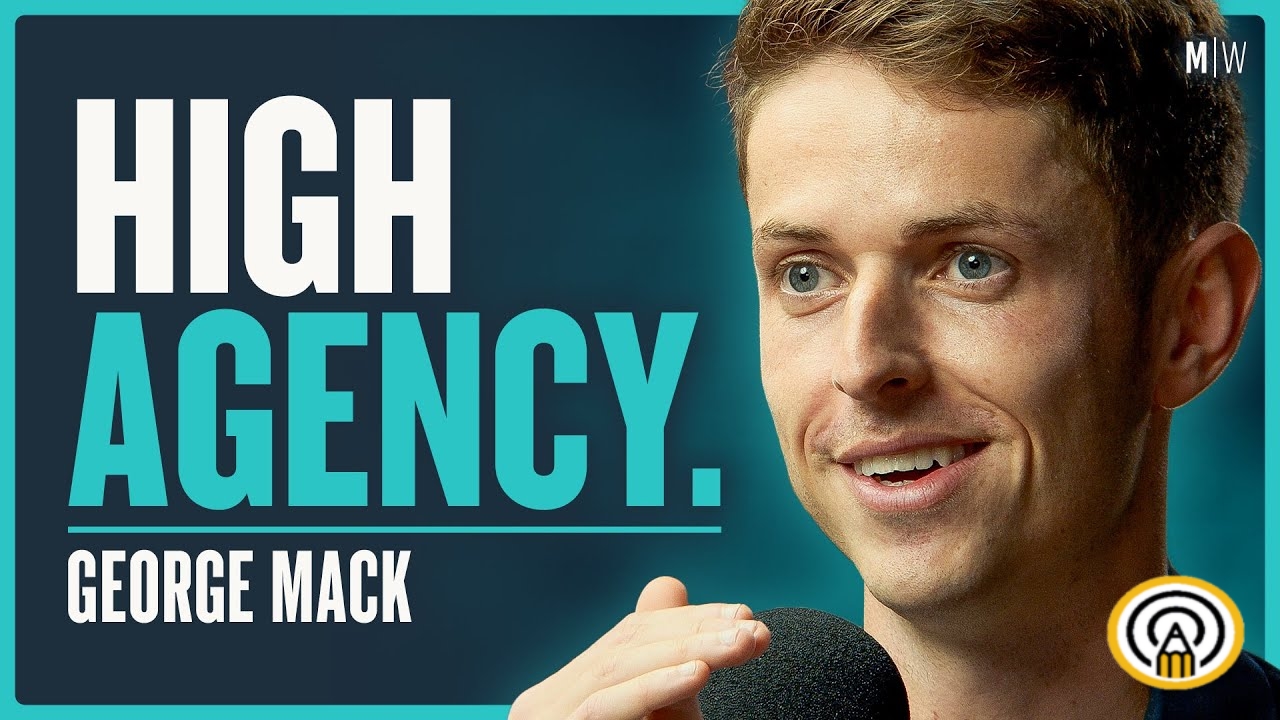
George Mack graduated from York, worked at a digital agency, co-founded a startup-focused marketing firm, and somewhere along the way became the person Naval Ravikant follows on Twitter. He did it by writing things that could not be unread.
Mack is British. That matters. There is a specific kind of dry precision that comes from a culture where understatement is the native language, and he deploys it at scale. His Twitter thread on "High Agency" - the belief that you are the author, not the audience, of your own life - has been read, shared, screenshot, and tattooed on the consciousness of a particular breed of ambitious person who knows what they want but keeps getting in their own way.
The concept is deceptively simple: when you're told something is impossible, does that end the conversation? For low-agency people, yes. For high-agency people, it's when the conversation starts. Mack noticed this gap early, named it cleanly, and built an entire intellectual framework around closing it.
The Ad Professor - his advertising and marketing education platform - reaches more than 300 million people. Not 300 million impressions. 300 million people. He built it the same way he builds most things: by taking something complicated and rendering it legible.
The Multiply Years
Before the newsletters and the podcast circuits, Mack co-founded Multiply with Josh Kalms - a marketing agency built for the fastest-growing startups in the world. Their client roster read like a who's-who of venture-backed ambition: companies backed by Stripe, Y Combinator, Sequoia, and LVMH. The premise was simple enough to be dangerous: apply the same mental models that make people effective to the problem of making companies grow.
Multiply has since pivoted into The Ad Professor - a media platform rather than a service business. The distinction matters. Service businesses sell time. Media businesses build leverage. Mack understood this shift before most.
What He Actually Does
On any given week, George Mack is writing an essay for his High Agency Substack (70,000+ subscribers), posting threads to his 300,000+ Twitter following, appearing on podcasts with Chris Williamson or Sam Parr, or thinking about which mental model from Epictetus might be more useful than whatever productivity framework is trending on LinkedIn that day.
He reads old books. The Lindy Effect - the principle that ideas which have survived a hundred years will likely survive another hundred - shapes his reading list. War and Peace. The Tao Te Ching. The Bhagavad Gita. Not because he is being contrarian about modern books, but because he has done the math on information half-lives and found most trending content decays within a year.
He has a framework called "George Mack's Razor": when choosing between two options, pick whichever one generates more luck. Go to the networking event. Send the cold DM. Take the meeting you're not sure about. Luck isn't magic - it's the compounded residue of showing up when most people stay home.