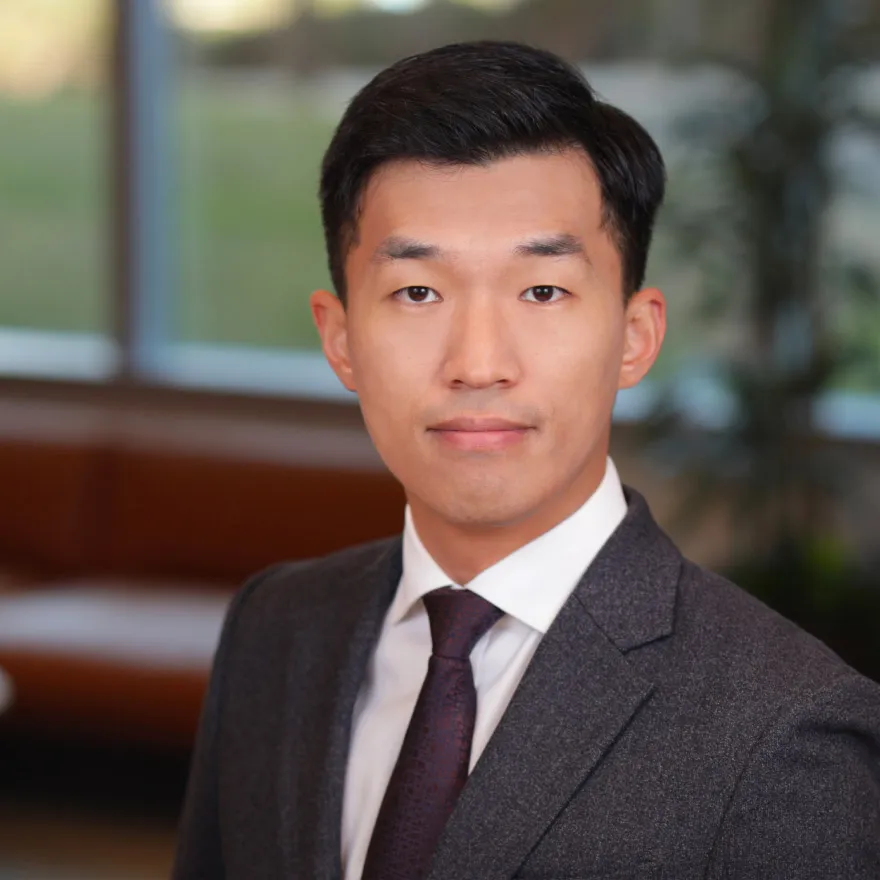
"The man who looked at a virus and said: I'll build something better."
A decade before most biotech founders learn how to spell "polymer nanoparticle," Kunwoo Lee was engineering them in Jennifer Doudna's orbit at Berkeley. He graduated in 2016, co-founded GenEdit the same day, and has been running at clinical velocity ever since.
The problem with viruses is that they're too good at their job. They get into cells - but they also trigger immune responses, can only carry certain cargo, and once you've dosed a patient, you often can't do it again. Every gene therapy company built on viral vectors knows this. Kunwoo Lee knew it too. So he built a different kind of delivery machine.
Lee grew up in Korea, studied at KAIST, and arrived at UC Berkeley in the early 2010s to pursue a joint PhD in bioengineering with UCSF. He landed in Professor Niren Murthy's lab, focusing on macromolecular therapeutics - which is bioengineering shorthand for "how do you get big, complex molecules into cells without killing the patient." What followed was five years of polymer chemistry, nanoparticle synthesis, and the slow, painstaking construction of a delivery system that didn't need a biological chassis at all.
The timing was remarkable. Down the hall, Jennifer Doudna's lab was reworking the rules of molecular biology in real time. CRISPR was exploding from a bacterial curiosity into the most powerful gene editing tool in history. But cutting genes is only half the problem. You still have to get there. Lee's PhD research produced one of the first demonstrations of gold nanoparticles delivering CRISPR-Cas9 ribonucleoprotein complexes into living cells - a proof of concept that would become the intellectual foundation of everything that followed.
We've completed our transition from a delivery platform to a therapeutics company, and this financing allows us to advance our first internal programs toward the clinic while continuing to expand the reach of NanoGalaxy.- Kunwoo Lee, on BreezeBio's $60M Series B, February 2026
He graduated in 2016 with his PhD and a Siebel Scholarship and co-founded GenEdit the same year alongside Murthy and fellow graduate researcher Hyo Min (Huey) Park. The company's founding premise was both simple and audacious: what if you could build a library of thousands of synthetic polymers, screen them systematically using machine learning, and identify which ones could deliver genetic payloads to specific tissues - reliably, safely, and without touching the immune system? What if the delivery problem wasn't really a biology problem at all, but a chemistry-at-scale problem?
That library became NanoGalaxy. It now contains thousands of chemically distinct hydrophilic polymer nanoparticles (HNPs), each with different targeting properties, tissue tropisms, and cargo compatibility. The platform can deliver mRNA, DNA, CRISPR ribonucleoproteins, and proteins. It has been demonstrated in immune cells, heart tissue, lungs, and the central nervous system. The polymers are synthesized to be non-immunogenic - they don't trigger the inflammatory cascade that routinely derails viral approaches.
By 2017, Lee was on Forbes' 30 Under 30 list in Science. By 2018, GenEdit had closed an $8.5M seed round led by DCVC Bio, with Sequoia Capital already in the mix. The momentum was building, but quietly - the way biotech momentum always does when the science is genuinely hard.
NanoGalaxy's polymer library contains more chemical diversity than most pharmaceutical companies' entire compound collections. It was built combinatorially - not one polymer at a time, but thousands in parallel, screened and ranked by machine learning.
The pitch for NanoGalaxy sounds almost too clean: a platform that can deliver any genetic payload to any target tissue, re-doseably, without triggering the immune system, and at manufacturing scale. Every gene therapy investor has heard variations of this story. What's different here is that BreezeBio keeps closing deals that suggest it might actually be true.
The core insight is polymer chemistry as combinatorial science. Rather than designing a single optimal vehicle, Lee's team built a library of thousands of chemically distinct hydrophilic polymer nanoparticles. Screen enough of them against enough targets, and patterns emerge. Machine learning helps identify which chemical structures correlate with which tissue preferences. The result is a platform that can be tuned rather than reinvented for each new application.
The advantages compound. Non-viral HNPs don't carry pre-existing immunity - most adults have antibodies to common viral vectors from childhood exposures, which throttles efficacy on first dose and eliminates re-dosing. HNPs sidestep that entirely. They're also manufactured chemically, not biologically, which means GMP scale-up looks more like small-molecule pharma than viral vector manufacturing - theoretically more controllable, more consistent, more scalable.
GenEdit has demonstrated in this collaboration and in our own studies that the NanoGalaxy platform can overcome historic challenges in the field and achieve tissue-selective delivery of a broad range of genetic medicine cargos.- Kunwoo Lee, on the Genentech collaboration, 2024
Demonstrated delivery to immune cells, heart, lung, and CNS - each with distinct polymer formulations from the NanoGalaxy library
mRNA, DNA, CRISPR-Cas9 ribonucleoproteins, proteins - one platform architecture, multiple modalities
No pre-existing immunity issues. Patients can receive multiple doses without the immune interference that plagues viral approaches
Chemical synthesis means GMP manufacturing looks like small-molecule pharma - more predictable than biological viral vector production
The $644M Genentech deal came before BreezeBio filed its first IND. That's not unusual in biotech - platform deals often precede clinical programs. But the size of the deal signals how much Roche values access to non-viral delivery at a time when the field is searching for viral vector alternatives.
In December 2023, GenEdit was named Phase I winner of the NIH TARGETED Challenge for programmable delivery systems for gene editing - a federal validation of the NanoGalaxy approach.
The rebrand from GenEdit to BreezeBio in February 2026 was more strategic statement than marketing exercise. "GenEdit" described what the technology could do. "BreezeBio" - coined alongside the $60M Series B - describes what the company has decided to become: a therapeutics developer with its own pipeline, not just a platform licensor.
The distinction matters. Platform companies sell access to their technology. Therapeutics companies own the drugs. The margins are different. The timelines are longer. The risk is higher. Lee is betting that after nearly a decade of building and licensing NanoGalaxy, the company now knows enough about which applications work best to develop some of them internally.
BRZ-101, the lead program, targets Type 1 Diabetes through an unusual mechanism: rather than suppressing the immune system broadly, it delivers mRNA encoding autoantigens to antigen-presenting cells, inducing regulatory T cells (Tregs) that restore immune tolerance. In preclinical studies in the NOD mouse model of diabetes, it worked. The question now is whether it works in humans - the most expensive question in medicine.
GenEdit was founded by three people from the same Berkeley lab: Kunwoo Lee (CEO), Professor Niren Murthy (the academic co-founder whose lab generated the core IP), and Hyo Min (Huey) Park (a fellow graduate student who co-developed the polymer library). Academic spinouts built by the actual researchers who did the work tend to have stronger founder conviction about what the science can and can't do.
Lee has appeared at major biotech conferences including PMWC (Precision Medicine World Conference) in San Francisco, TIDES USA on oligonucleotide and peptide therapeutics, and on the Finding Genius Podcast's "Mutation & Change" series, where he explained the NanoGalaxy platform and the broader potential of non-viral gene delivery.
His public communication style tends toward the technical and precise. He doesn't oversell. In a field where founder hype often outruns biology, that's a notable characteristic - and probably part of why large pharma partners like Genentech and Sarepta have trusted him with deals in the hundreds of millions.
Every major advance in gene editing - CRISPR-Cas9, base editing, prime editing - faces the same downstream problem. You've built a molecular pair of scissors (or a pencil, or a search-and-replace function). Now how do you get it to the cell in a living patient, to exactly the tissue you want, without triggering an immune response, without off-target effects, and ideally more than once?
Viral vectors - primarily adeno-associated viruses (AAVs) - have been the dominant answer for a decade. They're extraordinarily efficient. They're also limited in cargo size, immunogenic on repeat dosing, expensive to manufacture at scale, and come with pre-existing immunity challenges in a large fraction of the population.
Lipid nanoparticles (LNPs), the technology behind COVID mRNA vaccines, solved some of these problems for mRNA but have their own tissue tropism limitations - they tend to accumulate in the liver, which is great for liver diseases and suboptimal for everything else.
NanoGalaxy sits in a third category: synthetic hydrophilic polymer nanoparticles. The polymer backbone is designed from the start to be non-immunogenic. The tissue selectivity comes from the polymer chemistry itself, not from lipid composition or biological targeting ligands. The combinatorial library approach means the platform can be explored, not just optimized - a genuinely different scientific philosophy.
No pre-existing immunity. Re-dosable. Not limited by insert size. No risk of insertional mutagenesis. Scalable chemical synthesis vs. biological manufacturing.
Tissue selectivity beyond the liver. Hydrophilic polymers have different biodistribution profiles. Demonstrated delivery to heart, lung, CNS - not just hepatic applications.
Combinatorial polymer library screened by machine learning. Thousands of candidates, not one optimized vehicle. Platform can be tuned for each application without full platform redesign.
Kunwoo Lee is a member of the Council of Korean Americans, a network connecting Korean-American leaders across sectors. His trajectory - from KAIST in Korea to a Berkeley PhD to co-founding a company backed by Sequoia and Eli Lilly - reflects a generation of Korean and Korean-American scientists who trained in elite US programs and stayed to build.
The investor base for GenEdit's Series A in 2021 told a parallel story: alongside Sequoia and Eli Lilly sat KTB Network, Korea Investment Partners, Company K Partners, KB Investment, IMM Investment, and other Korean institutional investors. The Series A1 in 2024 deepened those ties. It's a pattern that suggests Lee has navigated both the US biotech ecosystem and the Korean investment community with deliberate fluency.
The GenEdit-to-BreezeBio rebrand in early 2026 was Kunwoo Lee's announcement that the platform phase is over and the product phase has begun. After nearly a decade of chemistry, combinatorial screening, partnership deals, and preclinical programs, the company has decided it knows enough to own its own drugs. BRZ-101 for Type 1 Diabetes is the first public declaration of that conviction - a bet that the same polymer nanoparticles that could help Genentech and Sarepta and Editas can also carry BreezeBio's own therapeutic vision into patients.