Justin Morcelle has occupied a particularly useful pair of seats: the one where marketing asks for money, and the one where somebody asks what the money will accomplish. Before he became a bank’s chief marketing officer, he worked in finance. Before he became an agency co-CEO, he hired agencies. His career offers an appealing complication to the usual picture of advertising leadership. The accounting graduate eventually joined the people making the pictures. He brought the questions with him.
Today he shares the chief executive role at Cleveland’s Adcom with Craig Martin. The route there runs through audit, bank profitability, customer strategy, brand campaigns and agency operations. Read together, those jobs suggest a consistent preoccupation: how to connect a business decision to the person on its receiving end. A number can tell you whether something happened. A marketer still has to understand why anybody cared.
The accountant changes departments
Morcelle studied at Case Western Reserve University, earning a Bachelor of Science in Accounting. His LinkedIn education entry lists 2000 to 2004 and Beta Alpha Psi among his activities. He began his career at PricewaterhouseCoopers as a certified public accountant in audit and advisory. At HSBC Bank USA, he later led a finance transformation initiative concerned with management information and decision support.
In September 2011, he joined First Niagara as head of profitability. His subsequent responsibilities included retail CFO, deposit product management and customer strategy. The progression matters: pricing deposits, advising retail leadership and overseeing marketing and analytics are different ways of examining the same business. They put the product, its economics and its customers within one executive’s field of view. He joined KeyBank through its acquisition of First Niagara, worked in integrated marketing and went on to become chief marketing officer. The department names changed; the business remained connected.
A car needs somewhere to go
When Morcelle discussed digital marketing in 2021, he reached for a road rather than a piece of software. In his analogy, data supplies the highway, a technology platform supplies the car, and colleagues supply the drivers. He was explaining why a purchase alone could not make a marketing organization digitally capable. All three parts needed to work together.
It is an unusually serviceable metaphor for a subject often buried under acronyms. A splendid car sitting beside an unfinished road has very little to recommend it, apart from upholstery. Likewise, people need usable information and equipment they can operate. Morcelle’s emphasis was on the complete infrastructure. The telling detail is that he gave colleagues a role in the picture. Technology had a place, but somebody still had to decide where to steer. That remains a useful way to read his later interest in AI: tools belong inside an operating system made of human choices.
Buying less waste
At KeyBank, the organizational question became concrete. A conversation with another Ohio brand’s CMO introduced Morcelle to the possibilities of bringing media buying in-house. He and his team explored a more direct relationship with audience information and advertising decisions. He helped develop an internal approach with his team using Adobe’s marketing tools.
The changes included better audience exclusions and control over how often people saw an advertisement. These are modest-sounding adjustments with actual costs attached. Paying repeatedly to reach the wrong audience is a remarkably expensive way to remain obscure. The KeyBank team’s reported results included a 50 percent decrease in average cost per thousand impressions and twice the time spent on the site. Those are team outcomes, rather than a personal scorecard for Morcelle. They nevertheless give his career’s finance-to-marketing connection a tangible example: operational decisions could change both the bill and the quality of attention.
Reported KeyBank team results after bringing media buying in-house. CPM means cost per thousand impressions.
The numbers still need a voice
Morcelle’s KeyBank tenure also involved the less spreadsheet-shaped work of giving a brand something to say. In October 2019, Epsilon and Fallon were appointed lead agencies of record. Their model brought customer insight and creative work together, covering brand strategy, media and direct marketing. Epsilon already had a 25-year relationship with the bank. This was collaboration built around existing knowledge as well as a new creative partner.
By March 2022, Fallon’s work under the KeyBank Opens Doors platform included a community-focused campaign voiced by Katey Sagal. The platform had debuted in 2020; the later installment brought everyday financial experiences and the bank’s community activities into its advertising. Morcelle described the ambition in terms of understanding clients and participating as a neighbor. The work helps explain why his analytical background should not be mistaken for a preference for bloodless communication. Knowing where a message goes and making it worth hearing are separate jobs. A campaign needs both, preferably before the invoice arrives.
“It takes deep client insights and a distinctive voice to standout.”
Justin Morcelle, on KeyBank’s agency appointment, 2019
Crossing to the other side of the brief
By August 2022, Morcelle was Adcom’s new partner and chief operating officer. His appearance on episode 65 of The A-Game podcast, with hosts Jeff Culliton and Nadya Scheiner, introduced him through a discussion of account-based marketing. The subject was an apt starting point: business-to-business marketing aimed at particular accounts, with the challenge of making tightly targeted work inventive enough to matter.
His responsibilities at Adcom included account strategy and management, integrated media, and analytics and insights. Taken together, these cover the relationship with the client, the channels carrying the work and the information used to judge it. The move placed someone who had commissioned marketing inside the organization delivering it. That is a useful change of perspective to carry into agency operations. A client’s question about cost, coordination or performance can arrive with a history attached. Morcelle had worked through those questions from the client’s chair before taking responsibility for the agency’s answer.
How many partners fit around one table?
In January 2025, he published a pointed essay about agency arrangements. He began with decisions he had faced as a CMO: whether work was central to business objectives, whether talent was available, whether demand would be steady and whether internal processes could support doing it in-house. An agency engagement followed a decision about how the work should get done.
He also examined the complications of adding partners. Each additional firm brings overhead and another relationship to coordinate. A specialist’s promised benefit has to be weighed against those costs, including the demands placed on the client’s own team. Cultural fit, quality and cost all mattered in his selection process. The practical details extended to project management and expectations for collaboration between agencies that might otherwise be competitors. There is a dry comedy in asking competing businesses to work together cheerfully. His prescription was to make the expectations explicit. Good intentions benefit from a calendar, a defined scope and somebody responsible for the handoff.
Spark keeps its name
That same year supplied a concrete agency expansion. On March 6, 2025, Adcom announced its acquisition of Spark Your Brand, a firm with experience in branding and retail, wholesale and e-commerce merchandising. Morcelle was identified as Adcom’s president and COO. He emphasized business and cultural alignment, and explained that Spark would keep its name and operate as a business unit with Randy Golenberg continuing to lead it.
The arrangement provides an interesting companion to his advice about agency complexity. Adding capabilities does not automatically settle how people will work together. In this case, the announced structure preserved a recognizable team and leadership while bringing it into a larger agency. Adcom’s explanation highlighted added expertise in tools and building products. The details are more revealing than the announcement’s celebratory language: a retained name, a continuing leader and a particular set of commercial skills. Growth had an operating arrangement attached to it.
Two names on the executive door
In 2026, Adcom named Morcelle and Craig Martin co-chief executive officers, while Joe Kubic moved to chairman. Martin brought long experience within Adcom; Morcelle brought experience on the client side and in agency operations. The company described the formal co-CEO structure as a reflection of the way it was already working.
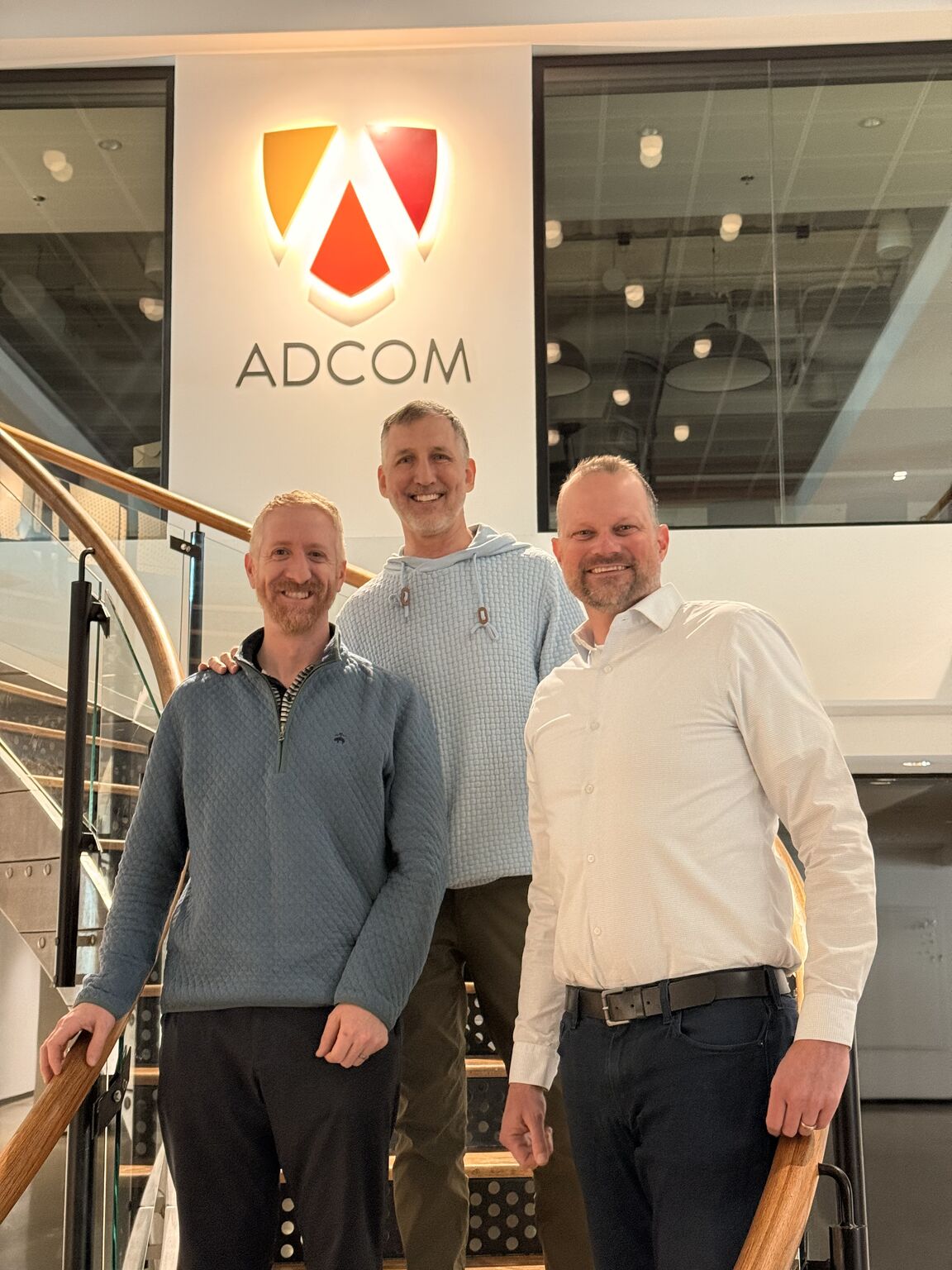
Shared leadership gives this career another pairing to consider. Finance and marketing had appeared earlier; now operational and client experience sit alongside a colleague’s long agency tenure. The announcement framed the next chapter around helping clients grow. Its most interesting feature is the continuity: Kubic remained involved, and two existing leaders assumed the executive role together. The photograph accompanying the announcement is correspondingly informal. Three colleagues stand on the office staircase, with no boardroom table in sight. For an industry that makes pictures for a living, it is a pleasingly straightforward one.
The driver is still required
Morcelle’s newer work returns to the relationship between tools and people. His 2025 essay on the changing CMO role argued for a broader understanding of the customer experience, more tangible measures of marketing investment and attention to human connection as AI spreads. On September 29, 2026, he and Adcom’s Jess Van Wagenen were listed to present at Cleveland Tech Week on practical AI applications for manufacturers and B2B businesses.
There is a local dimension to the career as well. United Way of Greater Cleveland lists him on its board, and Team NEO’s 2021 annual report included him on its marketing advisory council. These are settings in which business experience meets the wider region. His work has moved across several departments and across the client-agency relationship, while keeping Cleveland in the picture. The road analogy still fits. The equipment changes. The destination needs thought. And the person at the wheel has work to do.
Follow the work
- Justin Morcelle on LinkedIn
- Justin’s Adcom essays
- The A-Game: account-based marketing episode
- The 2021 marketing interview
- KeyBank’s media-buying case study
- KeyBank Opens Doors campaign films
- Adcom’s leadership announcement
- Spark Your Brand acquisition
- Cleveland Tech Week session
- United Way leadership
- The Adcom Group
- Adcom on Instagram
- Adcom on LinkedIn