On 12 December 2023, Julio Sánchez sat down to a rather local assignment for someone whose business had travelled across borders: dinner in Benidorm, followed by questions about how it all began. The Club de Opinión had gathered at Restaurante La Fachada. Its evening conversation carried a straightforward title: the history of Energy Sistem, told by Julio Sánchez.
He talked about his family’s arrival in Benidorm, the company’s beginnings and its development into an international technology business. The setting suits the story. Before there were headphones, tablets and smartphones, there were four brothers selling the things offices needed. The road from one enterprise to the other contains a useful problem: how many times can a business change what it sells while keeping a clear idea of its customers?
Sánchez’s public career offers several answers. They involve a stationery shop, a rapper, a university meeting room and, eventually, a speaker that could take instructions. There is considerably more movement here than the phrase “family business” usually suggests.
Before the music, the office supplies
The brothers were José Luis, Julio, Alfonso and Salvador Sánchez. Their early business, Ofitec, sold office supplies and equipment including typewriters, photocopiers and fax machines. Those machines now have a certain period charm. At the time, they were tools customers bought to get work done.
The business developed into wholesaling, then moved toward computer accessories as technology changed. Sánchez later explained the move into their own products through the growing importance of technology and music in people’s leisure. Selling other companies’ equipment had given way to making decisions about products carrying a brand of their own.
That progression matters more than a tidy founding legend. A shop and a consumer electronics brand ask different things of their owners. The former begins with what customers need nearby. The latter must make a product worth choosing from a shelf full of alternatives. Sánchez’s career crosses that distance alongside three people who share his surname.
A business with an Alicante return address
By March 2011, Energy Sistem had 80 employees and a presence in 57 countries, after beginning exports in 2008. Its work moved between places: design in Finestrat, manufacturing in China and Taiwan, distribution and customer service managed from Alicante. A quarter of its staff were engineers working on product development.
These are figures from that particular moment, when the business was already selling multimedia devices and electronic readers. They give the international story a physical shape. Work crossed borders, but the design operation retained its address on the Alicante coast.
Energy Sistem’s reported presence in March 2011, three years after starting exports.
For a founder, that arrangement brings different clocks into the same working day: the product being designed, the factory making it and the customer needing help with the last one. International reach is an appealing phrase. Distribution and service are where the phrase acquires a workload.
The audience comes before the catalogue
Sánchez’s explanation of competition was unusually compact. A company needed a clear proposition and a defined audience. Innovation and design were tools for reaching people who wanted everyday technology at competitive prices.
“Si quieres ser todo para todo el mundo acabas por no ser nada para nadie”.
Julio Sánchez, on choosing an audienceThe warning is that trying to satisfy everybody can leave a business meaningful to nobody. It is a useful sentence to keep beside a catalogue. Each new product category can look like another opportunity; together, those opportunities can make the original proposition harder to explain.
There is a pleasing tension in hearing this from someone whose business had travelled from office equipment into digital entertainment. Changing the offering and defining the audience have to coexist. A company can move a long way from the fax machine and still need a precise answer when someone asks who will buy the next device.
Why a rapper belonged in the plan
In 2011, the answer included Porta, the Barcelona rapper chosen for the Energy Versus campaign. The campaign supported headphones and portable Music Box products. It used a microsite, social content and online advertising to reach young listeners.
Sánchez explained the choice in terms of Porta’s internet audience and ability to connect with the people the brand wanted to reach. Downloads and video viewing were part of the calculation. The musician already had a relationship with listeners whom an electronics company hoped to interest.
It is a more revealing detail than a general claim to understand young customers. Here was a particular artist, a particular product family and a plan for putting them together. Music gave the hardware a social setting. A pair of headphones could be described through its specifications, but it would be used in somebody’s day, with somebody’s preferred voice coming through it.
The paperwork behind a colourful device
Design also had a less glamorous life in Sánchez’s business: registration. In March 2013, Energy Sistem’s portfolio included 253 registered designs. During a visit involving the European trademark and design office, the discussion included tools for protecting designs quickly in an industry with short product cycles.
The number gives substance to the word “design”. Colours and shapes were commercial assets with paperwork attached. Once a product is visible on a shelf, its appearance can be copied; protecting that appearance belongs to the business of selling it.
Registered designs reported in March 2013.
Sánchez’s public language about innovation sits alongside this administrative reality. A technology company needs ideas, and it needs arrangements that let those ideas survive contact with competitors. Even a cheerful, colourful device has a folder somewhere. The folder is unlikely to appear in the advertising.
A signature with students on the other side
On 22 May 2017, Sánchez signed a collaboration agreement with Manuel Palomar, rector of the University of Alicante. The relationship already included student placements. The agreement expanded what the company and university could do together.
Energy Sistem would provide products for an existing Polytechnic School laboratory used in teaching connected with mobile device programming. Technical staff could contribute seminars. Students could develop final projects, master’s work or industrial doctoral research with access to company facilities and products.
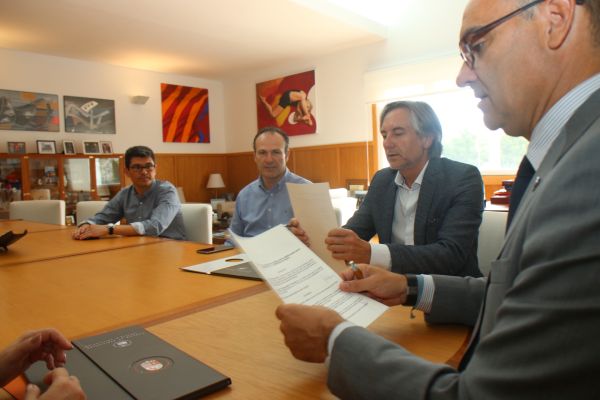
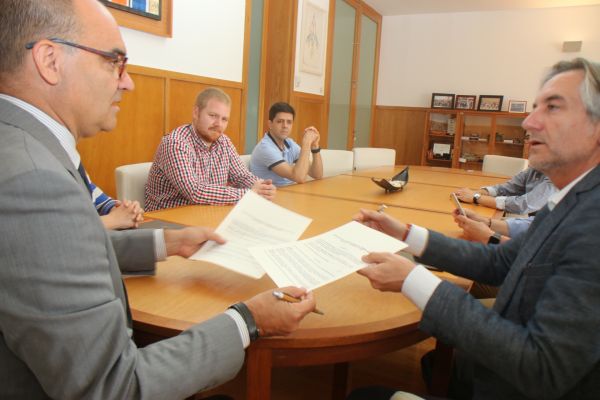
A product leaves the company and becomes something a student can examine, program or use in research. The agreement gave that exchange a practical structure. Sánchez spoke of the importance of working with the university and its students. The detail lies in the provision of actual equipment, actual access and people who could explain how the technology worked.
The family story acquires another programmer
There was another technology story in the family. Sánchez’s daughter Lucía began taking devices apart as a child and learned programming through online resources. In a 2018 interview, she described seeing a video about a young American who had made a game and deciding to try it herself.
Her father’s work gave her a close example of running a technology business. Her learning also had its own route: tutorials, programming platforms and the effort of making something herself.
It would be easy to turn this into a neat inheritance tale. Her own account makes room for something more interesting: access to a business example and access to instruction from elsewhere. A parent’s company and an online lesson can both appear in the same origin story. The surname travels between generations; the first product need not.
From running products to joining the conversation
Sánchez’s work also moved into the region’s business institutions. He joined the Asociación Valenciana de Empresarios in 2018. That year, he was named to lead the competitiveness and research, development and innovation commission at Cámara Alicante.
His public calendar connected him with people discussing how businesses change. An Alicante book presentation in June 2018 put him on the programme alongside Manuel Bonilla, Juan Carlos Cubeiro and Fernando Botella. The subject was the digital economy. In July 2017, a summer course programme had scheduled him to speak about technological innovation in Spain.
The latest chapter of that institutional work is dated July 2026: Cámara Alicante listed Julio Juan Sánchez Sánchez, representing Energy Sistem Technology, among the members of its newly constituted plenary. The international electronics business remained connected to a very specific regional business community.
A speaker learns to listen
Looking ahead to 2019, Sánchez singled out voice assistants. Energy Sistem had introduced audio products integrating Amazon’s Alexa, including a sound tower. His account focused on ordinary uses: controlling playback, setting alarms and hearing information without reaching for another interface.
“La tecnología tiene que estar siempre al servicio de las personas”.
Julio Sánchez, discussing technology for 2019Technology should serve people: the sentence is broad, but the examples were domestic and specific. After the years of office equipment and portable entertainment, the device could respond when somebody spoke to it.
Sánchez is Energy Sistem’s co-founder and former CEO. His board chairmanship was renewed in January 2023. The distinction between those responsibilities belongs in the story of a founder whose involvement extends beyond one executive job title.
Back at the dinner in Benidorm, the questions concerned beginnings as well as the company’s present. That combination feels appropriate. A fax machine, a pair of headphones and a voice controlled speaker belong to different moments. Sánchez’s recurring question about whom a product serves gives those moments something to say to one another.