An office screen has an unenviable assignment. It must persuade someone with a meeting to attend, a coffee to rescue, or a deadline to miss that its message deserves a moment. There are easier audiences. People buy tickets for the cinema. Nobody buys a ticket to the corridor outside a conference room.
Brandon Miles helped build a business around that overlooked encounter. Appspace, the company he co-founded in 2002, began with digital signage directed at employees. The distinction sounds small until you consider how much it changes the work. A passing shopper and a colleague beginning a shift need different things from the same rectangle of light.
That choice gives his career its shape. There is the earlier chapter in investment banking, the long stretch running a software company, the acquisitions that widened its ambitions, and the decision in 2022 to hand the chief executive role to Tony DiBenedetto. Through those changes, the audience remained people trying to get through a working day.
The appeal of this story is its scale of attention. Office communication rarely receives the glamour reserved for consumer technology. Yet a company still has to tell its employees something, somewhere, in a form they can use. Miles spent two decades helping make that ordinary obligation into a software business.
An economics degree, then a different kind of workplace
Before Appspace, Miles studied economics at the University of Chicago, attending from 1993 to 1997. He then worked at Morgan Stanley between 1997 and 2000, with real estate investment banking taking him to New York and London. His early professional geography was already international before the workplace software chapter began.
Banking and workplace communication make an unusual pairing on a résumé. One concerns transactions and capital; the other concerns the practical business of getting information to people. In Miles’s case, both belong to the documented chronology. It would be tempting to turn the degree into a complete explanation of the entrepreneur. A degree is a beginning, however, rather than a personality test.
He co-founded Appspace with Stan Stephens. Building a company from 2002 to a leadership transition in 2022 meant working across a period in which the equipment, expectations, and vocabulary of office life all changed. The familiar office display became one starting point for a much wider product.
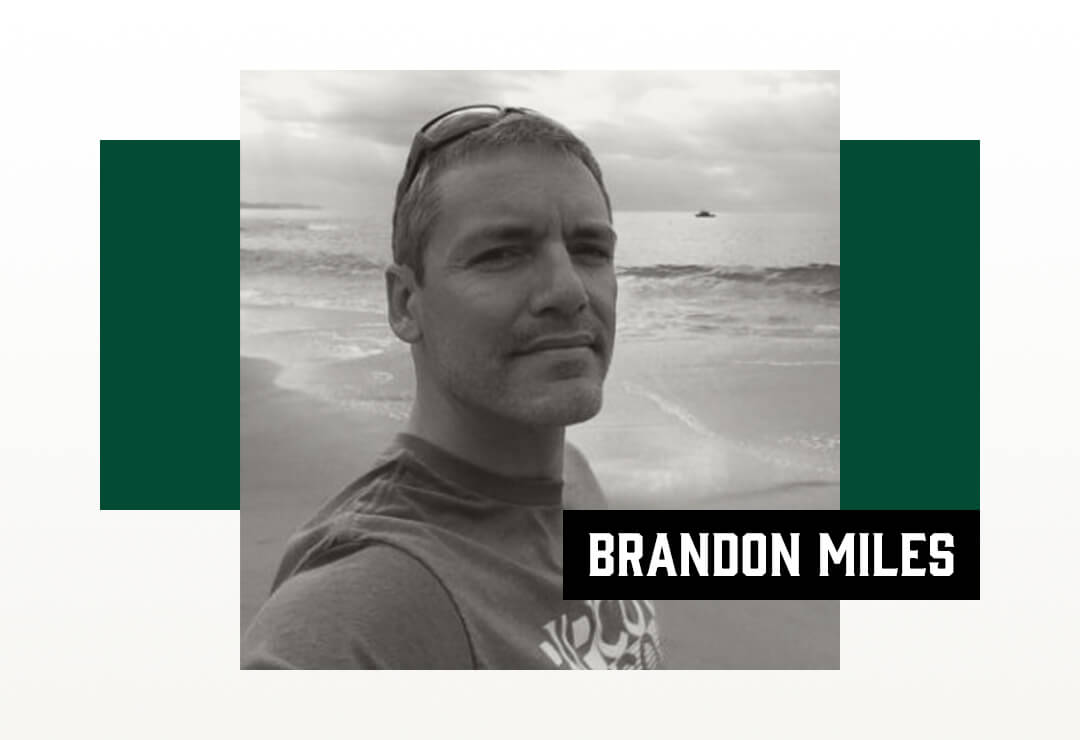
His public biography adds a less solemn detail: he enjoys skiing and describes himself as a terrible surfer. The line has the useful effect of puncturing the executive biography before it becomes too polished. A person can run a software company and still lose an argument with a wave.
The machinery behind the message
An early decision was to concentrate on internal corporate communication. Appspace’s own account of its beginnings distinguishes that focus from advertising networks, billboards, and commercial signage. The screen was familiar. The intended relationship between sender and viewer was different. Employees were the people the company wanted to help organizations reach.
By November 2016, one piece of the delivery machinery was taking shape through BrightSign. Its Series 3 XD and XT media players had been tested for compatibility with the Appspace App, using firmware version 6.2.63. This is the sort of detail that rarely decorates a founder profile. It does explain how a software promise gets onto actual equipment.
A content management platform needs somewhere for its content to run. Hardware compatibility gives customers another way to put the application to work. BrightSign’s announcement paired Miles with its CEO, Jeff Hastings, each discussing what the integration offered. The relationship illustrates a practical part of the business: distribution also means working with the companies supplying the boxes.
There is a modest pleasure in that specificity. Technology narratives often jump from an idea to a market. Here, between the two, sit media players and a firmware version. Somebody has to make those things cooperate before a message can appear on a wall.
Capital, content, and a larger address book
LLR Partners dates its growth investment in Appspace to August 2019. That date marks a change in the company’s financial backing, after years of operation. The investor’s portfolio places the business in software and identifies Dallas as its location. Miles’s company had acquired a partner for its next stage.
Capital can fund more development, broader distribution, and acquisitions. It also puts a different question before a founder: which additions will make the existing business more useful? Appspace’s next documented moves offer concrete answers. They extended the company through the material employees saw and through the digital places they visited.
In February 2021, Appspace announced the integration of The Marlin Company. Marlin brought experience in industrial workplace signage and content produced by its own specialists. For a business concerned with reaching employees, that added an ingredient beyond the technology used to deliver a message: the message itself.
Miles framed the combination around reaching people wherever they worked. The fit was practical. Appspace customers could gain access to Marlin’s content, while Marlin customers could gain access to the broader platform. A factory floor and a corporate office could share a communication problem without sharing a working environment.
Later that year, Beezy added another setting. Appspace announced the acquisition on October 20, 2021. Beezy supplied an intranet built for the Microsoft environment, bringing workplace information and collaboration into the combination. The ambition now encompassed both physical spaces and the digital spaces in which employees spent their time.
“Our sweet spot was within the corporate space.”
Brandon Miles, 2020
A ranking, and the work between the numbers
Deloitte’s 2021 Technology Fast 500 rankings list Appspace at number 443, with revenue growth of 251 percent. Miles appears beside the company as its chief executive. It is a useful fixed point in a story otherwise told through changes in product scope and business relationships.
A ranking compresses years into a line. The attraction is obvious: a number looks tidy on a page. The work represented by it is less tidy. Integrating another business, maintaining a product, supporting customers, and finding the next customer do not happen in the clean columns of an awards table.
A reader can take the milestones as a reminder to ask what changed underneath a growth figure. In this case, the visible changes include hardware compatibility, a content business, and an intranet acquisition. Each added something specific. Taken together, they make the company’s development more legible than a number alone. That is one way to read the record, rather than an account of Miles’s private motivations.
The ranking belongs to Appspace and its team. Miles’s place in it is as the executive leading the company at that moment. Keeping those distinctions intact makes the achievement easier to understand. A founder provides direction, but revenue growth is recorded by an organization with people doing many different jobs.
The Beezy acquisition also received a more personal acknowledgment. In November 2022, Beezy co-founder Jordi Plana publicly thanked Miles for making the transaction happen. A deal announcement describes the intended combination; a departing founder’s thanks gives it a human connection. Miles was part of the negotiation between two businesses, each with its own history.
Appspace · No. 443
Twenty years, then another chair
On March 29, 2022, Appspace announced DiBenedetto as its new CEO. He had chaired the board since 2020. Miles would move to the board and continue advising on product strategy. The announcement described a twenty-year tenure as chief executive, giving the handoff a clear place in the company’s history.
The distinction between leaving an operating role and leaving the enterprise matters here. The arrangement gave Miles a continuing relationship with the company he had helped establish. It also gave a new chief executive responsibility for running it. The title changed, and so did the division of work.
Nothing in that change requires a theatrical account of a founder’s feelings. Its significance is visible in the responsibilities themselves. Two decades of day-to-day leadership had reached a boundary. Product advice and board participation offered a different way to contribute to what Appspace would become.
Public company histories often treat a successor as the end of the founder’s story. This handoff supplies a more interesting stopping point: a business substantial enough to carry on under another leader, with the founder’s experience still part of the arrangement. Continuity can be an achievement without making much noise.
The screen gets a wider view
The company continued expanding after Miles’s CEO tenure. In September 2023, Appspace announced an investment from Accel-KKR, with LLR remaining an investor. The stated plans included deeper connections with Microsoft and Google. Those were plans for the company under its later leadership, extending the platform Miles had helped build.
By October 2025, Pete Schmied had been named CEO and Holly Grogan president. DiBenedetto would continue as executive chairman. In September 2026, Appspace presented Appspace Context, a vision for making workplace tools respond to an employee’s role, location, schedule, and changing circumstances. The founding business had continued to develop across successive leadership teams.
That later direction gives the early employee focus an interesting echo. A display has a location. A person has a task, a schedule, and somewhere else to be. Making communication useful requires attention to those particulars. The company’s language has grown more elaborate, but the ordinary working day remains a useful test.
Miles’s story ends here with two pictures worth keeping together: the executive who spent twenty years building Appspace, and the skier willing to admit the sea has his measure. Between them is a career made of specific decisions. Choose an audience. Find the equipment that works. Add capabilities. Make the deal. Eventually, let somebody else take the chair.