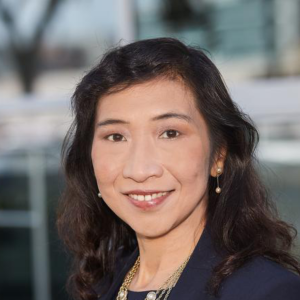
From Yale to Max-Planck to Harvard - and then into industry
Chou's entry point into biotech was pure science. A Ph.D. at Yale in biotechnology, cell biology, and neuroscience. Post-doctoral training at the Max-Planck Institute in Germany. A research faculty position at Harvard University Medical School. The credentials are impeccable, but what actually shaped her arc was the move that followed: trading academic research for the industrial machine of biologics development.
She moved through Genentech, Wyeth Biopharma, Pfizer, and eventually Bayer - not as a scientist who tolerated operations, but as someone who mastered it. At Pfizer/Medivation, she was Vice President of Pharmaceutical Operations, leading both biologics and small molecule development. At Tanvex Biopharma, her VP of R&D and Manufacturing role contributed to the company reaching IPO. At Bayer, she ran the entire global biotech organization - SVP and Global Head, with a product portfolio generating more than $3 billion in net revenue and a team of 2,000+ employees across development, manufacturing, and distribution.
That is not a scientist who drifted into management. That is an operator who built operational fluency into her scientific base until the two were inseparable.
The deliberate bet on a 28-person startup
The move from Bayer to AltruBio (then called AbGenomics) was not a step down. It was a calculated direction change. She had the option of staying at the top of a multi-billion dollar organization. She chose instead a company small enough to move fast, focused on a target that the industry had largely overlooked, and with a science she believed in.
That science centers on PSGL-1 (P-selectin glycoprotein ligand-1, also known as CD162). For most of its scientific history, PSGL-1 was studied as an adhesion molecule - a way that immune cells latch onto blood vessel walls during inflammation. AltruBio's insight was that PSGL-1 is also an immune checkpoint. When you engage it with an agonist antibody - one that activates rather than blocks the receptor - you selectively push activated T cells toward apoptosis. You do not suppress the immune system. You restore its self-regulation.
The lead candidate, ALTB-168 (neihulizumab), demonstrated this across four autoimmune and inflammatory diseases in clinical studies. Its successor, ALTB-268, is a tetravalent version - four binding sites instead of two - with higher potency and the same safety profile, plus the practical advantage of subcutaneous dosing.
The contrarian call on ulcerative colitis
In 2021, as AltruBio was mapping its clinical strategy, the team made a pivotal decision: focus on ulcerative colitis as the lead indication for ALTB-268. At the time, Chou later recounted, more than half of investors pushed back. UC was seen as a crowded space, hard to win, potentially the wrong bet.
She held the line.
Three years later, the May 2024 Series B round - $225 million, oversubscribed, led by BVF Partners LP with RA Capital Management, Cormorant Asset Management, and Soleus Capital joining - validated that call. Phase 2a data for the primary endpoint of clinical remission was anticipated in the first half of 2025. A global Phase 2b randomized, placebo-controlled study was on the planning board for 1H 2025 initiation.
Her response to the funding: "We are honored to welcome this esteemed new group of investors, whose participation complements the support of our existing world-class investor group. Their collective backing not only affirms the potential of our program and company but also our mission of developing durable biologic therapies for patients suffering from autoimmune diseases."
Building the infrastructure of credibility
Beyond the clinical program, Chou has been methodical about surrounding AltruBio with institutional credibility. In December 2024, the company announced its Scientific Advisory Board - three immunologists of genuine standing: Vijay Kuchroo (DVM, Ph.D.), Bernard Malissen (Ph.D.), and Arlene Sharpe (M.D., Ph.D.). These are not cosmetic appointments.
She sits on the board of Akero Therapeutics (NASDAQ: AKRO), a public biopharma company focused on metabolic diseases. She was appointed to the governing board of the California Institute for Regenerative Medicine (CIRM) in November 2022, California's stem cell and gene therapy oversight agency. She advises the UC Berkeley Engineering School and Silicon Valley Women in Engineering. And she advises AIxMed, a digital health biotech startup.
In 2025, Endpoints News named her to its Top 20 Women in Biopharma list. She had already been named Most Influential Women in Business by the San Francisco Business Times in 2018.
The lean machine advantage
AltruBio has 28 employees and has raised $327 million. That math - roughly $11.7 million per employee - is not a sign of inefficiency. It is a sign of a lean model that keeps scientific focus tight and operational bloat minimal. The company maintains an R&D center in Taipei, Taiwan alongside its San Francisco headquarters, a structure that stretches resources across time zones and expertise pools.
Chou has run rooms with 2,000 people. Running a room with 28 is a different discipline - fewer places to hide complexity, fewer buffers between decision and consequence. She chose it.
"Luck only comes to the most prepared people," she said. For someone who completed a Ph.D., a post-doc in Germany, a Harvard faculty position, and then spent 25 years navigating Genentech, Wyeth, Pfizer, Tanvex, and Bayer before staking her career on a single immune checkpoint molecule - preparation is not a posture. It is the actual product.