Before Josh Santos built a company to take carbon out of the sky, he shared a San Francisco home with the person who would help him try. Daniel Cavero was his roommate before he was his co-founder. They moved in together in 2016. By 2020, they were making machines together. The domestic trial period had been unusually thorough.
Their company, Noya, began with a practical question: could equipment already moving vast amounts of air also collect carbon dioxide? Cooling towers had fans, infrastructure and an existing reason to be there. For two founders trying to make direct air capture cheaper, borrowing an industrial head start was an appealing proposition.
Five years later, Santos announced that he and Cavero were winding down operations. He turned his attention to finding jobs for their colleagues. Then he moved to London and joined Fifty Years, an early Noya investor, to help other people start companies. His career now poses a different engineering question: how much of one founder’s experience can be made useful to the next?
Thirteen schools, one persistent question
Santos grew up moving around the southeastern United States. His mother served in the military; he attended 13 schools before college. The upheaval that stayed with him involved weather. At about 14, his family left their Alabama home during a hurricane. Returning meant discovering a familiar place with pieces missing: a roof, trees, a church beside his middle school.
He has described that return as an early reason to work on climate. The memory was specific and local, long before carbon removal became his profession. A damaged neighborhood gave an abstract planetary problem an address. Later decisions about engineering, electric vehicles and atmospheric carbon would grow around that early concern.
At MIT, where he graduated in 2014, he studied chemical-biological engineering. He also encountered the business side of research through Sloan coursework and undergraduate laboratory work. A short leadership program, LeaderShape, stayed with him for another reason: it connected the opportunity to attend MIT with a responsibility to use that education for others. The degree supplied technical tools; that lesson supplied a way to choose where to use them.
An apprenticeship in making things
His route to climate hardware included work that a tidy founder biography might hurry past. At Labdoor, he worked in sales and product-related roles. A former colleague, Neil Thanedar, recalled his willingness to take on unfamiliar responsibilities and learn quickly. Selling and organizing work offered a different education from solving an engineering problem with a known answer.
Then came Tesla’s Model 3 program. Santos worked as a project manager during its production scale-up, followed by a program management role developing electric powertrains at Harley-Davidson. Both jobs brought him close to the complicated business of turning designs into manufactured objects. A machine has to be buildable repeatedly, by people, with parts that arrive.
He was the first program manager in Harley-Davidson’s electric vehicle division. Away from work, he enjoyed reading and sailing in San Francisco Bay. The combination is pleasingly ordinary: a working week spent coordinating electric powertrains, leisure time depending on wind. Both pursuits reward paying attention to forces that decline to respect a schedule.
- 2014Graduates from MIT
- 2020Co-founds Noya with Daniel Cavero
- 2021Noya joins Y Combinator’s winter batch
- 2025Noya winds down; Santos joins Fifty Years in London
The backyard had visitors
Santos and Cavero founded Noya in 2020. Early experiments took place at home, where a carbon capture apparatus could look peculiar to anyone lacking the relevant chemistry background. The San Francisco bomb squad paid visits. A garage startup had acquired a rather specialized audience.
In a later reflection, Santos recalled the less cinematic worries that preceded those experiments. He had a steady six-figure salary. Leaving it raised questions about rent, whether the idea would work and whether another employer would hire him if it failed. These were practical objections from a person considering an expensive change of direction.
The prototype eventually worked. Noya entered Y Combinator’s Winter 2021 batch, and Santos appeared on the Forbes 30 Under 30 list for 2022. Those milestones offered public recognition of a venture whose earliest proof had been physical: a device in a backyard could capture something previously encountered in papers. The distance from reading about a process to watching it operate mattered.
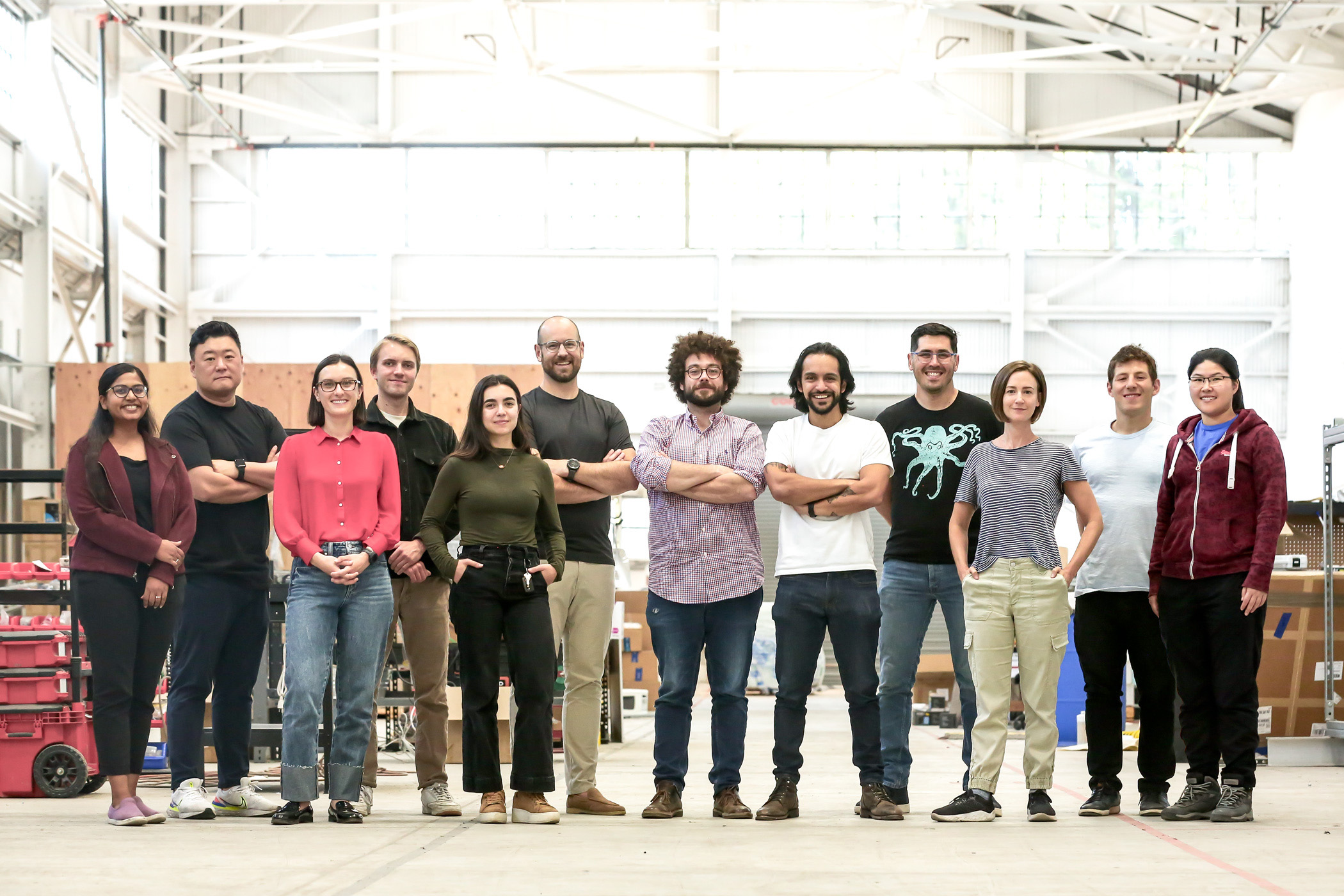
A buyer changes the machine
At first, Noya considered selling captured carbon dioxide into the existing commercial market. Businesses already bought the gas; selling to them offered a route to revenue while the market for permanent carbon removal was taking shape. An elegant capture process still needed someone willing to pay for what came out of it.
Shopify’s early purchases helped change that calculation. By 2022, Santos was explaining that the company could concentrate on carbon removal sooner than expected because buyers were signaling demand. The customer had influenced the direction of the business before the business had reached scale. An advance purchase could make a future machine easier to finance.
The hardware changed too. Following the 2022 Inflation Reduction Act, Noya moved away from cooling tower retrofits toward modular equipment near underground storage sites. The tax-credit economics favored a different arrangement. Santos had to carry an environmental ambition through the details of where equipment stood, how large a project would be and where its captured gas would go.
The later system used activated carbon coated with capture chemicals. Air passed through; the material collected CO₂. Electricity applied directly to the conductive material helped release the captured gas. The approach aimed to reduce the extra heating equipment and associated losses. It was the kind of design choice that made his manufacturing background relevant: fewer complications were worth pursuing when the aim was repetition.
The factory problem returns
Led by Union Square Ventures and Collaborative Fund
In April 2023, Noya announced an $11 million Series A led by Union Square Ventures and Collaborative Fund. Its plans included more testing, manufacturing capability and a commercial pilot. Funding gave the team room to attempt the next stage. It also made the difference between a working experiment and a working business more consequential.
Santos was learning to speak beyond the laboratory. In June that year, he signed a submission to the United Nations climate process about carbon removal. The letter discussed permanent storage and monitoring, reporting and verification. For a company selling removal, the accounting belonged alongside the chemistry. A customer needed a credible explanation of what had been removed and where it would stay.
In October 2024, Noya announced a sorbent manufacturing partnership with Johnson Matthey. The established manufacturer brought equipment and techniques used to produce automotive components. Santos explicitly connected the decision to his experience at Tesla and Harley-Davidson. He was again dealing with a familiar question: how to make specialized hardware through an industrial supply chain.
That sequence is easy to read backward as a march toward an inevitable outcome. It was a series of attempts, each carrying its own uncertainty. The funding announcement concerned capital raised. The partnership concerned manufacturing plans. Neither should be mistaken for evidence that the hoped-for network of carbon removal facilities had already been built.
What he did when Noya ended
On August 7, 2025, Santos publicly announced the decision to wind down Noya. His immediate concern was the people leaving it. He assembled a list of alumni seeking work and invited companies to consider them. After years of asking others to join his venture, he was helping them find somewhere else to build.
He described the experience as both fulfilling and difficult, and said he was stepping back from full-time work in carbon removal while remaining willing to help the sector. That distinction gave his departure a particular shape. Noya was ending; his respect for the work and the people doing it continued.
A founder’s public record often gives generous space to arrivals: funding, customers, new colleagues. Here, the departure deserves space too. Santos chose to use the attention around the closure to recommend his team. The action was small enough to describe precisely, and substantial enough to reveal something about his priorities without requiring a speech about leadership.
London, with a different kind of prototype
In November 2025, Santos announced his move to London and his work with Fifty Years on 5050, its ARIA-backed program for scientists, engineers and academics becoming founders. The relationship had history. Seth Bannon, Ela Madej and Alex Teng were among the people he knew through the firm that had first invested in Noya.
By February 2026, he was teaching a session built around the passage from employment to a first investment. He called his material the Paycheck to Pre-Seed Playbook. It drew on the same worries he had faced before Noya: rent, an untested idea, the cost of leaving a job. Experience had become something he could put in front of a room.
Away from founder programs, Santos makes room for house DJing, sailing, running and snowboarding. The range fits his newer work. After a UK 5050 camp in May 2026, he wrote about the value of sharing uncomfortable experiences and taking time away from work. Dancing under the stars made his list of useful activities. The house DJ had found an educational application.
“vulnerability builds trust faster than polished stories do.”Josh Santos, after 5050 camp, May 2026
The appeal of his present role lies partly in how much his experience complicates a simple pep talk. He has left the salary, raised the money, worked with the customers and closed the company. Each experience can give an aspiring founder a different question to ask before committing a career to an idea.
Santos began with an interest in solving a problem large enough to alter familiar places. For a time, his answer was a carbon capture machine. In London, he is working with people deciding what to build themselves. The next useful thing he helps make may start with a scientist asking whether it is time to leave a perfectly respectable job.
Read, watch, follow
- Fifty Years
- Josh Santos on LinkedIn
- Josh Santos on X
- Noya’s website
- Watch: This Is CDR - Noya Updates with Josh Santos
- Listen: Josh Santos and Daniel Cavero on MCJ
- MIT News: Noya’s modular carbon capture approach
- Santos’s announcement of Noya’s wind-down
- Santos on joining Fifty Years in London
- The Paycheck to Pre-Seed Playbook
- Carbon Unbound: Santos on his early motivation and Noya
- Venture Insider: an interview with Santos
- Noya’s Y Combinator profile