John V. Oyler got involved in the wireless business before he owned a mobile phone. An acquaintance had an idea, and Oyler wanted to work with him. The sequence is pleasingly untidy: first the person, then the business, and somewhere further down the list, the actual telephone.
He later described himself as “a very people driven person.” That admission offers a useful way into a career that otherwise looks like a collection of changes of direction. Wireless information. Consulting. Executive roles at several companies. A partnership with Xiaodong Wang that has lasted through the transformation of BeiGene into BeOne Medicines. Follow the people, and the route becomes easier to understand.
Oyler is BeOne’s co-founder, chairman and chief executive. He has held the chief executive role and led its board since the company began in 2010. More than fifteen years gives a startup time to acquire an institutional memory, and for its founder to discover which of his early convictions survive a much larger payroll.
The customer needed a refrigerator
Before there were shareholders, there were students furnishing rooms. At MIT, Oyler worked at assorted jobs and started a business with his roommate selling dorm essentials. Refrigerators, carpets and bookshelves offered a reasonably direct introduction to customer demand. A person with an empty room is refreshingly clear about the problem.
His campus employment also included selling doughnuts. The range is worth enjoying: an engineering student discovering that a customer might require either breakfast or somewhere to put it. There is something useful about an early business whose appeal can be explained without a slide deck.
Operations supplied a less charming lesson. Oyler recalled unloading trucks of carpets without thinking the process through, then spending eight hours reloading them. The merchandise had survived. His afternoon had not. An abstract phrase like supply-chain management becomes more memorable when it has to be carried back into a truck.
He was studying mechanical engineering, a discipline concerned with how things work together. The dorm business supplied a parallel curriculum in what happens when they do not. A refrigerator can have excellent specifications and still be in the wrong place. Business has a way of grading the whole arrangement.
An engineer learns to read a market
Oyler earned his MIT bachelor’s degree in June 1990 and his Stanford MBA in January 1996. He began his professional career at McKinsey & Company. His early consulting assignments included mainland China, where he spent time in Beijing and other cities during the early 1990s. The country entered his working life well before the company that would make him widely known.
His executive history includes Genta, where he was co-chief executive in 1997 and 1998, and Galenea, where he served as chief executive from 2002 to 2004. Between those names sits Telephia, the information company he co-founded and served as president. Its product was understanding an expanding wireless market.
Telephia began in February 1998 with Oyler and Tom Frangione. In 1999, its stated ambition was to become the wireless industry’s equivalent of A.C. Nielsen. It brought together information about market share, network quality, brand awareness, products and promotions. Carriers were spending heavily to attract customers; Telephia offered a way to examine what that spending accomplished.
There is a small delight in the sequel. Nielsen acquired Telephia in 2007. The early comparison eventually became the name on the buyer’s side of the transaction. Startup aspirations do not often resolve with such tidy punctuation.
A footnote with four inventors
One detail from the wireless years sits outside the usual executive biography. A patent application published in 2006 names Oyler alongside Tom Frangione, Mark Heidohrn and Alan Peyrat. Its subject is gathering data from wireless communications networks; the original assignee was Telephia.
The document describes collecting network information with multiple receivers and using the resulting data to evaluate performance. It is an appropriately practical trace of his engineering background: a system for observing what is happening, rather than relying entirely on what somebody says is happening.
A patent credit cannot tell us how four colleagues divided their work. It does preserve the fact that Oyler’s name appears among the inventors, attached to a specific technical problem. For someone usually introduced by three executive titles, that is a welcome change of scale. There was a thing to figure out, and a group trying to figure it out.
The partner who knew the larger map
BioDuro, founded in 2005, gave Oyler another education in organizing across borders. His partner Masood Tayebi had already run a business operating in 27 countries. Oyler was candid about finding reassurance in that experience. Having lived abroad did not, he said, remove his apprehension about running an international company.
That candor makes the account interesting. Familiarity with a country and responsibility for an organization are different qualifications. A passport collects evidence of travel with much less fuss than a company collects capable managers. Oyler could recognize the distance between what he had done and what the next business would demand.
The partnership also brought an influence from information technology: customers wanted a complete solution instead of a collection of disconnected services. It is a business-design question that travels easily between industries. Who sees the whole job? Who makes sure the pieces fit? Selling each component separately does leave everyone with excellent opportunities to blame someone else.
A company they could keep building
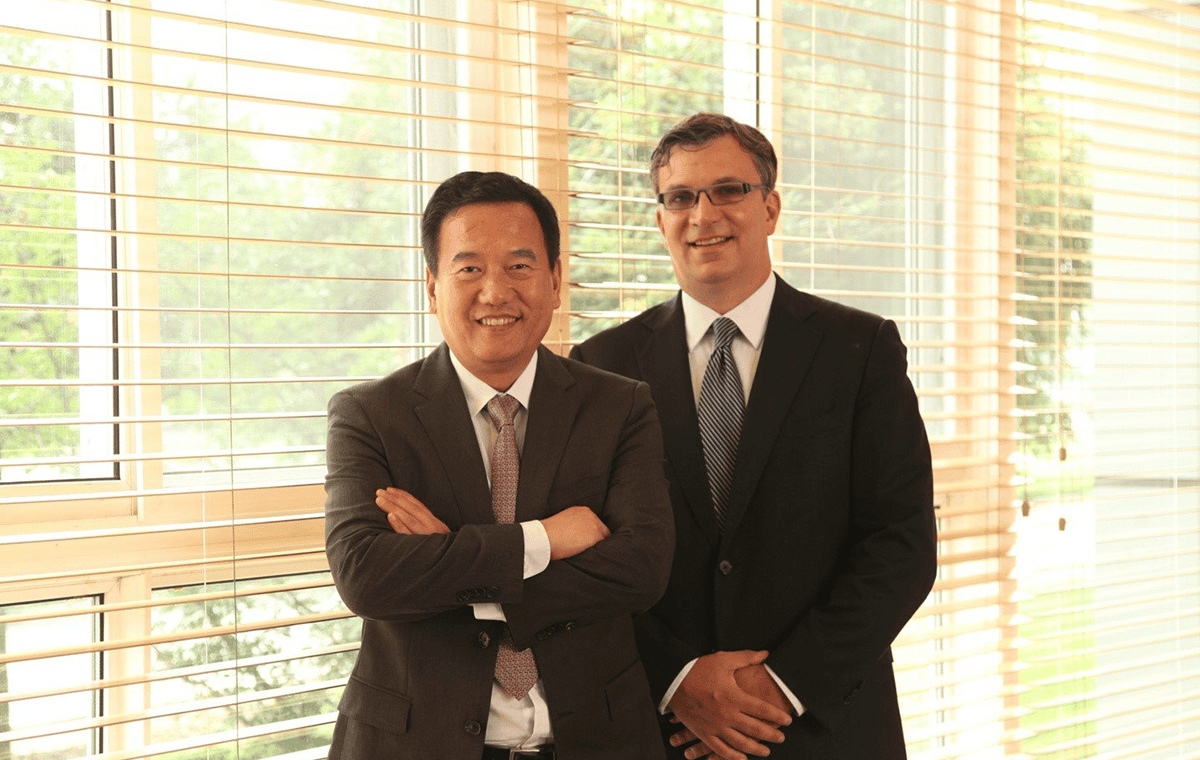
Oyler’s next enduring partnership began near BioDuro. Xiaodong Wang, who was building Beijing’s National Institute of Biological Sciences, unexpectedly walked into its lobby. Oyler happened to be there. He had previously wanted to meet Wang, yet initially did not recognize the visitor. The two got to know each other over the following years.
When a possible venture came up, its proposed destination troubled Oyler: build it, then sell it. After BioDuro’s acquisition by PPD, he wanted to create something he could continue developing. He and Wang founded BeiGene in 2010. The choice of partner and the intended life of the company belonged to the same conversation.
Years later, asked where the global business had its headquarters, Oyler gave an answer that sounds like a joke smuggled into an organization chart: “Our company headquarters is on Zoom.” Senior colleagues worked in different cities. Their shared meeting place offered a better description of decision-making than a pin on a map.
“Our company headquarters is on Zoom.”
John V. Oyler, recalling a conversation about the company’s center
The buildings are quite real
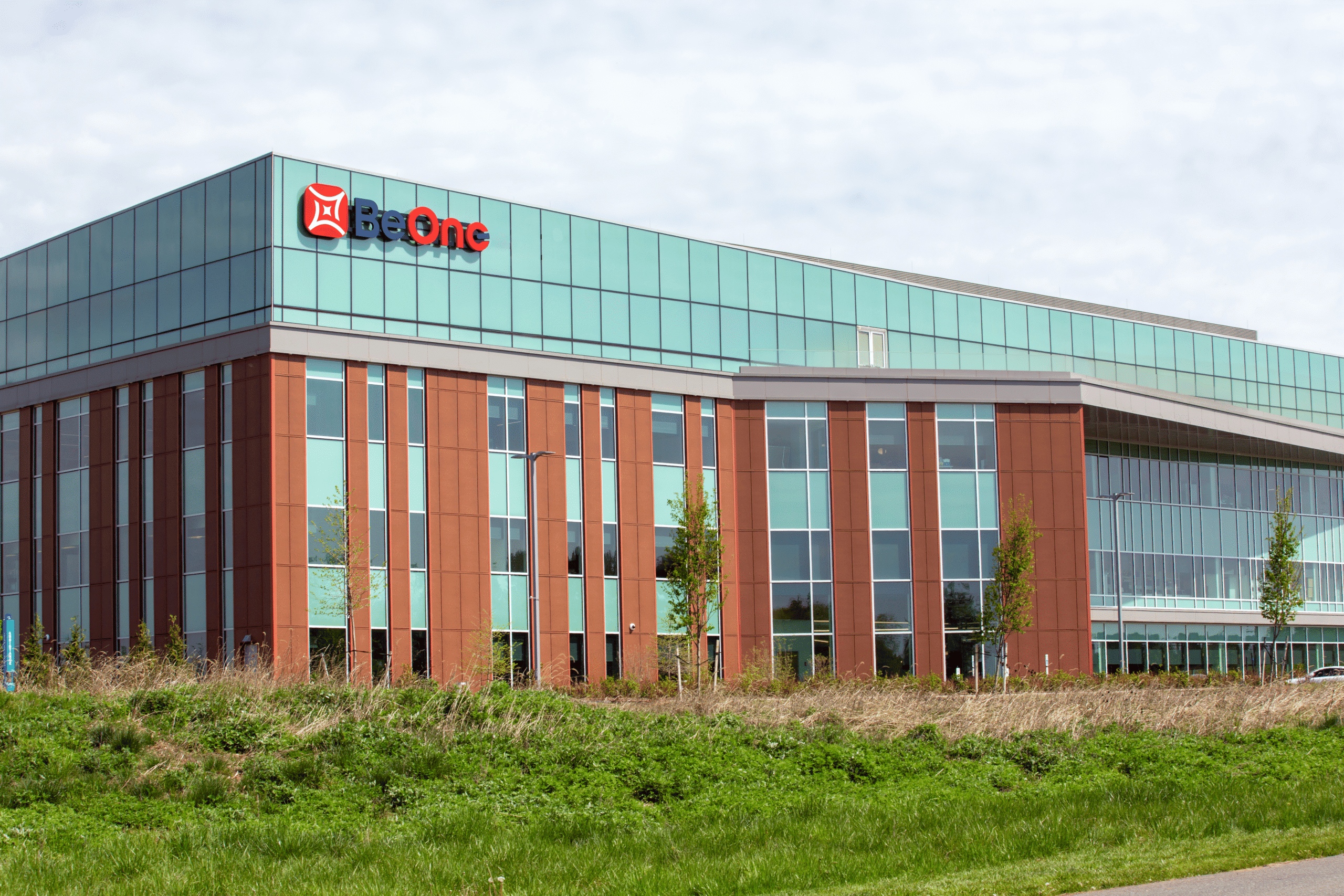
A distributed management team still needs places where people work. In July 2024, the company opened its Hopewell, New Jersey, campus after an $800 million investment. The site covered 42 acres and included approximately 400,000 square feet of space. Oyler joined Governor Phil Murphy and local officials for the ribbon cutting.
Then came another commitment. On July 23, 2026, BeOne announced a $300 million expansion, with 120 new full-time jobs planned. The project would add a three-story, 145,000-square-foot building. Hopewell Township subsequently described the expansion’s expected contribution to local employment and the community’s economic base.
Those are company investments, rather than a tally of the founder’s personal spending. They also provide a useful picture of the job he now holds. A founder may begin by moving inventory himself. Eventually the decisions involve buildings, long schedules and obligations that will outlast any particular quarter’s presentation.
Pittsburgh stays in the conversation
For an account of the character he admires, Oyler has pointed to the Pittsburgh Steelers. Growing up around Pittsburgh, he associated the team with work, persistence, loyalty and care for its community. His examples included Art Rooney Sr. and players such as Mean Joe Green and Jerome Bettis. Football supplied a vocabulary for the kind of organization he wanted to help create.
His stated management preference is for debate across levels and locations, with decisions grounded in evidence and reasoning. His parents and the lawyer Jeff Weisen also feature in his account of learning to lead. He has described helping others learn and grow as a personal goal. That ambition makes room for work whose result will appear on somebody else’s résumé.
The Pittsburgh attachments extend to the Penguins. He enjoys skiing and time with his family, and serves on Stanford Graduate School of Business’s Advisory Council. These details put a little ordinary life around the executive titles. Even a founder whose colleagues occupy several time zones can retain a perfectly local sporting allegiance.
The next quarter, and the next decade
In 2025, BeiGene adopted the BeOne Medicines name. That year also brought national recognition from EY’s Entrepreneur Of The Year program. By the second quarter of 2026, the business reported $1.7 billion in quarterly revenue, a 30 percent increase from the same period a year earlier. The organization he and Wang started had become a company with substantial continuing operations.
A revenue figure answers one question about scale. Oyler’s career invites a few others. How does a founder select people whose experience fills his own gaps? How does a partnership develop before it becomes a corporation? How long does he want to remain responsible for what he has built?
The young entrepreneur who joined a wireless venture without owning a phone makes those questions feel less ceremonial. He was willing to start with a person he wanted to work alongside. Across the changes in company names, industries and office locations, that is an unusually recognizable place to begin.