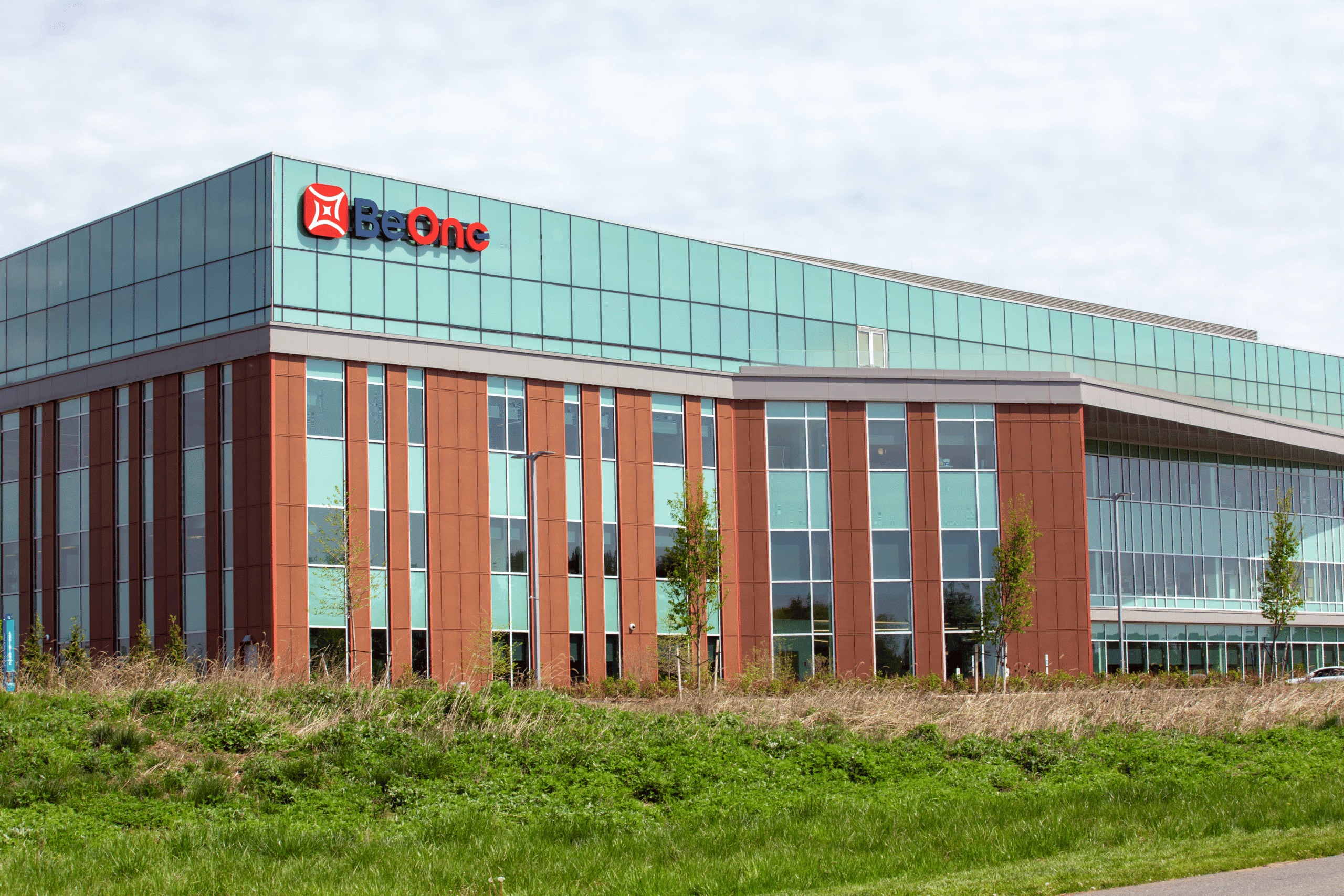
A cancer drug is usually introduced as a molecule. BeOne Medicines offers another place to begin: a building in New Jersey. Its Hopewell campus opened in 2024 after an $800 million investment. In July 2026, the company announced another $300 million expansion. Before considering the chemistry, consider the confidence required to pour that much concrete.
- Prove the drug. Brukinsa challenged an established blood-cancer treatment in a direct comparison.
- Build the route. BeOne brought clinical operations in-house and invested in manufacturing.
- Pay for the ambition. Its 2025 revenue reached $5.34 billion; research spending reached $2.15 billion.
A factory is an argument
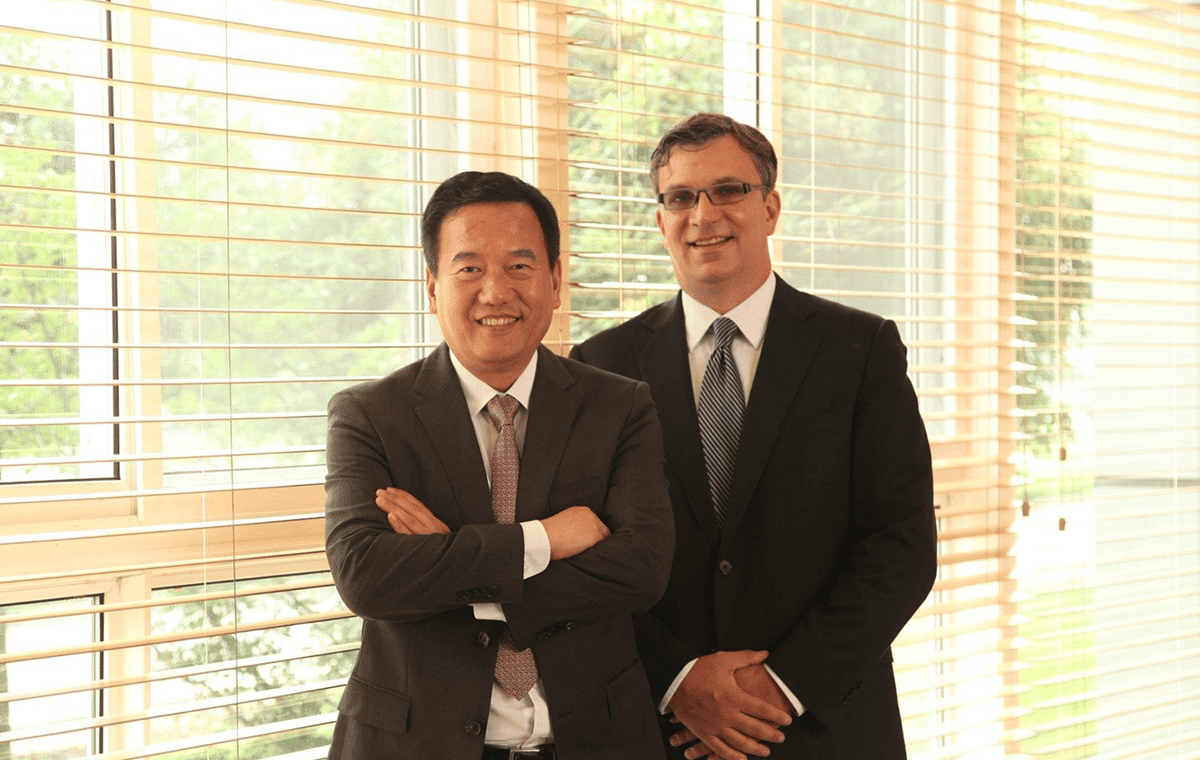
Founded as BeiGene in 2010 by entrepreneur John V. Oyler and scientist Xiaodong Wang, the company grew from Chinese research roots into a business spanning blood cancers and solid tumors. In 2025, it became BeOne Medicines and moved its legal domicile to Switzerland. The name changed after much of the machinery was already in motion.
The factory helps explain the ambition. A discovery must survive clinical testing, regulatory review, production and distribution before reaching a patient. Each stage can become somebody else’s responsibility. BeOne has chosen to own substantial parts of that journey. Hopewell was initially built for biologics; the announced expansion adds small-molecule manufacturing capabilities. Two kinds of medicine require different industrial skills.
The comparison that mattered
Brukinsa, the brand name for zanubrutinib, is the commercial engine. It inhibits BTK, a protein involved in the growth and survival of certain cancerous B cells. That puts it in a competitive neighborhood alongside medicines such as Imbruvica and Calquence. The problem was never simply whether another BTK inhibitor could exist. Physicians already had choices.
BeOne funded ALPINE, a randomized study involving 652 people with previously treated chronic lymphocytic leukemia or small lymphocytic lymphoma. The comparator was ibrutinib, sold as Imbruvica. At two years, about 78% of patients receiving zanubrutinib were alive without their cancer worsening, compared with about 66% receiving ibrutinib. Those are results in a defined trial population, rather than a promise to every patient.
The FDA approved Brukinsa for CLL/SLL in January 2023. The medicine generated $3.93 billion in 2025, roughly 74% of BeOne’s total revenue. A direct clinical comparison had become a business fact. It also left a concentration problem: much of the company’s success still depended on one product.
Owning the expensive middle
The company’s less photogenic choice concerns clinical operations. Its history dates the move toward bringing that work in-house to around 2020. In a 2026 interview, Oyler described a model built around internal trials, global partnerships and community oncologists. The practical attraction is clear: fewer organizational handoffs can put more responsibility for execution inside the company.
That is a plausible operating advantage, not evidence that every study becomes cheaper or faster. Internal teams need salaries, systems and a continuing pipeline. A small developer with one uncertain asset could find the same architecture painfully expensive. The transferable idea is to identify the bottleneck worth owning, then calculate what happens when the pipeline slows.
“When we started the company, the commitment was to fight cancer, and I think that commitment hasn’t changed.”
John V. Oyler · Morgan Stanley interview, 2026
The bill is substantial. BeOne spent $2.15 billion on research and development in 2025. Its $5.34 billion in total revenue supported $286.9 million in annual GAAP net income, following a $644.8 million loss in 2024. Amgen’s strategic investment, which closed in January 2020 at about $2.78 billion, illustrates the financing muscle behind this approach. Owning infrastructure requires someone to finance the waiting.
Its expertise now extends beyond a single class of blood-cancer drugs. The development pipeline includes antibody-drug conjugates, which pair an antibody with a drug payload, and protein degraders designed to remove a target protein. These are investigational programs, with clinical outcomes still to establish. Having the factory and the trial organization creates a route to testing them; it does not establish that they work.
The partner exits. The drug stays.
Ownership also became a response to a changed partnership. Novartis paid $650 million upfront under a 2021 tislelizumab agreement. In September 2023, the companies terminated that arrangement, and BeiGene resumed global development and commercialization rights. There is no need to invent a founder’s private revelation here. The observable change was contractual: BeOne would carry more of the responsibility itself.
Tislelizumab, sold as Tevimbra, is a PD-1 checkpoint inhibitor used in specified solid-tumor settings. It gained its first FDA approval in 2024. A third medicine, sonrotoclax, received U.S. accelerated approval as Beqalzi in May 2026 for adults with relapsed or refractory mantle cell lymphoma after at least two systemic therapies, including a BTK inhibitor. That pathway carries a continuing obligation to verify clinical benefit.
There have been problems beyond partnering. In May 2026, the FDA challenged a Brukinsa television advertisement, including its quality-of-life implications and presentation of safety information. A favorable clinical endpoint cannot support every appealing claim. For a company selling evidence, the distinction is commercially awkward and medically essential.
Access has to travel the last mile
The patient uses the medicine. The oncologist chooses treatment. Distributors, pharmacies, hospitals and payers help determine whether it arrives. BeOne earns primarily from prescription sales, including its own products and selected licensed medicines in China. Regulatory approval therefore answers only part of the access question. Reimbursement, local availability and patient eligibility still matter.
The commercial numbers also need their labels. After its August results, BeOne raised full-year 2026 revenue guidance to $6.6 billion-$6.8 billion. That was management’s forecast, not money already earned. Likewise, the company’s stated values - Patients First, Collaborative Spirit, Bold Ingenuity and Driving Excellence - describe its intended culture. Financial results, clinical data and actual access provide firmer tests of execution.
One useful measure comes from its partnership with The Max Foundation and BeOne Care Foundation. Renewed in August 2026, the program had provided Brukinsa access to more than 300 people with CLL in low- and middle-income countries. The plan is approximately 1,000 patients cumulatively through 2028. That is a bounded commitment readers can follow.
Patients and clinicians can search BeOne’s trial finder by condition and location; study teams assess eligibility. Meanwhile, second-quarter 2026 revenue reached $1.7 billion, and October brought plans for further solid-tumor presentations at ESMO. The next test is whether the infrastructure that helped carry Brukinsa can carry a broader portfolio. The buildings are already there. The evidence still has to arrive.
Keep exploring
For treatment information, study searches and a closer look at the company: