In 2022, Humira brought AbbVie $21.237 billion. A single medicine generated more than a third of the company’s revenue. For most businesses, that would be an occasion for cake. For a drugmaker, it also invites a particular kind of arithmetic: how much of this disappears when competitors arrive?
U.S. biosimilar competition began in 2023. By 2025, Humira’s worldwide sales were $4.540 billion. Yet AbbVie’s total revenue had climbed above its 2022 level. The interesting question is what happened before the decline. AbbVie had spent years preparing other medicines, other markets and other ways to make money.
- Humira’s decline was a known deadline.
- Skyrizi and Rinvoq became the principal successors.
- Acquisitions broadened the business, with some expensive disappointments.
A deadline with a dollar sign
AbbVie began independent life in January 2013, when Abbott separated its research-based pharmaceutical business. It arrived with medicines already on the market. This was a new company with an old company’s responsibilities: clinical research, regulated factories and patients whose treatment could not pause for a corporate reorganization.
Humira, an antibody targeting tumor necrosis factor, treated several inflammatory diseases. Its commercial success gave AbbVie resources to finance what came next. It also created concentration risk. The same product that supported the business made the eventual loss of exclusivity consequential.
Look at the timing. AbbVie obtained rights to risankizumab through a 2016 collaboration with Boehringer Ingelheim. The medicine became Skyrizi. It received its first U.S. approval in 2019, as did Rinvoq. Both were on the market years before Humira’s American biosimilar competition began. The successors had a running start.
Two medicines, two routes out
Skyrizi and Rinvoq are different tools. Skyrizi inhibits interleukin-23, a signaling protein involved in inflammation. Rinvoq is an oral JAK inhibitor. Their approved uses overlap across some inflammatory conditions, but their mechanisms, dosing and safety considerations differ. They are prescription treatments chosen for particular patients, rather than interchangeable replacements for everyone taking Humira.
Rinvoq also shows why commercial opportunity requires clinical qualifications. Its U.S. approval for Crohn’s disease covered eligible adults with an inadequate response or intolerance to TNF blockers. JAK inhibitor warnings include serious heart-related events, cancer, blood clots and death. A growing market does not remove the need to weigh individual risks.
The second route was acquisition. AbbVie announced its Allergan purchase in 2019 at roughly $63 billion in equity value and completed it in May 2020. Botox, eye care and aesthetic products widened the portfolio. The appeal was diversification: a company facing pressure on its dominant medicine would have more businesses contributing cash.
There is a useful wrinkle here. Botox appears in separate therapeutic and cosmetic revenue lines. The familiar beauty brand also has medical uses. AbbVie’s range extends further, from migraine medicines Ubrelvy and Qulipta to cancer treatments including Venclexta and Epkinly. Different conditions mean different specialists, treatment decisions and competitors.
The buyer is not always the patient
To understand this business, follow the medicine past the laboratory. AbbVie sells through wholesalers, distributors, pharmacies, governments and healthcare providers. Three wholesalers, McKesson, Cardinal Health and Cencora, accounted for substantially all its U.S. pharmaceutical product sales in 2025. The patient who needs a treatment usually does not place an order with the manufacturer.
That creates several audiences. A prescriber needs evidence. A payer evaluates coverage and reimbursement. A patient needs a treatment they can obtain and use. AbbVie competes with drugmakers such as Johnson & Johnson, Novartis, Lilly and Amgen across overlapping markets. Its research, manufacturing capacity and commercial network matter together; a discovery alone cannot perform all three jobs.
For patients, the practical entry points are product information and support programs. Eligible U.S. patients with no insurance or limited coverage may receive medicines without charge through myAbbVie Assist. Commercial-insurance programs have different conditions. Availability and approved uses vary by country, which makes local product information essential.
An $8.7 billion reminder
Buying the future brings its own uncertainty. AbbVie completed its $8.7 billion Cerevel acquisition in August 2024. Among the attractions was emraclidine, an experimental schizophrenia medicine with encouraging early findings. In November, two Phase 2 trials failed to demonstrate the required statistically significant improvement over placebo on their primary endpoint.
“While we are disappointed with the results, we are continuing to analyze the data to determine next steps.”
Roopal Thakkar / chief scientific officer / November 2024
The clinical evidence changed the financial assumptions. AbbVie subsequently recorded a $3.5 billion non-cash, after-tax impairment for the emraclidine asset in its 2024 results. That charge was not the acquisition’s total price, nor proof that every Cerevel program had failed. It was a substantial reduction in the value assigned to one anticipated medicine.
Here the comparison with Humira becomes useful. A loss-of-exclusivity date can be anticipated. A trial result cannot be scheduled into success. A diversification strategy needs several credible possibilities because even an expensive purchase can deliver disappointing evidence.
Build the replacement while you can
There is work between signing a deal and making it useful. In his account of the Allergan integration, founding CEO Richard Gonzalez emphasized employee buy-in and explaining the combined company’s purpose. AbbVie’s stated culture stresses patient impact, integrity and innovation. Those commitments are management’s description; integration still depends on people making thousands of ordinary decisions together.
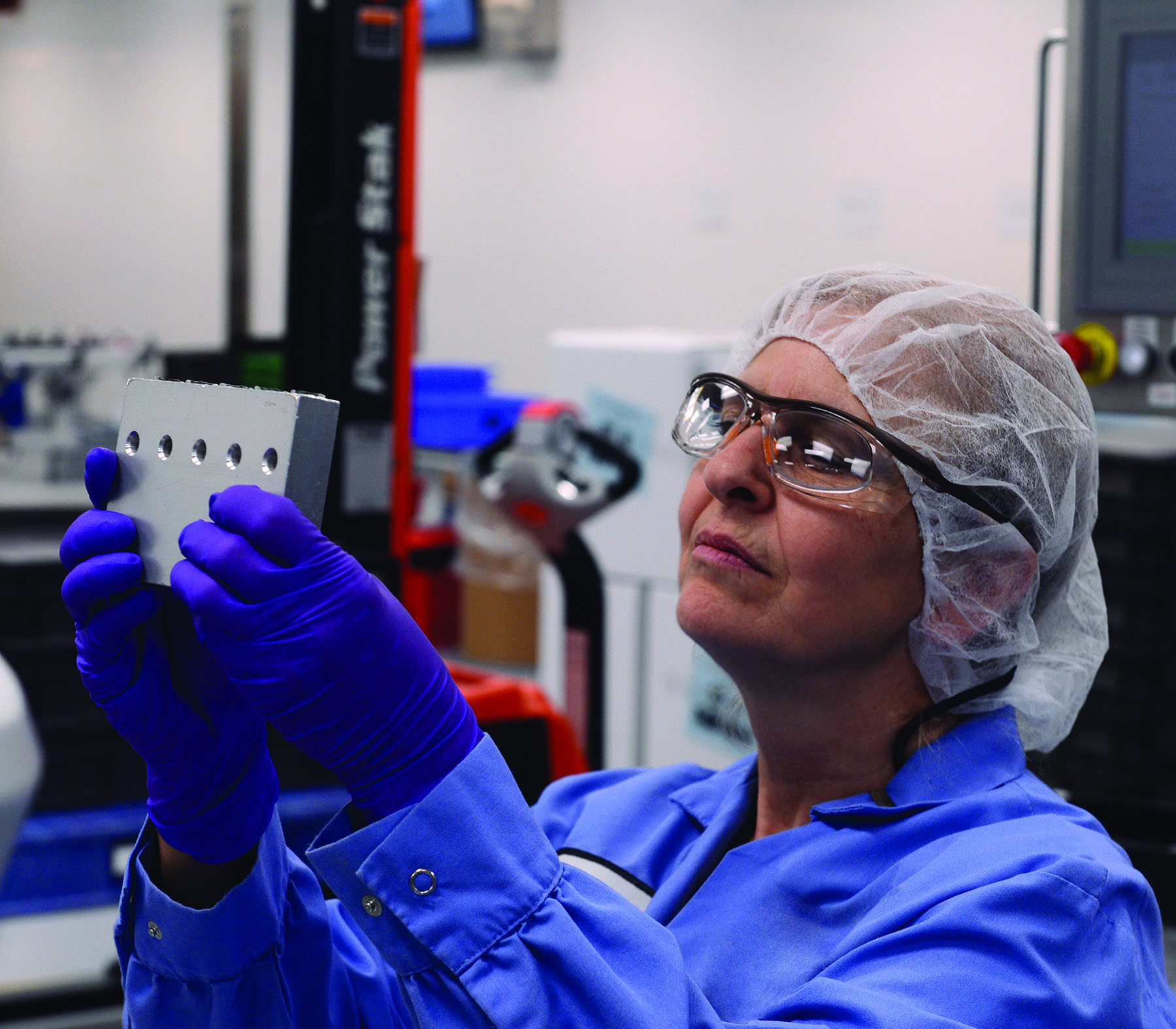
There are physical constraints, too. In September 2025, AbbVie began a $70 million expansion in Worcester, Massachusetts, adding biologics manufacturing areas and laboratory, warehouse and office space. Selling more complex medicines requires somewhere to make them. Partnerships provide another route: its 2020 Genmab oncology agreement began with $750 million upfront and shared development and commercialization responsibilities.
The lesson a smaller business can copy is the sequence. Name the dependency. Put a date on the threat. Fund alternatives while the existing business can support them. That approach needs capital, time and alternatives that actually work. AbbVie’s trial disappointments show how quickly the last assumption can change. Preparation buys opportunities; the evidence decides what they become.
AbbVie has announced a McLaren Racing partnership linking championship points to donations for immune-mediated disease charities. The company’s latest reported quarter, Q2 2026, brought $16.990 billion in net revenue, up 10.2% year over year.