The Company Today
The lab that decoded breast cancer has a sequel
On the ground floor of a building in Culver City, a few dozen people are running clinical trials against four different cancers at once. That is an unusual amount of ambition for a company of 63. Most biotechs this size are still arguing about a single molecule. TORL BioTherapeutics is shepherding a CLDN6 drug toward a pivotal trial, an antibody and a conjugate against CLDN18.2, an ADC for colorectal cancer, and another for solid tumors that carry a protein called DLK1.
The shortcut, if you can call it that, is pedigree. TORL's science comes out of the UCLA laboratory of Dennis Slamon - the oncologist whose work on the HER2 protein produced Herceptin, and whose lab helped validate the targets behind Ibrance and Kisqali. Three drugs that changed how breast cancer is treated, all traceable to one bench. TORL is the bet that the bench has more where that came from.
"Leverage decades of scientific expertise and deep research capabilities while avoiding the significant costs and risks associated with early-stage discovery."
- Amit Sinha, Goldman Sachs Asset Management, on the TORL thesis
*Phase 1 overall response rate, CLDN6+ platinum-resistant ovarian cancer at the 2.4 mg/kg dose (n=8). Early data; not a promise.
The Problem They Saw
Chemotherapy can't tell friend from foe
Here is the oldest problem in cancer treatment. The drugs that kill tumor cells are very good at killing other cells too. Hair, gut lining, bone marrow - chemotherapy hits all of it, because a fast-dividing cancer cell and a fast-dividing healthy cell look nearly identical to a poison. Oncology has spent fifty years looking for a way to aim.
Antibody-drug conjugates are one answer. The idea: take an antibody that locks onto a protein found on cancer cells, then chain a potent toxin to it. The antibody is the address. The toxin is the package. Deliver one without spilling the other, and you have chemo that knocks on the right door.
The catch has always been the address. Most proteins that show up on tumors also show up, a little, on something you need - and "a little" toxin in the wrong tissue is how good ideas become bad side effects. The whole game is finding a target that sits on the cancer and almost nowhere else.
That is what makes Claudin 6 interesting. It switches on during fetal development and switches off before birth. In a healthy adult, it is essentially absent. On certain tumors - ovarian, endometrial, testicular - it comes roaring back. A protein that the body has otherwise retired is about as clean an address as oncology gets.
Find a flag the tumor waves and the body never does. Aim the whole arsenal at the flag.
- The ADC thesis, compressed
The Founders' Bet
Skip the lottery, license the proof
Drug discovery is mostly a story of dead ends. For every target that becomes a medicine, dozens look promising and then quietly don't. The early-discovery phase is where the money goes to die. TORL's founders decided to start somewhere further down the road.
Through a strategic partnership with the Slamon Research Lab at UCLA, the company holds exclusive development and commercial rights to a portfolio of biologics aimed at validated cancer targets - science that has already cleared the riskiest hurdle of all, which is being right. Around that foundation gathered a roster that reads like a who's-who of drug development: Dennis Slamon as scientific co-founder, Dave Licata and Mark Attanasio among the founding team, and Mark Alles - the former chief executive of Celgene - as chairman.
Scientific Co-Founder
Dennis Slamon, M.D., Ph.D.
The UCLA oncologist behind the HER2 discovery that led to Herceptin, and the CDK4/6 work behind Ibrance and Kisqali. TORL's pipeline grew from his lab.
Chairman & CEO
Mark J. Alles
Former chief executive of Celgene. Brings late-stage commercial and operating muscle to a company moving its lead drug toward registration.
Co-Founder
Dave Licata
Founding leader who helped translate the UCLA science into an operating company and its earliest financings.
Co-Founder
Mark Attanasio
Managing Partner at Crescent Capital Group; helped anchor TORL's capital base alongside co-founder Neil O'Brien.
"Building a preeminent biopharmaceutical company dedicated to the discovery, development, and commercialization of antibody-based therapies to improve and extend the lives of people with cancer worldwide."
- TORL BioTherapeutics, mission statement
The Record So Far
Six years, four targets, one pivotal trial
2019
The company forms
TORL is founded around biologics discovered in the Slamon Lab at UCLA, with exclusive rights to a portfolio of novel cancer targets.
2023
$158M Series B launch
TORL goes public with a Series B led by Goldman Sachs Asset Management, with Bristol Myers Squibb, Cowen, Vertex Ventures HC and Alexandria.
2024
$158M Series B-2 & ESMO data
An oversubscribed second tranche funds the pipeline; Phase 1 results show up to 50% response in CLDN6+ platinum-resistant ovarian cancer.
2025
$96M Series C & pivotal trial
TORL closes its Series C and presents updated TORL-1-23 data at ESMO in Berlin. Pivotal CATALINA-2 Phase 2 is underway; FDA grants Fast Track.
2026
Phase 3 planned
A confirmatory CATALINA-3 study is slated to begin, with pivotal Phase 2 data expected in 2027.
The Product
A pipeline that reads like a hit list
TORL doesn't have one drug. It has a system for turning Slamon-lab targets into antibody-based medicines - and a lead program that is now the company's proof of concept.
Lead · Phase 2
TORL-1-23 (ixotatug vedotin)
A Claudin 6-targeted ADC for platinum-resistant ovarian cancer. In the pivotal CATALINA-2 trial; holds FDA Fast Track. The drug the whole company is judged by.
Phase 1
TORL-2-307
Both a monoclonal antibody and an ADC aimed at Claudin 18.2-positive solid tumors, including gastric and pancreatic cancers.
Pipeline
TORL-3-600
An ADC targeting CDH17, a protein found on colorectal and other gastrointestinal cancers.
Pipeline
TORL-4-500
An ADC against DLK1, a target that reappears on certain solid tumors - the same fetal-protein logic as Claudin 6.
Claudin 6 is a protein the body switched off before you were born. On a tumor, it switches back on - and becomes a target the rest of you doesn't share.
- Why TORL-1-23 leads the pipeline
The Proof
The numbers that made investors lean in
Mission statements are free. What moved TORL from interesting to fundable was Phase 1 data: in heavily pretreated patients whose ovarian cancer had stopped responding to platinum chemotherapy, TORL-1-23 shrank tumors at a rate that, for this population, is genuinely hard to dismiss.
Overall response rate by patient group
TORL-1-23 Phase 1, CLDN6+ tumors · source: ESMO 2024 presentation
Ovarian (PROC), 2.4 mg/kg
Ovarian (PROC), 3.0 mg/kg
Bars scaled to the 50% high-water mark. These are early, small-cohort numbers from a dose-finding study - encouraging, not conclusive. The pivotal CATALINA-2 trial exists to find out whether they hold.
Money followed the data. Since 2019 TORL has raised more than $450 million - a $158M Series B in 2023, an oversubscribed $158M Series B-2 in 2024, and a $96M Series C in October 2025 - from a backer list that includes Goldman Sachs Asset Management, Bristol Myers Squibb, Cowen Healthcare Investments, Vertex Ventures HC and Alexandria. Strategic pharma writing checks is its own kind of validation.
Capital raised by round
US$ millions · 2023-2025
Three rounds, one direction of travel: enough runway to carry a lead drug into pivotal trials without rationing the rest of the pipeline.
The Mission
Aimed at the patients chemo gave up on
The lead indication is not an accident. Platinum-resistant ovarian cancer is one of oncology's harder rooms - by the time the platinum stops working, options thin out fast, and the patients in those Phase 1 cohorts had already tried and exhausted line after line of treatment. A drug that produces responses there is speaking to people the system has largely run out of answers for.
TORL's stated aim is broader than one tumor: a portfolio of antibody-based therapies, each aimed at a target the Slamon lab has reason to trust, each meant to extend lives without burning down the body to do it. Claudin 6 is the proof of concept. Claudin 18.2, CDH17 and DLK1 are the argument that the model repeats.
"TORL is able to further the clinical development of this drug for patients with CLDN6+ platinum-resistant ovarian cancer."
- On the purpose of the 2025 Series C financing
Why It Matters Tomorrow
Back to the antibody on the wall
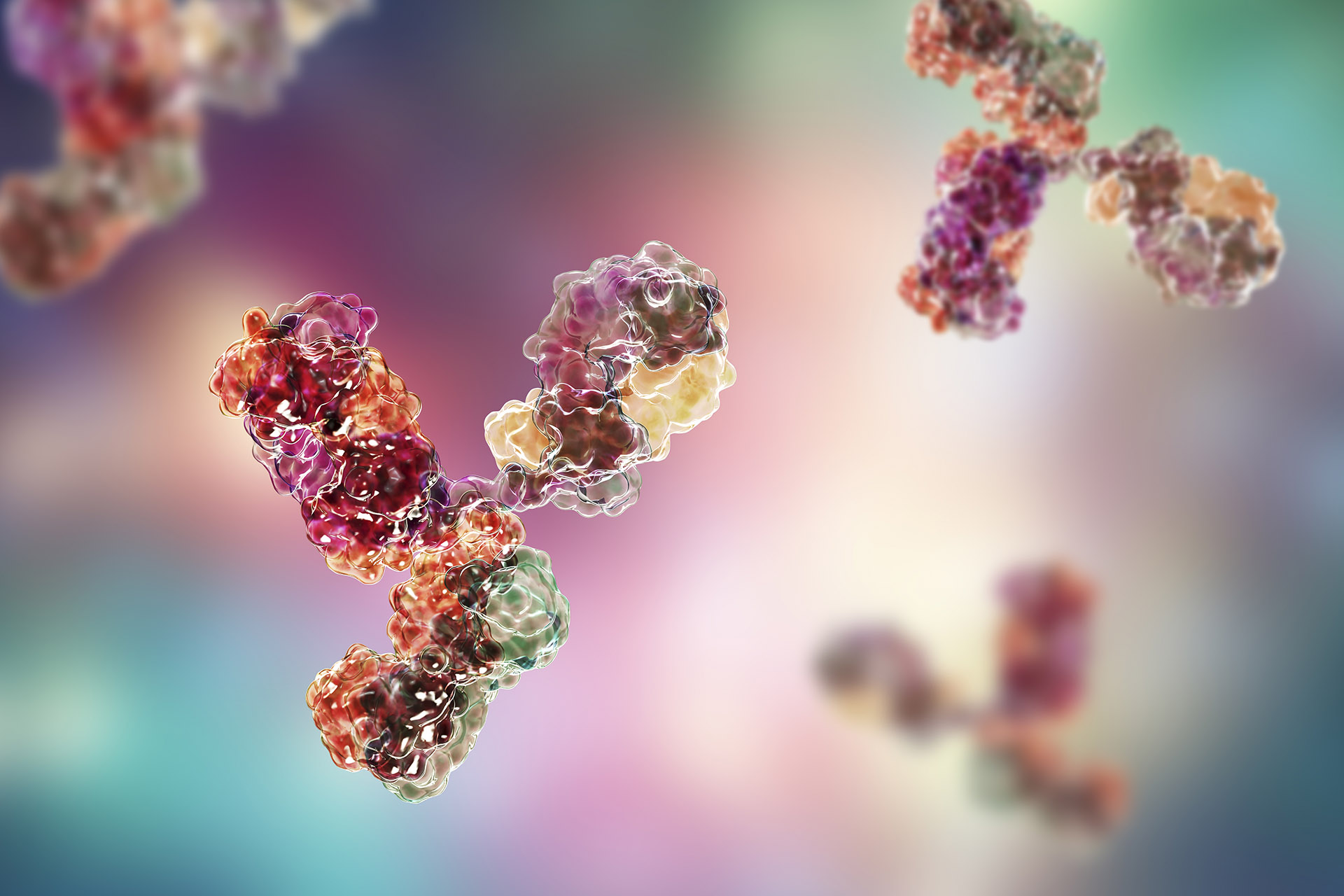
Look again at that Y-shaped molecule from the top of the page. For most of medical history it was a thing your immune system made and science merely watched. TORL is part of a generation of companies that treat it as a chassis - something you can engineer, target, and load with a payload precise enough to matter.
The honest caveat: clinical-stage biotech is a business of unproven promises, and most drugs that look good in Phase 1 do not finish the journey. TORL's lead program could stall in its pivotal trial like so many before it. But the company has done the rare thing of converting a legendary lab's reputation into a real pipeline, real data, and a war chest deep enough to find out. By 2027, the CATALINA-2 readout will say a great deal - about TORL, and about whether you can shortcut drug discovery by starting from proof instead of hope.
A few dozen people in Culver City, betting that the hardest problem in cancer has a clean address. The answer is in a clinical trial right now.
Profile compiled from public sources · Figures are approximate and reflect reporting through 2025-2026 · Early clinical data is not a guarantee of outcome.