cancer-treatment
(22)
Genmab
A Danish antibody specialist turned one licensed molecule into a multibillion-dollar royalty engine. Now Genmab is spending that advantage on a harder act: becoming the company that carries more of its own cancer medicines from lab bench to patient.
Actithera
Actithera is a radiopharmaceutical biotech developing next-generation radioligand therapies (RLTs) for cancer. Founded in 2021 by medicinal chemist Andreas Goutopoulos and based in Cambridge, Massachusetts and Oslo, Norway, the company uses a proprietary, chemistry-led platform to design covalent small-molecule radioligands that lodge inside tumors, deliver targeted radiation, and clear quickly from healthy tissue. Its isotope-agnostic approach is engineered to match the residence time of a drug in a tumor to the half-life of long-lived radionuclides, with a lead program targeting Fibroblast Activation Protein (FAP). Actithera raised an oversubscribed $75.5M Series A in July 2025.

Leal Health
Leal Health (formerly TrialJectory) is an AI-powered treatment decision-support platform that gives cancer patients and their oncologists an unbiased, single point of access to FDA-approved therapies and clinical trials matched to a patient's exact diagnosis. Founded in 2017 and headquartered in New York, the company built a patented, generative-AI engine that reads thousands of trials and treatment options, then matches patients in a roughly two-minute intake. It has facilitated millions of treatment matches across 22+ cancer types, is free for patients and clinicians, and earns revenue from biopharma partners and health plans. In February 2026 Leal Health was acquired by Nexus Precision Health.

Pinetree Therapeutics
Pinetree Therapeutics is a Cambridge, Massachusetts biotech founded in 2019 that develops antibody-based targeted protein degraders for cancer. Its AbReptor and TAER-TAB platforms use modular bispecific and multispecific antibodies to hijack the body's own lysosomal machinery and eliminate disease-driving membrane-bound and extracellular proteins - including drug-resistant receptor tyrosine kinases that conventional inhibitors cannot reach. Led by founder and CEO Ho-Juhn Song, Ph.D., the preclinical company has raised roughly $111M to date, struck a $500M+ EGFR-degrader option deal with AstraZeneca, and is advancing lead oncology programs toward Phase I.

Jack Hoppin
Jack Hoppin is the co-founder, chairman, and CEO of Ratio Therapeutics, a Boston-based biotech developing targeted radiopharmaceuticals for cancer. A mathematician by training with a PhD in applied mathematics, he previously co-founded the molecular imaging company Invicro and led Konica Minolta Precision Medicine. At Ratio he pairs with scientific co-founder John Babich to build fit-for-purpose radioligand therapies on the company's Trillium pharmacokinetic-modulation and Macropa chelation platforms, backed by investors including Bristol Myers Squibb and a partnership with Novartis.

Apeximmune Therapeutics
Apeximmune Therapeutics is a South San Francisco / Burlingame-area biotechnology company developing next-generation antibody therapeutics that harness the immune system to treat cancer and autoimmune disease. Using a proprietary target-discovery platform built on bioinformatic analysis of thousands of tumor RNA-seq transcriptomes, the company has identified more than 30 novel immune targets. Its lead program, AI-306, is a first-in-class antagonist antibody against the novel immune checkpoint AIM-103, and its MEBA platform builds bispecific antibodies that engage macrophages to kill tumor cells. The company closed a $21.3 million Series A in 2025 led by PharmaEssentia.
NEOK Bio
NEOK Bio is a Palo Alto-based clinical-stage biotechnology company developing bispecific antibody drug conjugates (ADCs) for solid tumors. Founded and led by physician-executive Mayank Gandhi and backed by Korean antibody specialist ABL Bio, NEOK launched from stealth in November 2025 with a $75 million Series A. Its dual-targeting approach binds two complementary tumor antigens at once, aiming to widen the therapeutic window and overcome the resistance and toxicity limits of conventional single-target ADCs. The company's two lead programs, NEOK001 (ROR1/B7-H3) and NEOK002 (EGFR/MUC1), both cleared FDA IND review in early 2026 and are headed into Phase 1 studies.

SageMedic Corp.
SageMedic Corp. is a Redwood City, California biotech and CLIA-accredited laboratory advancing functional precision oncology. Its flagship product, the SAGE Oncotest, grows hundreds of live 3D microtumors from a patient's own fresh tumor biopsy and tests them against a panel of FDA-approved chemotherapies and targeted drugs, predicting which treatments a tumor will resist or respond to within 7-10 days - independently of genetic mutations. The company reports actionable results in 88% of cases versus roughly 26% for genomic tests. Founded by physician-scientists Dr. Chris Apfel and Dr. Brigitte Apfel, SageMedic aims to more than double a patient's odds of receiving the most effective therapy the first time.

Coherence Neuro
Coherence Neuro is a San Francisco medical-device company building closed-loop neurotechnology to treat cancer as a continuously monitored condition rather than a reactive battle. Founded in 2022 by University of Cambridge researchers Ben Woodington and Elise Jenkins, the company decodes the body's electrical signals in real time and delivers adaptive, AI-tuned stimulation through its flagship SOMA system - a wireless implant, wearable, and mobile app working together. Backed by a $10M seed round led by Artesian and Topology Ventures, Coherence aims to begin first-in-human trials in 2026.

DoseOptics LLC
DoseOptics LLC is a Dartmouth spinoff based in Lebanon, New Hampshire that builds BeamSite, the first FDA-cleared camera system to record radiation therapy as it happens by imaging Cherenkov light - the faint glow emitted when a radiotherapy beam passes through tissue. The technology lets radiation oncology teams literally see the beam on the patient in real time, turning an invisible treatment into a video they can review, catching positioning errors and delivery anomalies that were previously undetectable.

Holobeam Technologies
Holobeam Technologies is a Bethpage, New York biotech developing Holographic Energy Teleportation (HET), a patented method of focusing energy to precise microscopic locations inside the body. Paired with antibody-guided AdvaNan nanoparticles, the approach - branded the Holothermia protocol - aims to both detect individual cancer cells earlier than conventional imaging and heat them to death while sparing surrounding tissue. Founded by prolific inventor Gene Dolgoff, the LCD-projector pioneer who says he conceived the Star Trek Holodeck, the company is building HET-based MRI and portable scanners for diagnosis and treatment.

Philina Lee
Philina Lee, PhD is the Chief Executive Officer of AdvanCell, a clinical-stage radiopharmaceutical company developing targeted alpha therapies for cancer built on a proprietary Lead-212 platform. A biopharmaceutical executive with more than two decades in oncology, she was Chief Commercial Officer at Blueprint Medicines (acquired by Sanofi for roughly $9.5 billion) and earlier helped build the organization at Algeta that launched Xofigo, the first approved alpha therapy. Trained as a cell biologist at MIT, she took the AdvanCell helm on January 1, 2026 to lead the company's US expansion from a new Boston-area headquarters and advance its lead candidate 212Pb-ADVC001 for prostate cancer.
William Ware
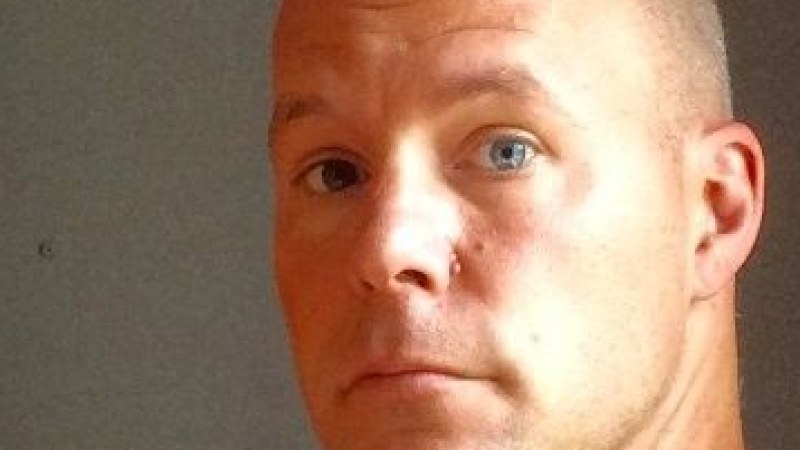
William Ware is the co-founder and CEO of DoseOptics LLC, a Dartmouth-affiliated medtech company in Lebanon, New Hampshire that turns a faint blue glow into a safety tool for cancer patients. Its systems image Cherenkov light - the same eerie glow seen in nuclear reactors - to show radiation dose landing on a patient in real time during treatment. A Thayer School of Engineering alumnus with a chemical engineering background, Ware has launched more than 20 patented products across pharmaceuticals, oil and gas, textiles, and medical devices, and partnered DoseOptics with Vision RT to fold Cherenkov imaging into mainstream radiotherapy.

Marengo Therapeutics
Marengo Therapeutics is a Cambridge, Massachusetts clinical-stage biotech reprogramming the immune system from the inside out. Instead of releasing the brakes on T cells the way checkpoint inhibitors do, Marengo's STAR (Selective T Cell Activation Repertoire) platform builds antibody-fusion molecules that target variable regions of the T cell receptor (Vβ) to selectively wake up the specific subsets of T cells that can attack tumors - and remember them. Launched in 2021 with $80M from Apple Tree Partners, its lead drug invikafusp alfa (STAR0602) is in Phase 1/2 trials, has earned FDA Fast Track designation, and is being studied across cancers that no longer respond to PD-1 therapy.
Outpace Bio
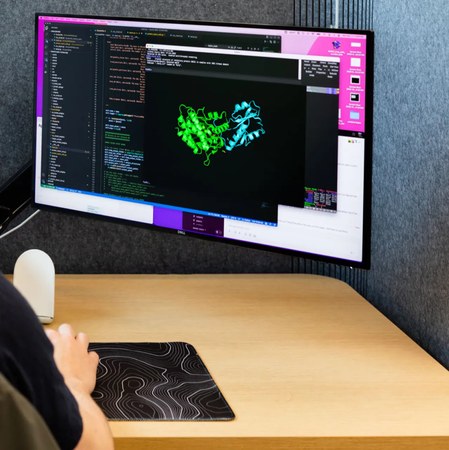
Outpace Bio is a Seattle biotech using AI-powered de novo protein design to program immune cells - especially CAR T cells - that can recognize and destroy solid tumors while limiting harmful side effects. Spun out of Lyell Immunopharma in 2021 by Institute for Protein Design alumni, the company has raised roughly $199M and is advancing its lead candidate, OPB-101, a mesothelin-targeted CAR T therapy for platinum-resistant ovarian cancer, toward the clinic.

Sporos Bioventures
Sporos Bioventures is a Houston-based private biotechnology company that builds and operates a portfolio of oncology and immune-disease startups under one roof. Rather than launching companies one at a time, Sporos pools capital, drug-discovery infrastructure, and operational expertise across multiple programs - including Tvardi Therapeutics, Asylia Therapeutics, Nirogy Therapeutics, Stellanova Therapeutics, and its internal Sporos BioDiscovery group - to move targeted cancer therapies from idea to early clinical trials faster and with less duplicated risk.
AdvanCell
AdvanCell is a vertically integrated, clinical-stage radiopharmaceutical company developing a pipeline of targeted alpha therapies (TAT) for cancer, powered by its proprietary Lead-212 (212Pb) alpha isotope generator technology. By solving the chronic supply bottleneck of alpha-emitting isotopes, AdvanCell aims to deliver highly potent, tumor-specific radiation that destroys cancer cells while sparing healthy tissue. Its lead asset, ADVC001, a 212Pb-PSMA therapy, is in clinical trials for metastatic prostate cancer, with a deepening pipeline targeting melanoma, ovarian, breast, and lung cancers.
Ratio Therapeutics
Ratio Therapeutics is a Boston-based clinical-stage biotech engineering next-generation targeted radiopharmaceuticals for solid tumors. Its proprietary Trillium and Macropa platforms tune how radioactive cancer-killing payloads travel through the body, aiming to deliver a lethal dose to tumors while sparing healthy tissue. Backed by major pharma partners including Novartis, Bayer, Lantheus and Bristol Myers Squibb, Ratio is advancing FAP- and SSTR2-targeted programs from imaging into therapy.

Stephen Rubino
Stephen Rubino is the CEO of Sporos Bioventures, a Houston-based biotech that runs cancer drug development as a portfolio rather than a single bet. A Cornell-trained virologist with a Baruch MBA, he spent three decades in business development and commercial roles at Schering-Plough, Novartis, Celyad Oncology and Fortress Biotech before taking the helm at Sporos in 2022, where the lead program is SPR1, a next-generation TEAD inhibitor aimed at hard-to-drug cancers.
Bill Cupelo
Bill Cupelo is the Chief Business Officer of Ratio Therapeutics, a Boston-based biotech building targeted radiopharmaceuticals that aim to both image and treat cancer. A chemist by training who learned to sell science, he spent more than a decade at imaging CRO Invicro, climbing from software product manager to head of sales, before bringing his sponsor-side, science-first mindset to Ratio's pipeline of alpha-emitting radioligand therapies. He also serves as Treasurer of the Massachusetts Nuclear Medicine & Radiopharmaceutical Council.

Anirudh Joshi
Anirudh Joshi is the co-founder and CEO of Valar Labs, a Palo Alto-based AI oncology company building tools that let doctors predict whether a specific cancer treatment will work before a patient wastes months on the wrong one. A biomedical engineer trained at Georgia Tech and Stanford, he previously built AI at Microsoft, PathAI, and Curai before co-founding Valar in 2021 with teammates from Stanford's AI in Medicine group. Valar raised $26M total, landing a $22M Series A from Andreessen Horowitz and DCVC in 2024, and its flagship test Vesta — predicting BCG therapy response in bladder cancer — is now live at 20 U.S. hospitals. Named to Forbes 30 Under 30 Healthcare 2025.

Nathaniel Fernhoff
Nathaniel Fernhoff is the CEO and Co-founder of Orca Bio, a late-stage biotechnology company headquartered in Menlo Park, California, developing high-precision allogeneic T-cell immunotherapies to treat blood cancers and autoimmune diseases. Holding a Ph.D. in Molecular and Cell Biology from UC Berkeley and dual Bachelor's degrees in Biological Sciences and Mathematics from Stanford, Fernhoff co-founded Orca Bio in 2016 based on decades-old Stanford research. He rose from Chief Scientific Officer to CEO in May 2025, leading the company through a landmark Phase 3 clinical trial for Orca-T - showing 78% survival free from chronic graft-versus-host disease versus 38% for standard-of-care - a BLA submission under FDA Priority Review, and a $250M Series F round bringing total funding to over $625M. With a 100,000-square-foot manufacturing facility in Sacramento capable of producing ~3,000 cell therapy products per year, Fernhoff is steering Orca Bio toward potential commercialization and a cure for blood diseases without compromise.