Breaking
YesPress Profile  /  Biotech Executive  /  Founder

Nathaniel
Fernhoff

"The man who showed up for his patient - and then raised $625 million to show up for everyone else's."

CEO and Co-founder of Orca Bio. Molecular biologist turned biotech architect. Building the precision cell therapy that could make blood cancer survivable - without compromise.

Orca Bio Cell Therapy Stanford / UC Berkeley Series F FDA Priority Review
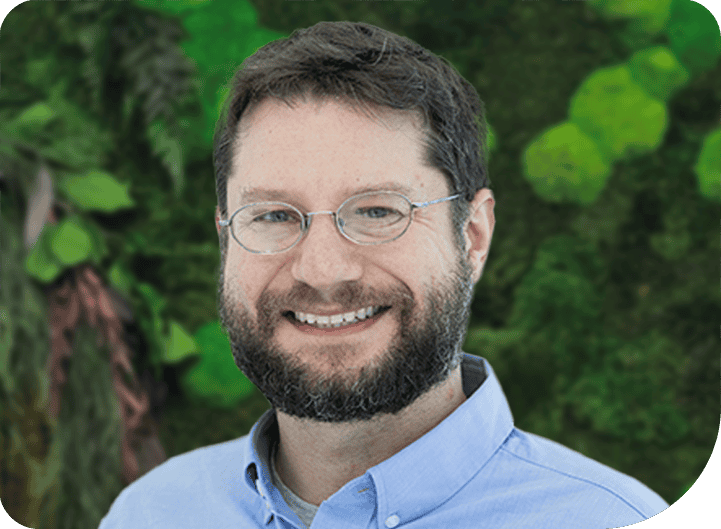
Nathaniel Fernhoff, CEO and Co-founder of Orca Bio
CEO & Co-founder
$625M+ Total Funding Raised
78% cGFS Rate - Orca-T Phase 3
72 hrs Vein-to-Vein Manufacturing
290+ Employees at Orca Bio

A Decades-Old Discovery,
One Audacious Bet

The origin story starts in the 1980s - not with Nathaniel Fernhoff, who wasn't yet in the picture, but in a Stanford laboratory where researchers were beginning to understand how to separate, identify, and sort blood cells with extraordinary precision. Fernhoff absorbed those discoveries as a postdoctoral scholar in Irving Weissman's lab - the same Weissman who is now on Orca Bio's board, the same man widely considered the father of stem cell biology. The research had been sitting there for decades. Fernhoff looked at it and saw a company.

In 2016, he co-founded Orca Bio alongside Ivan Dimov and Jeroen Bekaert, applying Weissman-era insights to a problem that hadn't moved much: allogeneic hematopoietic stem cell transplant was still burdened by graft-versus-host disease (GvHD), a condition where donor immune cells attack the recipient's body. Standard-of-care was rough. The field assumed "rough" was the cost of the cure. Orca Bio bet otherwise.

"The origin story for Orca traces its roots back, probably the 1980s."

- Nathaniel Fernhoff, CEO, Orca Bio

The premise at Orca Bio was deceptively simple: what if you could sort donor immune cells with single-cell precision, building a product that floods the patient with exactly the cells needed and none of the cells that cause damage? Orca-T, the company's lead investigational product, is that bet made manifest - a defined composition of donor-derived T cells including regulatory T cells (Tregs) designed to orchestrate a takeover of the patient's immune system with minimal collateral damage.

For years, the question was whether the science would survive contact with a randomized, controlled Phase 3 trial. In 2025, it did - spectacularly. The Precision-T Phase 3 study enrolled 187 patients with hematological malignancies (beating its target of 174) across centers treating acute myeloid leukemia, acute lymphoblastic leukemia, and myelodysplastic syndrome. Orca-T achieved 78% survival free from moderate-to-severe chronic GvHD at one year, compared to 38.4% for standard allogeneic transplant. The hazard ratio was 0.26. The p-value was less than 0.00001. These are not numbers that require spin.

93.7% one-year overall survival for Orca-T patients vs. 83.2% for standard-of-care. The difference between those two numbers is the reason Orca Bio exists.

By October 2025, the FDA had accepted Orca Bio's Biologics License Application for Orca-T and granted it Priority Review - with a target action date of April 6, 2026. The data had been published in Blood journal by December. A $250M Series F led by Lightspeed Venture Partners closed in January 2026. Fernhoff, who had become CEO in May 2025 after serving as Chief Scientific Officer since founding, is now steering the company through the last leg before potential commercialization.

The manufacturing question - always the hard part in cell therapy - gets answered differently at Orca Bio. The company's Sacramento facility spans 100,000 square feet and can produce approximately 3,000 cell therapy products per year. The vein-to-vein turnaround is 72 hours or less. That's not a marketing claim; it's a logistics proof point that Orca Bio resolved the manufacturing challenge most cell therapy companies quietly postpone.
Two Stanford Degrees,
One Berkeley Ph.D., Zero Shortcuts

Stanford University
B.S. Biological Sciences
Dual degree alongside Mathematics
Stanford University
B.S. Mathematics
The quantitative backbone behind the biology
UC Berkeley
Ph.D. Molecular & Cell Biology
Deep training in the science that underlies Orca Bio's core platform
Stanford (Weissman Lab)
Ruth L. Kirchstein NRSA Postdoctoral Scholar
Training with Irving Weissman - the mentor who became a board member

Fernhoff's scientific credentials are not decorative. In 2013, he was part of a team that published in Science on engineered SIRP-alpha molecules - a mechanism that enhances macrophage attack on cancer cells. That paper represents a thread that runs directly through Orca Bio's work: understanding how immune cells can be precisely redirected to kill what needs killing and ignore what needs protecting.

His ResearchGate profile lists 12 publications, 1,608+ citations, and 3,700+ reads - the academic footprint of someone who did the science before building the company around it. The dual B.S. in Mathematics is easy to overlook but hard to overstate: precision cell therapy is, at its core, a measurement and manufacturing problem. Fernhoff's mathematical training informs how Orca Bio thinks about single-cell sorting, product definition, and clinical endpoint design.

The postdoctoral fellowship in Weissman's lab did more than sharpen the science. It positioned Fernhoff at the intersection of stem cell biology, immunology, and translational medicine - exactly the territory where Orca Bio operates. That Weissman joined the company's board is both a scientific endorsement and an institutional continuity: the lab that pioneered the underlying science still has skin in the game.


From Lab Bench
to the Corner Office

Fernhoff was not the original CEO of Orca Bio - that was Ivan Dimov, his co-founder and frequent patent collaborator. Fernhoff spent nearly a decade as Chief Scientific Officer, which at Orca Bio meant building the scientific engine that would ultimately generate the Phase 3 data that changed everything. In May 2025, with that data in hand and commercial launch approaching, Fernhoff stepped into the CEO role.

The transition matters for what it signals: Orca Bio is now a commercial-stage company, and the person leading it is the same person who invented the technology. That combination - scientific credibility and executive accountability in one individual - is unusual in biotech, where the shift from research leadership to company leadership often involves bringing in an outside CEO with a commercial pedigree. Orca Bio chose continuity over convention.

"Following the positive Phase 3 results for Orca-T, we remain focused on a 2025 BLA submission and ensuring commercial readiness."

- Nathaniel Fernhoff, on becoming CEO, May 2025

One story from the clinical development phase cuts to the character of how Fernhoff leads. When a patient enrolled in Orca Bio's trial at Stanford was going through treatment, Fernhoff showed up personally. His explanation was simple: "I wanted to be there. He expected me to be there." That's not the behavior of an executive managing from a distance - it's the behavior of someone who understands that every clinical datapoint is a person, and who keeps the clinical stakes visible in day-to-day decision-making.

The age-limits story adds another layer. A 71-year-old patient - outside typical trial eligibility - pushed for access to Orca-T treatment. The patient's story, documented publicly, reflects what happens when a precision therapy actually works: patients who had no other options start finding ways in. Fernhoff built a company where that demand exists.

Under Fernhoff's scientific leadership and now CEO tenure, Orca Bio has assembled a pipeline that extends well beyond Orca-T. Orca-Q - the second-generation allogeneic T-cell therapy targeting high-risk hematologic malignancies - received FDA Regenerative Medicine Advanced Therapy (RMAT) designation in April 2026. Fernhoff is listed as a co-inventor on the underlying patents. The company is not a one-product story.

Precision-T Trial: The Numbers
Don't Need Translation

Orca-T: Survival Free from Chronic GvHD 78%
Standard HSCT: Same Endpoint 38%
Orca-T: 1-Year Overall Survival 93.7%
Standard HSCT: 1-Year Overall Survival 83.2%
Orca-T: Moderate-Severe cGvHD Incidence 12.6%
Standard HSCT: Moderate-Severe cGvHD 44%
Endpoint Orca-T Standard
Patients Enrolled 187 Target: 174
cGFS at 1 Year 78% 38.4%
Overall Survival at 1 Year 93.7% 83.2%
Mod-Severe cGvHD 12.6% 44.0%
Hazard Ratio 0.26 1.0 (ref)
P-value <0.00001 -
Published In Blood Journal Dec 2025

Study Context

Precision-T Phase 3 trial in patients with hematological malignancies (AML, ALL, MDS). Sponsored by Orca Bio. Data published December 2025.

Three Things That
Actually Matter

🧪

He Did the Science First

Most biotech CEOs are former consultants or deal-makers. Fernhoff is a published scientist with a Ph.D. from UC Berkeley and postdoctoral training in one of the world's premier stem cell labs. He co-invented the technologies Orca Bio is commercializing. The company runs on science he personally understands at the molecular level.

🏭

He Solved Manufacturing

Cell therapy is littered with companies that got the science right and the manufacturing wrong. Orca Bio built a 100,000 sq ft cGMP facility in Sacramento with 3,000-dose-per-year capacity before the FDA decision. The 72-hour vein-to-vein turnaround is now a documented capability, not a projection.

📊

The Phase 3 Data Closed the Argument

Many biotech companies arrive at FDA with Phase 2 signals and a story. Orca Bio arrived with a randomized Phase 3 trial, 187 patients, an effect size that statisticians describe as rarely seen, and a publication in Blood. The data closed the scientific argument that precision cell sorting produces meaningfully better outcomes.

🧬

The Math Degree Matters

Dual B.S. from Stanford in both Biological Sciences and Mathematics. In a field where clinical endpoint design, cell sorting specificity, and manufacturing precision are the actual differentiators, the mathematical training behind Fernhoff's scientific thinking is a real asset - not a footnote on a resume.

🤝

The Mentor Became a Board Member

Irving Weissman - considered the father of stem cell biology, the man in whose lab Fernhoff trained as a postdoc - sits on Orca Bio's board. That's not a ceremonial role. It's a direct line from foundational Stanford research to the company commercializing its applications, 40 years later.

👥

Patient First, Literally

"I wanted to be there. He expected me to be there." Fernhoff personally showed up for a trial patient at Stanford. In a sector where patient-centricity is often a brand value, Fernhoff demonstrated it by walking into a hospital room. The 71-year-old who broke age limits to get into an Orca trial proves the demand is real.

Things You Didn't Know
About Nate Fernhoff

The Handle

His Twitter/X handle is @etanfer - his first name spelled backwards. The kind of subtle easter egg you'd expect from someone who thinks in molecular structures.

72 Hours

Orca Bio can manufacture a complete, single-cell-defined cell therapy product in 72 hours or less from donor blood draw to patient-ready product. That's not a lab benchmark - it's a commercial facility running at scale.

The Dual Degree

Most biology Ph.D.s have one undergraduate degree. Fernhoff had two at Stanford - Biological Sciences and Mathematics. The combination is the blueprint for a scientist who thinks in precision and proof.

Published in Science at ~30

While in training, Fernhoff was part of a research team that published in Science - one of the top two journals in science - on a mechanism that makes macrophages better at attacking cancer cells.

1,608+ Citations

His ResearchGate profile lists 12 peer-reviewed publications with over 1,608 citations and 3,700+ reads. For context: most biotech CEOs can't point to a single first-author paper.

The Mentor Connection

Irving Weissman, Fernhoff's postdoctoral mentor at Stanford, is on Orca Bio's board of directors. When the student builds a company on the teacher's discoveries and invites the teacher to the board, that's not networking. That's continuity.

The Arc of a
Scientific Career

Undergrad Years
Earns dual B.S. degrees in Biological Sciences and Mathematics at Stanford University. The mathematics background shapes his future thinking on precision and measurement in cell biology.
Graduate School
Ph.D. in Molecular and Cell Biology at UC Berkeley. Focuses on the biological machinery that governs how immune cells recognize and respond to signals - the intellectual foundation for cell therapy design.
2013
Publishes research on engineered SIRP-alpha molecules in Science journal, demonstrating that macrophages can be enhanced to more effectively attack cancer cells. The paper accumulates hundreds of citations in subsequent years.
2013 - 2016
Ruth L. Kirchstein NRSA Postdoctoral Scholar in Irving Weissman's laboratory at Stanford University. Works at the intersection of stem cell biology and immunosurveillance. Absorbs decades of Weissman lab insights that will form Orca Bio's platform.
2016
Co-founds Orca Bio (originally Orca Biosystems) in Menlo Park, California with Ivan Dimov and Jeroen Bekaert. The company's core thesis: single-cell precision in donor immune cell sorting can dramatically reduce graft-versus-host disease without sacrificing the graft-versus-leukemia effect.
2016 - 2025
Serves as Chief Scientific Officer, building Orca Bio's research and development engine, co-inventing Orca-T and Orca-Q technologies, and guiding the Precision-T Phase 3 clinical program from design to enrollment completion.
2023
Orca Bio's 100,000 sq ft manufacturing facility in Sacramento, California becomes operational. Capacity: approximately 3,000 cell therapy products per year with a 72-hour vein-to-vein turnaround.
June 2024
Precision-T Phase 3 trial completes patient enrollment at 187 participants, exceeding the target of 174. The study spans patients with acute myeloid leukemia, acute lymphoblastic leukemia, and myelodysplastic syndrome.
May 2025
Appointed CEO of Orca Bio, succeeding Ivan Dimov. Fernhoff is now accountable for commercial readiness, regulatory approval, and the transition from clinical-stage to commercial-stage biotech company.
October 2025
FDA accepts Orca Bio's Biologics License Application for Orca-T and grants Priority Review. Target PDUFA action date: April 6, 2026.
December 2025
Phase 3 results for Orca-T published in Blood journal. Primary endpoint: 78% cGFS for Orca-T vs. 38.4% for standard allogeneic HSCT. Hazard ratio 0.26. P-value <0.00001.
January 2026
Orca Bio closes $250M Series F financing led by Lightspeed Venture Partners, with participation from Illinois Municipal Retirement Fund, Kaiser Foundation Hospitals, and Mubadala Investment Company. Total funding exceeds $625M.
April 2026
FDA grants Regenerative Medicine Advanced Therapy (RMAT) designation to Orca-Q - the second-generation investigational allogeneic T-cell therapy Fernhoff co-invented - for treatment of high-risk hematologic malignancies.

Nate Fernhoff
On Camera

Navigating the Journey to Safer Stem Cell Therapies with Nate Fernhoff

Navigating the Journey to Safer Stem Cell Therapies

Cell & Gene: The Podcast • July 2025

High-Precision Cell Therapy: Orca Bio's Nate Fernhoff

High-Precision Cell Therapy: Orca Bio's Nate Fernhoff

Cell & Gene • October 2025

Share This Profile