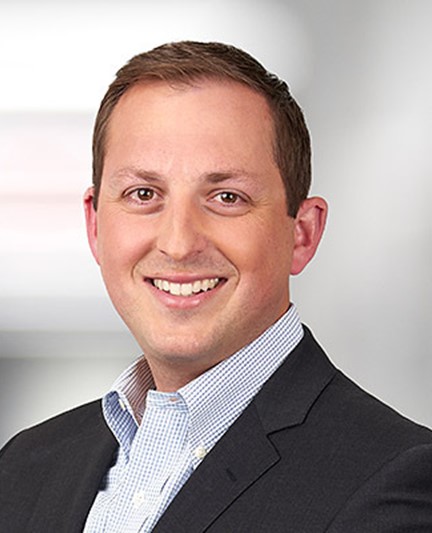
A salesman who can argue chelation chemistry
The pitch for radioligand therapy sounds like science fiction until someone explains it without flinching. A molecule goes looking for a cancer cell, latches on, and delivers a radioactive payload that does the rest. Bill Cupelo explains it without flinching. As Chief Business Officer of Ratio Therapeutics, the Boston biotech he joined in April 2024, that explanation is roughly his job description: take radiochemistry that most people find intimidating and turn it into partnerships, momentum, and a pipeline.
What makes him unusual in a room full of dealmakers is that he started at the bench. A chemistry degree from the College of the Holy Cross came first, then a master's in biotechnology from Georgetown. He could have stayed in the lab. Instead he spent more than a decade learning a different craft - how to translate molecules into revenue - and somewhere along the way picked up an executive MBA from MIT Sloan, the kind of credential people collect when they have decided the science alone is not the whole game.
His proving ground was Invicro, the imaging contract research organization that became part of Konica Minolta. He did not arrive as a salesman. He arrived as a software product manager, building the tools that imaging scientists use to read scans and model drug behavior. That detail matters. Most heads of sales learn the product from a brochure. Cupelo learned it from the inside, which is why his eventual climb to Vice President of Business Development and Strategic Accounts, and then Head of Sales, never required him to fake fluency in the science he was selling.
"I am honored to join Ratio at such a pivotal time, as the development of targeted radiopharmaceuticals continues to build momentum in our industry."
Why imaging was only half the story
At Invicro, Cupelo lived inside the diagnostic half of cancer care - clinical imaging core labs, software informatics, data science, and the strategic alliances that knit those services to pharma partners running trials. Imaging tells you where the tumor is. It does not treat it. For a decade he watched the picture form and stop there.
Ratio Therapeutics is built on closing that gap. The company works in theranostics, a clumsy word for an elegant idea: pair a diagnostic with a therapeutic so the same targeting molecule that lights up a tumor on a scan can also carry a treatment to it. Ratio's platforms lean on alpha-emitting radionuclides like actinium-225, chelation technology, and pharmacokinetic modulation - the unglamorous machinery of getting a radioactive isotope to the right address and keeping it there. Moving from the company that takes the picture to the company that acts on it is, for Cupelo, less a career pivot than a logical next sentence.
The 76-person bet
Ratio is not a giant. It is a focused team of roughly 76 people working out of 1 Design Center Place, a converted furniture showroom in Boston's Seaport that now houses biotech instead of sofas. Behind them sits real money - a Series B that brought in $50 million, part of around $110 million raised to fund a pipeline of FAP-targeted radiotherapeutics, imaging agents, and the chemistry that makes multi-isotope supply possible. Cupelo's mandate is plain: accelerate growth, build out the pipeline of novel therapeutics and diagnostics, and find the pharma partners who turn a promising platform into approved medicine.
He does not do it only from his own desk. Cupelo serves as Treasurer of the Massachusetts Nuclear Medicine & Radiopharmaceutical Council, the kind of role that signals he is invested in the field's plumbing, not just his employer's quarter. Radiopharmaceuticals depend on supply chains most industries never think about - isotopes with half-lives measured in days, manufactured and shipped before they decay into uselessness. Someone has to care about that infrastructure. He does.
Theranostics, in three moves
The shape of a career
Read his resume backward and a pattern shows up. Learn the science. Build the product. Close the deal. Each move kept the previous one in play rather than discarding it. The chemist did not abandon chemistry to sell; he sells because he knows the chemistry. The product manager did not stop understanding software when he started running sales; the software understanding is what made his sales credible. By the time he reached the C-suite, the parts had stopped being separate jobs and become a single, unusually coherent skill set.
That coherence is the quiet argument for why a small company gave him a chief title. Targeted radiopharmaceuticals are having a moment - large acquisitions, crowded conference halls, a sudden rush of capital into a field that spent years on the margins. In a hot market, the scarce resource is not enthusiasm. It is people who can sit across from a pharma partner and speak fluently about both the half-life of an isotope and the terms of a deal. Cupelo is one of them.