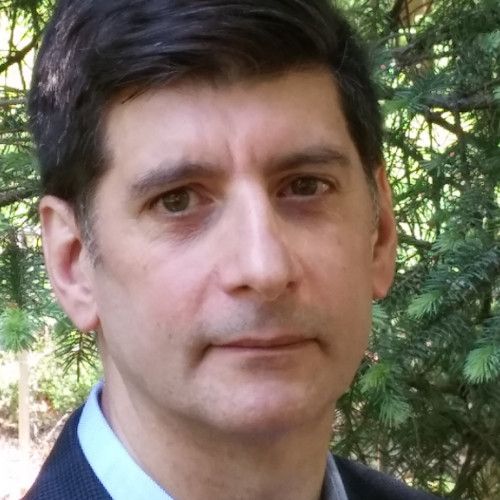
Walk into Sporos Bioventures expecting a biotech with one molecule and a moonshot, and you'll be confused. There isn't one drug here. There's a portfolio - several oncology programs running at once, each chasing a different cancer vulnerability, all sitting under one private company in Houston. Sporos is Greek for "seed." Stephen Rubino is planting a whole field.
That structure is the point. Most biotechs are a coin flip: one lead asset, one clinical readout, one binary moment where the whole company lives or dies. Rubino spent three decades watching those coin flips from the deal side of the table, and at Sporos he's running the opposite play. Spread the bets. Target cancer-specific vulnerabilities and the co-dependencies hiding in the tumor microenvironment. Let the portfolio absorb the risk that a single program never could.
The lead program tells you what kind of science he's backing. It's called SPR1, a next-generation TEAD inhibitor - a small molecule aimed at a notoriously hard-to-drug node in cancer biology. The pitch from his own team is blunt: best-in-class potential, built on an optimized TEAD isoform selectivity profile, with preclinical activity they claim is superior to other compounds in development. In April 2024, Sporos BioDiscovery carried that data to the podium at the American Association for Cancer Research annual meeting.
01 The virologist's detour
Rubino's first credential is the one nobody expects from a CEO who spends his days on licensing terms and board decks: a PhD in virology from Cornell University. He trained to understand viruses - the molecular machinery, the way a tiny agent rewrites a cell's instructions. It's a discipline that teaches you to respect biology's stubbornness, and it left him fluent in the language his scientists speak.
Then he did the unusual thing. He went and got an MBA at Baruch College and pointed that scientific fluency at the commercial side of the business. Most people pick a lane - bench or boardroom. Rubino kept both, and the combination is rarer than it sounds. He can read a preclinical dataset and a term sheet with the same eye.
02 Ten years, one school of marketing
The career proper began at Schering-Plough, where he spent roughly a decade leading global marketing. That's where the commercial instinct got built - not in a classroom but in the grind of positioning therapeutics across markets, learning what makes a drug matter to the people who prescribe it and the patients who take it. Strategic planning, commercial operations, the unglamorous machinery of turning a molecule into medicine.
From there the resume reads like a tour of biotech's most interesting corners. He became Global Head of Business Development and Licensing in the Cell and Gene Therapy Unit at Novartis - one of the hottest, most fiercely contested deal areas in all of oncology, the place where the industry was rewriting what "cure" could mean. Dealmaking at that altitude is part science, part chess, part nerve.
03 Chief Business Officer, Entrepreneur in Residence
He carried that into Celyad Oncology as Chief Business Officer, then spent time as an Entrepreneur in Residence at Fortress Biotech - the kind of role where you're handed a thesis and asked to build a company around it. Along the way he sat on boards at Viracta Therapeutics and Sermonix Pharmaceuticals, the seats where you watch other people's binary moments and learn what governance actually costs.
By the time Sporos handed him the CEO title in September 2022, Rubino had done nearly every job in the chain except the one he was about to take. He'd marketed the drugs, licensed the drugs, financed the companies, and governed the boards. What he hadn't done was run the whole thing. Sporos was the answer to that.
04 Why a portfolio
The portfolio model isn't a marketing flourish. It's a worldview. An investor doesn't put a life's savings into one stock; a smart fund diversifies across uncorrelated bets so no single failure is fatal. Rubino is applying that logic to drug discovery itself - treating a stable of oncology programs the way a portfolio manager treats positions, each targeting a distinct cancer-specific vulnerability, none of them load-bearing for the entire enterprise.
It's a quietly contrarian stance in an industry addicted to the single hero asset. And it's the natural conclusion of a career spent watching coin flips. When you've sat through enough binary readouts, you stop wanting to be the one holding a single coin. You'd rather hold the table.
05 The TEAD bet
To understand why SPR1 matters to him, you have to understand what a TEAD inhibitor is trying to do. TEAD proteins sit at the business end of a signaling pathway that cancers hijack to keep growing - a pathway long considered "undruggable" because the targets had no obvious place for a small molecule to grab. Cracking it has become one of oncology's quiet arms races, and Sporos walked into it claiming a specific edge: isoform selectivity. Rather than hitting every flavor of the target indiscriminately, SPR1 is built to be selective between TEAD1 and TEAD4, the difference the team argues between a blunt instrument and a scalpel.
His own framing leans on that precision. Best-in-class potential, he has said, rests on the optimized isoform selectivity profile and the resulting preclinical activity - language that's careful, specific, and free of the moonshot bravado the field usually traffics in. It's the vocabulary of a man who has read the data and knows exactly which claims he can stand behind. The posters at AACR weren't a victory lap; they were a methodical case, built one experiment at a time.
06 What he's actually selling
Strip away the molecules and the deal history, and Rubino is selling a process. Sporos's stated mission is to transform the drug development process across oncology through its portfolio approach - not to discover one miracle but to change the odds on the whole enterprise of discovery. That's an ambitious thing to claim, and it's the kind of claim only someone who has lived every stage of the pipeline can make with a straight face. He's not promising a cure. He's promising a better machine for finding them.
The work is unglamorous in the way that durable work usually is. Preclinical characterization. Isoform profiling. Conference posters in spring. Partner companies and portfolio structure. It's the long, patient business of turning biology's stubbornness into medicine - one seed at a time, across a field he keeps planting. The flashy version of biotech makes headlines. Rubino is building the version that makes drugs.
There's a tidy symmetry to it. He started by studying viruses, the smallest agents capable of rewriting a living cell, and ended up trying to rewrite how an entire industry chases cancer. The scale changed; the instinct didn't. Find the vulnerability. Understand the dependency. Apply leverage at exactly the right point. Whether the subject is a virus, a deal, or a portfolio of drug programs, the move is the same - and after thirty years, Stephen Rubino has gotten very good at making it.