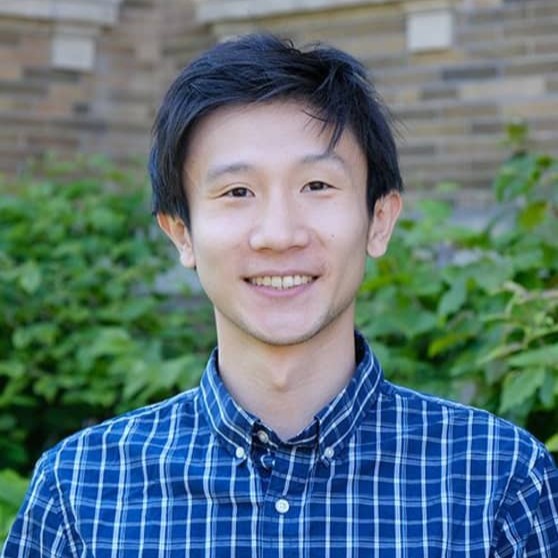
He Wasn't Trying to Build a Company. He Was Trying to Build a Sales Bot.
November 2022. OpenAI has just dropped GPT-3.5, the whole AI world is crackling with possibility, and Jerry Liu is wrestling with a problem so mundane it almost slipped past history: how do you actually feed your own data into one of these things? He wasn't chasing a billion-dollar idea. He was trying to build a sales bot - and kept running into the same wall every developer was hitting: context window limits, no clean way to retrieve, no structured path from enterprise data to LLM output.
So he built a tool. Called it GPT Index. Pushed it to GitHub on November 9, 2022. Went to sleep.
By the time the AI world caught its breath in early 2023, what he'd built in a weekend had a name - LlamaIndex - and was rapidly becoming the connective tissue between unstructured enterprise data and the large language models everyone was scrambling to use. The tool that solved his problem turned out to solve everyone's problem.
Princeton to Autonomous Vehicles to the Data Layer of AI
Liu graduated Princeton in 2017 - summa cum laude, 3.97 GPA, Outstanding Senior Thesis Award - with a CS degree and a finance certificate. His thesis was on 3D shape manipulation using Generative Adversarial Networks, co-authored with Fisher Yu and Thomas Funkhouser, published at 3DV 2017. He was thinking about generative AI before most people knew to spell it.
He spent a year at Quora working on feed ranking, then moved to Uber's Autonomous Technology Group - first as an AI resident, then as a research scientist. For two and a half years he worked on learning-based compression and joint prediction/planning for self-driving systems. The kind of work that makes you very good at thinking about data pipelines, context windows, and systems that need to be reliable under pressure.
From Uber ATG he moved to Robust Intelligence, where he managed the ML monitoring team and helped build the AI Firewall - a system for detecting and preventing AI failures in production. That job, perhaps more than any other, wired his thinking around context quality, data reliability, and what actually breaks when AI meets real enterprise data.
Then GPT-3 landed, and he started tinkering on weekends.
The Framework That Became Infrastructure
LlamaIndex is, at its core, a data framework for LLM applications. It gives developers tools to ingest, index, and query any kind of data - structured, unstructured, across dozens of sources - and connect it cleanly to language models. The category it helped define is called Retrieval-Augmented Generation, or RAG: instead of baking all your enterprise knowledge into a model at training time, you retrieve the right context at inference time and hand it to the LLM on demand.
The first version used a tree-index approach that didn't work especially well in practice. Liu iterated. He's been iterating since. By early 2023, the project had outgrown its GitHub side-project status and Liu knew it. He brought in Simon Suo - a former Uber ATG colleague - as co-founder and CTO, and they formally incorporated LlamaIndex as a company in March 2023.
Three months later: $8.5M seed round led by Greylock. The angel list read like a who's-who of product-led growth - Jack Altman (Lattice CEO), Lenny Rachitsky, Mathilde Collin (Front CEO), Raquel Urtasun (Waabi CEO). These aren't random checks. They're bets from people who watch enterprise software get built and know what infrastructure looks like when it's becoming load-bearing.
Context quality is the new competitive moat in AI. The scaffolding era is ending; agent loops are now commodity middleware.
- Jerry Liu, CEO, LlamaIndexFrom Open Source to Enterprise Platform
LlamaIndex grew past 600,000 monthly downloads. Clients include Salesforce, KPMG, and Carlyle. In February 2024, they launched LlamaParse and LlamaCloud - a managed document parsing and ingestion service that gives enterprises a fully hosted path to the same RAG infrastructure developers had been building themselves. It's the logical move: open source builds the category, the cloud platform captures the value.
In March 2025, they closed a $19M Series A led by Norwest Venture Partners, with participation from Greylock. Then in May 2025, Databricks and KPMG announced minority equity stakes. Strategic capital from the two companies that represent the data layer (Databricks) and the enterprise consulting bridge (KPMG) to the Fortune 500. It's not random. It's architecture.
Liu describes the current moment in AI infrastructure as a shift from scaffolding to substance. The era of duct-taping together 100 tools and MCP connectors is giving way to something tighter: a small set of high-quality integrations, filesystems as the primary agent interface, context quality as the actual differentiator. LlamaIndex is betting it's already built the platform for that world.
The Texture of the Thing
His personal website is jerry.wtf. Not because it's edgy, but because the domain captures something true about the man: the work is serious, the self-presentation is not. He writes about product, philosophy, and poetry. He has 52+ GitHub repositories and actively maintains them. He publishes prolifically on Medium, appears on podcasts, speaks at conferences, and mentors mid-size companies on AI strategy - all while running a 95-person company in the middle of the fastest-moving technology shift in a generation.
Forbes put him on the 30 Under 30 list in 2024. He'll probably find it less interesting than the GitHub star count.