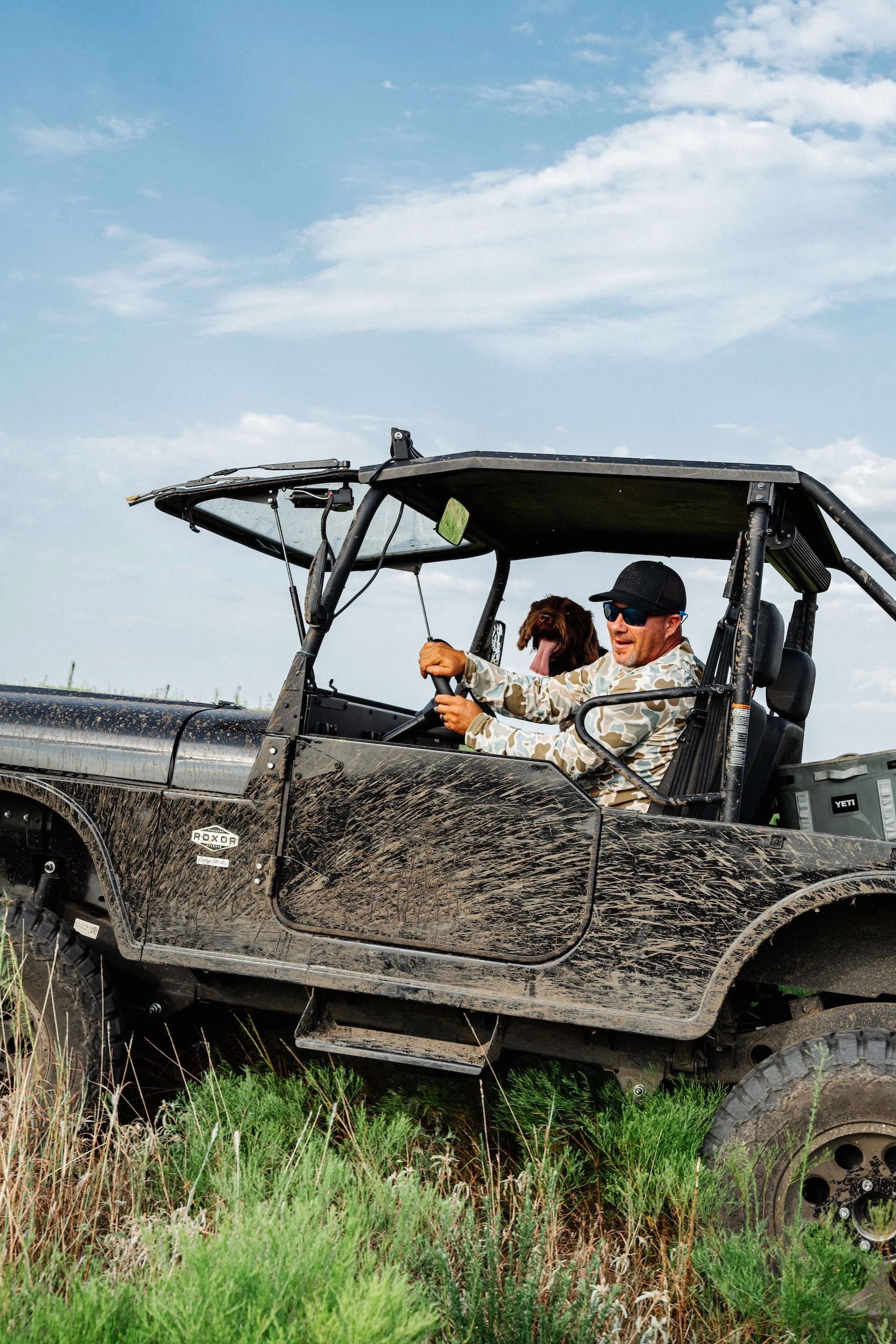
The vehicle has mud along its sides, the driver wears camouflage, and a dog has secured the passenger seat. In the photograph, Jeff Tolle has one hand on the wheel and his mouth slightly open. There is no boardroom table in view. It is a useful picture of someone whose professional life involves persuading people that a brand understands their own.
In August 2025, Tolle became president and CEO of Idea Ranch, the advertising agency based in Tulsa. He had been its chief creative officer. The announcement described a husband, father, hunter and angler taking on a wider responsibility. Meanwhile, founder Paul Brothers was heading back to the creative department. Two people changed jobs; one business kept its name.
Agency succession usually arrives dressed in reassuring language. This one had a more interesting detail: the founder wanted to return to making things, while a colleague with experience across the business would run it. The arrangement gives Tolle a particular assignment. He has to look after the organization that makes the work possible.
The founder goes back to the drawing board
By May 2019, Tolle was speaking publicly as a senior vice president at Brothers & Company, the agency that preceded the Idea Ranch identity. Yakima, the vehicle-rack and cargo-equipment business, had selected the firm for public relations and marketing. The assignment covered media relations, influencers, events and creative ideas. A rack on a car roof had become a brief with several moving parts.
Tolle’s comments linked Yakima’s equipment with the activities it supported. That is a small but revealing choice. A cargo solution has measurements and mechanisms; its buyer also has plans for Saturday. The advertising has to understand both. Anyone who has packed for a trip knows that the relationship between an object and an ambition can become surprisingly emotional by the third failed attempt to close the trunk.
Later that year, an announcement about client-service leader James Lawson identified Tolle as chief brand and revenue officer. He praised Lawson’s strategic judgment and his attention to the interests of both client and agency. Those two descriptions of Tolle’s role offer a glimpse of the territory he covered before the CEO appointment: the commercial relationship, the brand, and the people expected to make good on a promise.
- 2019Brand & client workSenior leadership at Brothers & Company
- 2020Creative leadershipManaging partner and CCO at Idea Ranch
- 2025The whole agencyPresident and CEO, announced in August
Public professional profiles place him in the managing-partner and chief-creative-officer role at Idea Ranch from August 2020. The new agency name was accompanied by promotions across creative, account service, and social and public relations. Heath Kennedy, Austin Hillard, Sarah Powell, Breanna Major, Charlsey Wolfe and Danny Burke took on expanded responsibilities. Even the launch announcement was a collection of people moving forward.
That history helps explain the shape of the later handoff. Tolle’s promotion followed years in which responsibility was distributed among colleagues. Laura Beth Matson, the agency’s chief strategy officer, described the range of his experience this way: “From media to account service and creative, Jeff’s worn every hat in the agency.” A hat collection is only useful if the wearer remembers what each job asks of the person beneath it.
A brief is somebody’s life
Tolle’s hunting and fishing belong in this story because Idea Ranch works in communities organized around doing things: getting on the water, working the land, making equipment earn its place. Personal familiarity cannot finish a campaign by itself. It can, however, make a person more alert to the difference between an appealing image and a believable one.
His comments on the agency’s Nutrena appointment in March 2026 returned to the audience’s experience. The animal-nutrition brand serves people caring for livestock, horses, poultry, pets and other animals. Tolle emphasized their expectations of “honesty, consistency, and proof.” The partnership had begun in December 2025 and covered brand strategy, creative, paid and earned media, and execution across retail channels.
Those expectations carry a practical demand for advertising. A customer has to connect the claim on the page with the thing they encounter afterward. The more frequently a product enters someone’s routine, the more opportunities there are to compare the promise with the result. A clever sentence may earn attention once. The next purchase has its own argument.
Another public glimpse of Tolle at work comes through a post shared on the agency’s LinkedIn page. He described three production teams going to different settings: Costa work in the Florida Keys, a lineman training center in Tennessee, and a Kentucky farm for Carhartt and Academy Sports + Outdoors. He named colleagues across the crews and placed himself with the Costa production. The chief executive still appeared inside the working account of a shoot.
The connections among those settings are more specific than scenery. Each contains people with skills, obligations and an understanding of what their tools must do. Tolle described the agency’s preference for outdoor recreation, farm and ranch, and working communities that reflect its people’s lives. That gives the creative team a starting point. It also gives the audience plenty of grounds for checking its homework.
The lesson that leaves with you
A leader’s influence can be difficult to photograph. The campaign gets a finished image. The conversation that helped someone become better at making it usually disappears when the meeting ends. Former colleague Ryan Cristelli supplies one such memory of Tolle: being called into his office and told plainly what was working and what needed work.
Cristelli connects that experience with habits he continued to use afterward, including setting expectations early, staying curious, and finding a clear way to tell a client’s truth. Colleague Billy Kulkin also describes Tolle as someone who listens and makes room for people to develop. These are colleagues’ portraits, with the closeness that implies. Their shared emphasis is on the ordinary exchange between a leader and a person learning the job.
It is tempting to make mentoring sound ceremonial. A wise remark, a grateful protégé, a suitable sunset. The recollection here is more useful because it includes correction. Someone’s work needed attention, and Tolle explained where. Feedback becomes valuable when the recipient can do something with it. Politeness that leaves the problem intact is a rather expensive office decoration.
Tolle’s earlier comments about Lawson show the same concern from another angle. Client service involves strategic counsel, recruitment, staffing and a responsibility to support creative work. It is easy to imagine each discipline admiring its own contribution. The harder organizational task is getting the contributions to meet. An idea needs people who can develop it, deliver it and explain why a client should trust it.
An adventure belongs on the calendar
Idea Ranch’s public values make room for lives outside the office. They connect outside experience with richer perspective and storytelling, while also emphasizing directness, integrity, patience and kindness. That combination is revealing. Directness without patience can make a meeting unnecessarily theatrical. Patience without directness can keep everyone politely occupied until the deadline passes.
The agency has turned some of its outdoor preference into policy. An Adventure Birthday gives employees an extra day off to get outside. Its workplaces are dog-friendly, and the benefits described publicly include parental leave and extended weekends. An indoor golf simulator also makes the list. The resulting picture is of a workplace trying to leave space for the interests its advertising often depicts.
“Challenge and cheer each other on.”
Jeff Tolle, on Idea Ranch’s working culture
Outside magazine gave Idea Ranch a Best Places to Work honorable mention for 2024, its third consecutive year of that recognition. In comments accompanying the announcement, Tolle emphasized colleagues looking after one another and the effect of that support on creative work. A perk is easy to name. The willingness to help someone through a difficult assignment requires repeated choices.
For a chief executive who came through creative leadership, that distinction has consequences. The working environment becomes part of his responsibility for the work itself. A team needs enough candor to catch weak thinking and enough trust to offer an unfinished idea. Both can be lost in a meeting long before anyone opens a design file.
Boots, birds and the next assignment
The agency’s audience focus allows considerable variety. In April 2025, FeatherSnap named Idea Ranch its agency of record. The brand’s smart bird feeders send photographs and video to phones. The assignment combined brand positioning with paid and earned media, affiliate marketing, product sales and subscriptions. Birdwatching had acquired a camera, an app and a commercial brief.
Tolle, then chief creative officer, described the opportunity to build on what FeatherSnap’s team had already established. The task makes a useful companion to the earlier Yakima work. Both products help people pursue an interest, but the moments of use are different. One helps carry equipment away from home. The other invites people to notice what has landed just outside it.
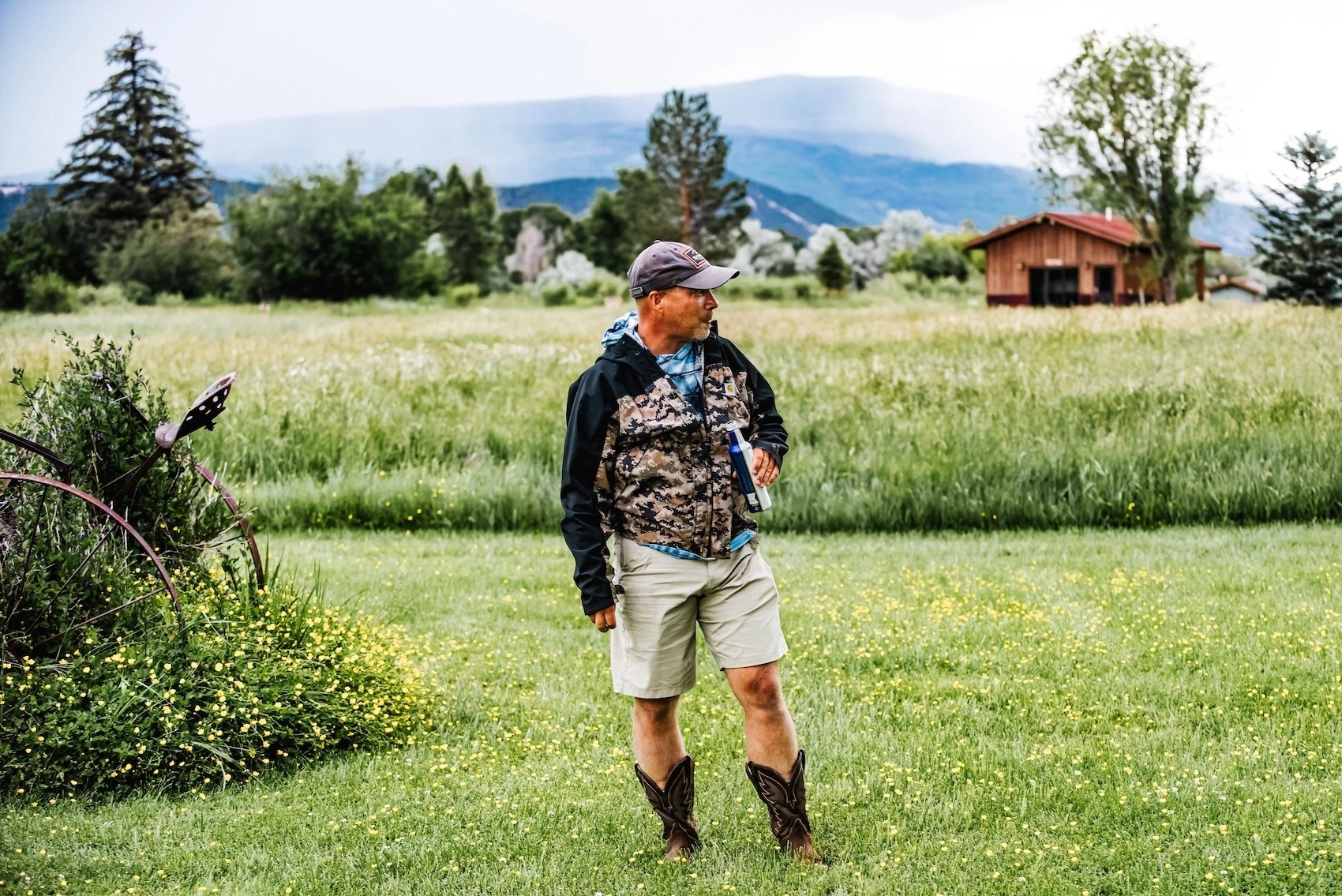
Alberta Boot Company Outfitters and Cody & Sioux offered another kind of assignment. The Calgary brands brought western craftsmanship and lifestyle into the agency’s work. Tolle’s comments emphasized craftsmanship and history; the partnership called for brand development and storytelling that could support growth while respecting that heritage. Selling a longstanding tradition requires care with what people already recognize.
Put these briefs together and Tolle’s role becomes clearer. He works around products that enter people’s pursuits, routines and sense of belonging. The CEO appointment broadens his responsibility for the team interpreting those connections. There are clients to serve, colleagues to develop, and creative decisions that have to survive contact with a customer’s experience.
The muddy vehicle photograph supplies a modest closing image. The dog has a seat. The driver has somewhere to go. The person looking at the picture can make sense of it without a paragraph of explanation. For someone whose business involves telling stories, there is value in remembering how much people understand before the copy begins.