Leyla Dailey has a wonderfully inconvenient piece of advice for anyone assembling a creative team: hire people whose work makes you jealous. Go further. Hire someone you believe could eventually take your job. It is a cheerful way to introduce a little professional insecurity into the interview process. It also forces a leader to decide what the department is for.
For Dailey, president and chief creative officer of Doe-Anderson in Louisville, the answer begins with the people around her. A colleague with a different kind of ability can see an opening that the person in charge has missed. The leader’s task includes recognizing that opening, then giving the colleague enough room to use it. There is a certain elegance to turning envy into a recruitment strategy.
Her career makes that advice worth examining. She has led creative work at Young & Rubicam and Cavalry, arrived at Doe-Anderson in 2021, and added the presidency in January 2023. In 2024, Ad Age named her its Small Agency Executive of the Year. The titles establish her authority. The decisions about who gets to contribute tell a more interesting story.
“Set your ego aside and hire people you admire”
Leyla Touma Dailey
Kentucky, by way of elsewhere
Dailey grew up in eastern Kentucky in a Syrian immigrant family. Her route to Louisville included time in the Northeast and roughly twenty years in Chicago. During college, she studied in Nepal and traveled in India. Her early creative habits were personal and hands-on: reading, writing, and developing photographs in a darkroom. Long before creative work became a department to manage, it was something she made herself.
She earned a degree in comparative religion and English literature at the University of Vermont. Those subjects do not prescribe an advertising career. They do offer plenty of material for a person interested in how people explain their lives, attach meaning to objects, and tell stories about what matters. Seen alongside her later work, the education is an intriguing beginning rather than a tidy explanation for everything that followed.
Her professional background includes Digitas and Leo Burnett as well as Y&R and Cavalry. Moving between agencies means entering different creative systems, with different clients and different ways of getting a decision made. The career gives her hiring advice some practical weight: she has worked inside enough organizations to know that a team’s abilities need not resemble its leader’s.
Cheese plates and creative judgment
One useful glimpse of that earlier work comes from Boursin’s “Made to Wow” campaign. Dailey was credited as chief creative officer at Young & Rubicam on the project, which addressed a familiar hosting problem: wanting to serve something impressive without turning a gathering into an examination. The campaign connected the cheese to recipes and ideas people could use while planning holiday parties.
The work met hosts where they were already looking for inspiration, including Pinterest, Facebook and Instagram. Its timing accounted for the fact that people plan celebrations before the celebration arrives. That sounds obvious when written down. Advertising often depends on taking an ordinary observation seriously enough to build the whole plan around it.
At Cavalry, she was credited as chief creative officer on CLORALEN’s “Bleach Like a Boss.” Here, the problem was less glamorous than a holiday cheese plate: people worried about splashes and damage when using liquid bleach. The campaign used bold visuals and product demonstrations to make control the central idea. Both projects involved recognizing a consumer’s hesitation before trying to change their behavior.
There is an instructive range between those assignments. Creative leadership must accommodate a product people want to bring to a party and one they would prefer to handle without ruining their clothes. Neither brief improves merely because the creative department finds it entertaining. The work has to give the person buying the product a reason to care.
The acorn gets some breathing room
At Doe-Anderson, Dailey joined an agency with a history reaching back to 1915. The January 2023 leadership changes paired her promotion with John Birnsteel’s appointment as CEO, Lee Dorsey’s role as president and chief operating officer, and Todd Spencer’s move to executive chairman. The agency was blending established colleagues with people who had arrived from larger organizations.
The new leadership arrived alongside a refreshed agency identity. Dailey and design leader Zach Stewart explained a system that drew on Baskerville and Clarendon, two typefaces connected to the firm’s history. The team developed custom lettering that could be rearranged into patterns. The old name acquired a new visual life.
Then there was the acorn. It had belonged to the agency since its founding, carrying the association between a small beginning and something much larger. The team removed it from the primary logo while retaining it as a heritage mark. A familiar symbol could keep its place in the story without having to occupy the center of every application.
For an agency asked to change other people’s brands, changing its own creates an unusually intimate brief. Everyone has opinions. Some of those opinions have been employed there for years. The rebrand’s answer was to give historical elements specific jobs inside a more flexible system. It is a useful parallel to Dailey’s approach to people: make room, assign responsibility, let the different parts contribute.
Custom lettering at the center.
The acorn keeps its own place.
A brief you can wear
The Maker’s Mark collaboration with The Endery offers a more tactile example of making space for different skills. The bourbon brand and the women-owned Peruvian fashion business created hand-knitted holiday sweaters from surplus wool. Dailey was credited as chief creative officer. The project asked what might happen if a familiar seasonal tradition received a little more care.
Holiday sweaters have a convenient relationship with taste. The wearer can always claim that looking ridiculous was the intention. This project gave the joke some substance: material already in existence, knitting that required human craft, and designs intended to last beyond a single party. The bourbon’s holiday labels helped inspire the patchwork patterns.
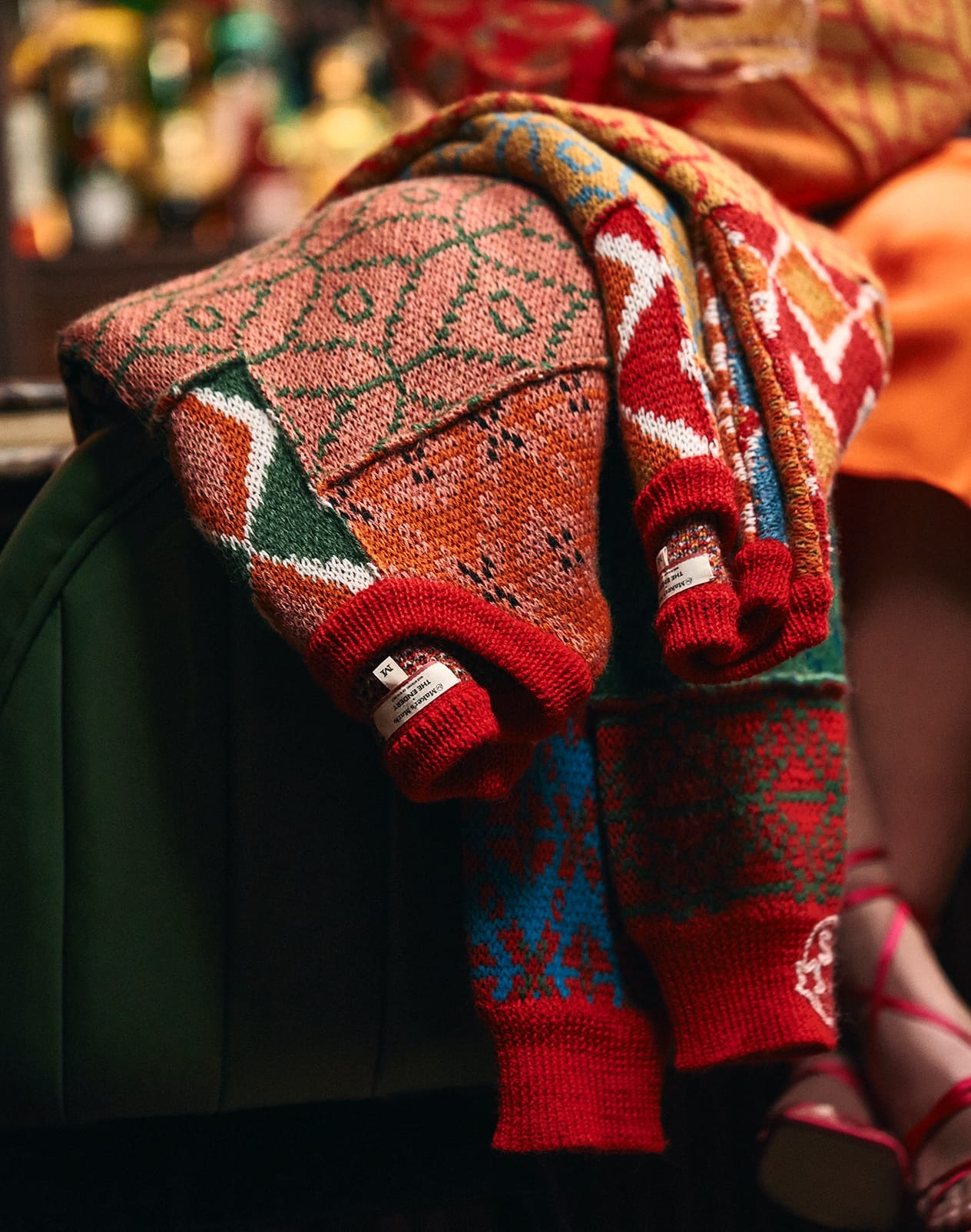
The campaign also returned all profits to the Peruvian knitting community. The campaign’s reported results include 95 million social video views and 218.4 million impressions. Those are measures of exposure, rather than proof that every viewer changed a habit. The more revealing creative detail is that the campaign had an actual garment at its center. The thing being advertised could be touched, worn and kept.
Maker’s Mark × The Endery · Campaign results
The credits give the object a human scale again. Art direction, copywriting, photography, music, editing and production all appear behind the finished work. A chief creative officer has responsibility for the result; the list of contributors shows how many forms of judgment went into it. A sweater is quite good at reminding an advertising team that execution is a real activity.
The people behind the work
Dailey’s hiring philosophy became especially concrete in 2024. Marianne Newton joined as vice president and director of integrated production after working on agency projects including Maker’s Mark and Georgia Aquarium. Dailey had first met her in Chicago. Recruiting her full time brought an existing working relationship into the agency’s daily life.
Later that year, associate creative directors Samantha “Sam” Jolley, Hayden Griffin and Collin Buenerkemper joined the team. Jolley brought experience from agencies including Dagger, Haymaker and Heat. Griffin and Buenerkemper had worked together at VML Kansas City and were brought in to lead Maker’s Mark and other assignments. The hires added different backgrounds, along with a creative partnership that already knew how to work together.
In November 2025, the agency promoted Miles Harvey, Britt Riley and Zach Stewart to senior vice president and executive creative director roles reporting to Dailey. Stewart also became head of design. These appointments distributed creative responsibility across people with distinct bodies of work. A department cannot make its leader’s hiring philosophy visible through an inspirational sentence alone. It needs actual positions and actual authority.
That is also the context for her 2024 executive award. After receiving it, Dailey spoke about the recognition as a validation of the agency team’s effort and a possible way to attract new clients. An award can remain a private decoration, or it can become an introduction for everyone else. Her response placed the agency and its people inside the achievement.
A little more room for the next person
Her work with the wider creative community extends that pattern. The One Club listed her among the mentors for its 2022 Elevate program, which offered small-group conversations for women and non-binary creatives moving into leadership. She has also served on creative juries, including Next Creative Leaders and the ADC Fusion Cube jury.
Mentorship involves a different use of authority. The experienced person can offer judgment without making the younger person’s decisions for them. Jury service brings another responsibility: paying close attention to work made outside your own department. Both require a leader to remain curious about what somebody else is trying to do.
In Louisville, Dailey also serves on the board of Fund for the Arts. The connection puts her alongside people concerned with the city’s creative life beyond client campaigns. It gives the word “creative” a wider setting: the places and organizations where people make work, encounter it, and find support for continuing.
For graduates entering marketing, she has recommended curiosity and a willingness to jump before every uncertainty is resolved. Coming from a leader who asks colleagues to leave their egos out of hiring decisions, the advice has a useful internal consistency. Give another person a chance. Give an unfamiliar idea a chance. Accept that the first version may need help.
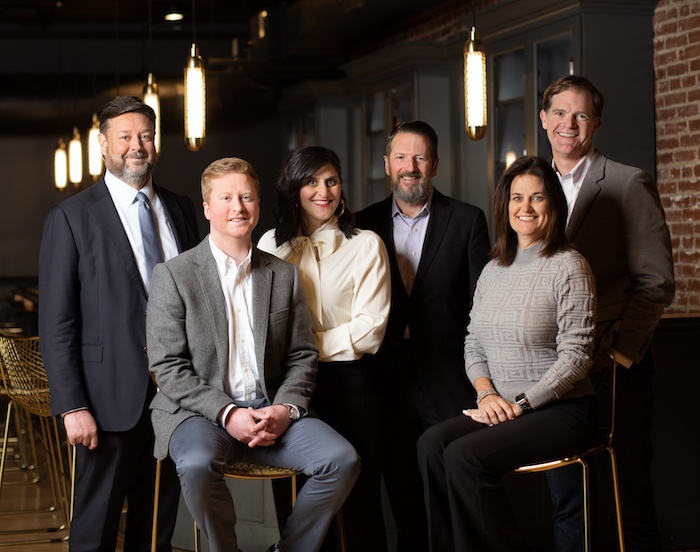
Dailey’s story returns to the interview room. A leader encounters someone whose work provokes admiration, perhaps with an uncomfortable little pinch of envy. The decision that follows can shape an entire department. Invite that person in, and you also accept the possibility that the work will go somewhere you would never have taken it alone. That is a considerable amount of responsibility to place on an empty chair. It is also a good reason to fill it carefully.