Clint Runge did not set out to build an advertising agency. He wanted to build buildings, preferably the cool kind, and he was impatient with the long apprenticeship between a young architect and an important idea. Architecture had hierarchy. Advertising, he imagined, might let youth skip the queue. He added an advertising degree to his architecture studies at the University of Nebraska-Lincoln and discovered, with the timing reserved for expensive lessons, that every creative business has a queue.
The useful discovery was that the process traveled. A designer could study a problem, make a structure and consider how people would move through it. The structure did not need concrete. It might be an identity, an event, a game, a community or a suspiciously official envelope left on a windshield.
Runge and fellow architecture student Charlie Hull had been freelancing for architectural firms. In 1996, the Nebraska Center for Entrepreneurship paired them with MBA student Linda Hauner to write a business plan. The creative guys were not immediately thrilled by the phrase “business plan,” but the work placed third in competitions at Nebraska and San Diego State. It gave a loose design practice a little scaffolding. In 1997, Archrival opened in Lincoln.
The starving-artist MBA
The first five years were what Runge now calls the starving-artist years. The work appeared in design magazines and won awards; the business kept finding fresh ways to be broke. He and Hull knew little about client management. They did things that felt right, learned in public and retained the low overhead expectations of recent students. There are worse ways to survive an education, although most universities include fewer invoices.
Runge knocked on local doors. At a burrito shop, he asked how the owner planned to spend the marketing budget. The answer was a $500 newspaper advertisement. Runge said he could do better, though he was not sure he could, and remembers accepting a burrito as payment. At a car wash, the same sum became faux parking citations tucked onto dirty cars. The envelopes looked like the city's ticket notices and accused each vehicle of being too filthy. The idea reached local television and the newspaper's front page. It also attracted a cease-and-desist from law enforcement.
“I want to be a great creative, great at the process, and wherever that would lead me, it could lead me.”Clint Runge
The stunt's value was larger than the mischief. Runge had seen that an idea in the physical world could recruit people into distributing it. A small media budget could travel when the audience had something to notice, discuss or pass along. Long before “earned” became a compulsory adjective in agency presentations, Archrival was learning the mechanics with envelopes and shoe leather.
A business chooses its age
About five years in, the founders looked at the projects that had worked, that they liked and that occasionally made money. They shared an audience: young adults. This sounds obvious only after someone has done the sorting. Archrival could put one foot in youth culture and the other in a professional room. The agency chose to specialize.
Then a bank offered more money than Archrival had ever received for work that looked like ordinary bank marketing. Runge and the team declined it. The refusal was an expensive form of positioning, and therefore more credible than a slogan. Archrival would be about youth culture. The company could age; its subject would remain the same age.
The Runge field guide to relevance
- Study where people are headed, not merely what is popular this afternoon.
- Let trusted participants carry the message into their own communities.
- Build a role for the brand instead of demanding attention for its arrival.
- Say no when a large check pulls the company away from its useful edge.
Red Bull provided validation. Archrival helped develop the energy drink's early American social presence, created the Roshambull branded game and later handled interactive and social work connected to Red Bull Stratos. In 2009, Archrival was named among Facebook's original 14 preferred developer consultants. The agency's mix of digital experimentation and real-world participation attracted global attention without requiring it to pretend Lincoln was a coastal ZIP code.
Its work expanded across adidas, Spotify, Hollister and other consumer brands. The method kept returning to people. Find the runner a local group already follows, the student with credibility on campus, the fan who can explain why a product belongs. Runge does not confuse all of these people with celebrity influencers. His interest is bottom-up trust: people tend to trust people like themselves more than institutions announcing that they are trustworthy.
“Where are your consumers headed? And let's go there and we'll meet them when they arrive.”Clint Runge
Selling, learning and coming home
In early 2010, Runge and Hull joked that business was going well enough to be boring. Two weeks later, Jeffrey Dachis left a voicemail. Dachis had co-founded Razorfish and was assembling social-business companies. Archrival declined several versions of his offer before accepting the sixth. Dachis Group acquired the agency that November.
Runge later said he did not regret the deal. It gave him a business mentor and a close view of how firms worked at global scale. It also proved temporary. Dachis moved toward analytics software and data-driven marketing while Archrival wanted to remain a youth-marketing agency. In June 2013, Runge, Hull and Nebraska investors bought Archrival back. Runge said the agency had “come home.” A sale had become a classroom, followed by a return trip with better luggage.
Four chapters, one stubborn specialty
The company grew while Runge developed a parallel career explaining generations to rooms full of marketers. He taught creative strategy at Nebraska for 15 years and became a regular speaker on identity, loyalty, consumerism and the State of Youth Culture. His public persona leaves room for Diet Mountain Dew, card tricks and competitive rock-paper-scissors. He calls himself a Gen Xer, which helps his argument: expertise in youth culture is not the same as claiming permanent youth.
Keep the artifact, change the scale
Archrival's Lincoln office contains a cabinet of curiosities, a wooden record of the agency's chapters. High in it sits an early book Runge made. The pages deliberately refuse uniformity. He remembers putting every ounce of his creative energy into it and getting goosebumps when the printed copy returned. Decades of awards have not displaced the pleasure of that first physical proof.
The office extends the same argument into space. Exposed brick and ductwork meet a podcast studio, murals, a branded arcade machine and a front door bearing a single word: “Hello.” Runge worked with architecture firm BVH on the renovation, a chance to bring his original training back into the room. He wanted a flexible place where creative people could do strong work and one that felt as if it could exist anywhere in the world. Outside, a full-building alley mural has remained untagged. Runge reads that absence as acceptance.
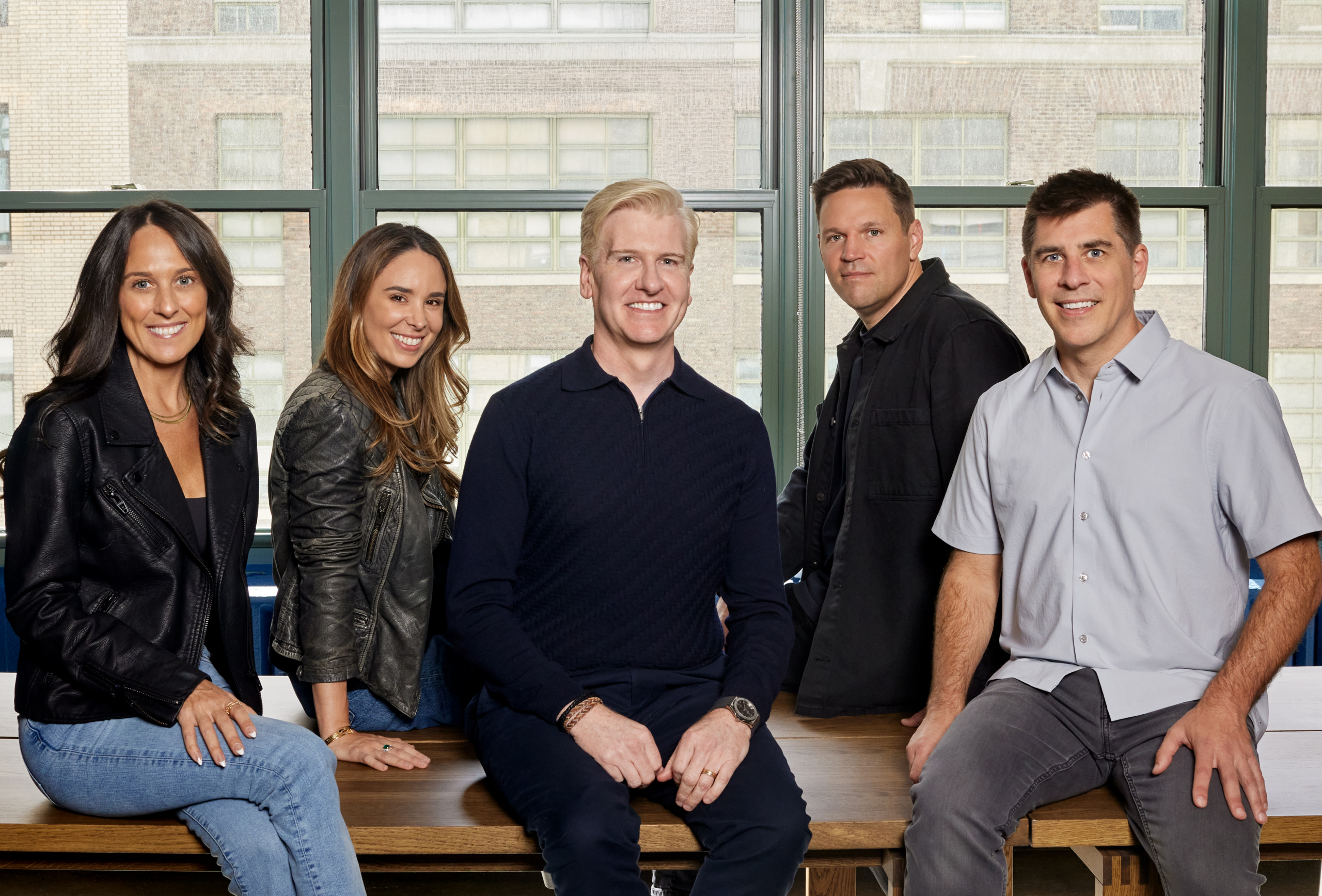
On June 10, 2026, Havas announced that it had acquired a majority stake in Archrival. The agency would join Havas Play, adding its collegiate activations, ambassador networks, sports work, gaming experience and community practice to a larger system. Financial terms were not disclosed. Runge remained CEO and Founder.
For Runge, the public logic of the deal sounds familiar: stop chasing trends and understand what truly moves a generation. Havas offers global reach, data, media and a wider stage across sports, entertainment, creators and fandom. Archrival offers cultural proximity and people on the ground. The transaction asks whether a company can expand its radius without sanding off the local grain that made it interesting.
Runge's announcement supplied the neatest expression of the wager: all of who Archrival is will stay the same, while everything it could be lies ahead. “Midwest to the world continues,” he wrote. The phrase works because it refuses the old provincial bargain. Lincoln is not a waiting room for elsewhere. It is where the thing was built.
The platform after the platform
Runge is wary of building a grand strategy around whichever platform has just entered the group chat. Large brands can spend six months approving a response to a novelty and arrive after the party has moved. His alternative is to understand durable generational questions: how identity is assembled, which relationships produce trust, where communities gather and what people expect a brand to contribute.
This is why he admires Lego. A simple toy became what he calls a brand universe, entered through sets, films, parks, licensed worlds and fan creation. A parent and child can participate at once without either borrowing the other's enthusiasm. The architect in Runge is still visible there. He likes brands with rooms, doors and permission to build.
Nearly 30 years after Archrival began, its founder's durable idea is not a campaign trick. It is a discipline of arrival. Go far enough ahead to meet the audience, but remain patient enough to learn why they are coming. Make something they can enter. Keep one strange old book on the shelf, lest scale convince you that the goosebumps were merely a KPI.