The easiest way to sell Minnesota is to point a camera at a lake. The harder way is to ask why the lake matters. Is it the canoe? The quiet? The person beside you? Or the version of yourself who has, for once, put the phone away? Adventure™, the Minneapolis agency founded by Scott Mitchell in 2005, built a business around this second question. It made handsome things, certainly. But its real product was a bridge between human appetite and commercial action.
That distinction mattered because Adventure occupied a crowded patch of agency country. Plenty of firms can shoot a sunset, redesign a beer can or buy a television schedule. Adventure concentrated on active-lifestyle, recreation, destination and consumer brands - categories in which the customer is often buying an identity before buying an object. A kayak is also a Saturday morning. A state is also an escape. A preschool in a zoo is also a theory of childhood.
First, find the reason beneath the reason
The agency described its method as a combination of “human-centric science” and storytelling. Its menu was broad: qualitative and quantitative research, positioning, identity, packaging, campaign development, media, social, digital, photography, video and live experience. Yet the work reads more coherently when seen as one loop. Listen closely. Name the desire. Build a world around it. Put that world where the right people will see it. Then count what they do.
The Adventure loop
Consider “Just Add Water,” a 30-second spot for Explore Minnesota. Water is the state’s most obvious asset and therefore a dangerous creative choice. Obvious things become wallpaper. Adventure ran focus groups with travelers inside and outside Minnesota and learned that proximity to water - along with food, urban experiences and multigenerational travel - remained a genuine draw. The cliché survived the research. That changed the brief. Water could be used, but as an activity and social connector rather than a postcard.
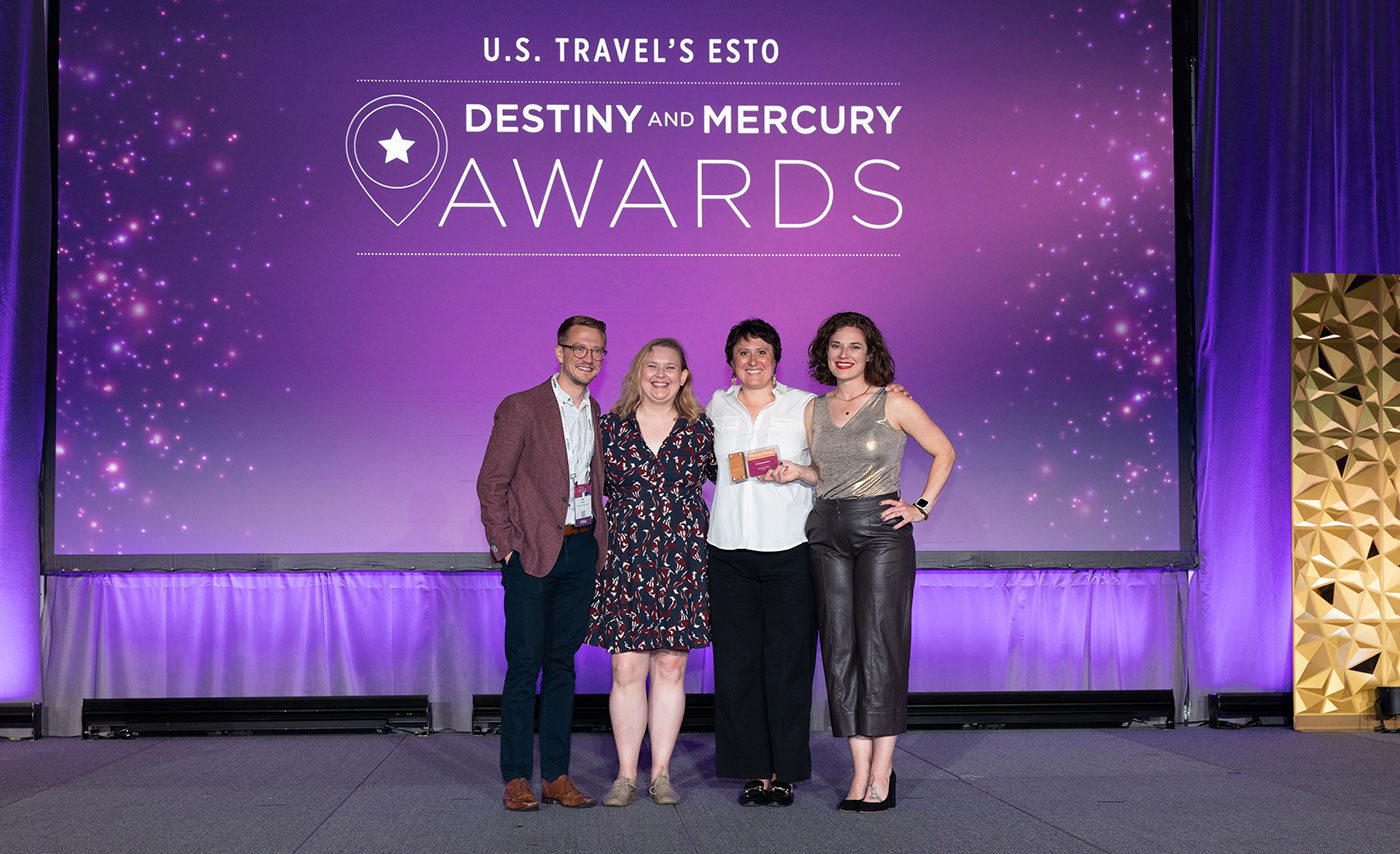
The resulting campaign won the U.S. Travel Association’s Best in Broadcast Mercury Award. More usefully, every television market targeted recorded triple-digit year-over-year growth in website traffic. An attribution study reported a 6.3% lift over baseline for exposed people visiting the site within 30 minutes, rising to 10.8% within 14 days. The pretty film had a measurable wake.
“There are trips that don’t just take you to new places, but transport you to what can feel like an entirely different world.” - Gina Nacey
The dream had a dashboard
Adventure’s long Explore Minnesota relationship began in 2018, when it won a competitive review to become the state tourism office’s advertising agency of record. True Media handled media strategy, planning and placement alongside the agency. The public money was substantial: a 2019 state contract report lists a $6,527,054 amendment for advertising and marketing services. That number covered a broad government engagement, not one glamorous piece of film. It is a useful corrective to the fairy dust of an agency reel. National tourism persuasion requires production, research, placement, coordination and repetition.
A 2019 public contract amendment for Adventure’s Explore Minnesota advertising and marketing services. The creative lived inside an operating system, not a single spot.
Then the operating conditions failed. COVID-19 made the basic premise of destination marketing - encouraging movement - unstable. Adventure and Explore Minnesota responded with a proprietary scoring model that monitored changing COVID levels across markets and guided where media should run. The first assumption to break was that a fixed media plan could survive a volatile public-health map. The replacement was a plan that moved with the data. That work earned the partners their first Best in Broadcast Mercury Award in 2021.
The approach matured into “Dream State,” which sold travel less as inventory and more as a change in consciousness. Its 2023 spring and summer campaign, featuring the spot “The Magic of Summer,” was credited with more than $1 billion in visitor spending and a reported $101 return for every dollar invested. It won Adventure and Explore Minnesota their third Best in Broadcast Mercury in four years.
A campfire still needs a next click
In 2022 the agency carried Dream State into physical space. Pop-ups in Chicago and St. Louis surrounded visitors with floor-to-ceiling film, loon calls and the sound of an orchestra tuning. Then came the campfire and Adirondack chairs, where Minnesota ambassadors could turn atmosphere into conversation. More than 5,000 people entered over two weekends. Two thousand visited the tourism website, and 500 subscribed to its newsletter.
Those numbers reveal a practical instinct worth copying: design the handoff before designing the spectacle. The event did not end at the exit. It offered a next action, and Adventure counted the drop from passerby to participant to prospect. The conversion was imperfect, visible and therefore useful.
The same logic appeared in less cinematic assignments. Four Peaks Brewing needed to grow without sanding away its character. Adventure chose design evolution over revolution, creating a packaging system that made the portfolio consistent while keeping individual beers distinct. Variety-pack sales rose 13% year over year after the refresh. For Minnesota Zoo’s Nature Preschool, the agency studied competing Twin Cities programs, developed a differentiated position and built a playful identity. Interest soon exceeded capacity. In each case, aesthetics were attached to a commercial or operational problem.
Research the emotional job, not only the demographic. Build the campaign and measurement plan together. Give every physical experience a digital continuation.
This model depends on meaningful access to customers, enough media to observe behavior and a product capable of delivering the promise. A gorgeous invitation cannot rescue a disappointing destination.
What Adventure was really selling
By the end, Adventure’s portfolio looked like a gear closet assembled by an unusually social traveler: Old Town canoes, Predator fishing kayaks, Park Tool, Polaris, Hatteras yachts, Cambria, a zoo, a brewery and two state tourism brands. The company called itself “proudly independent and shamelessly optimistic.” Its 46-person LinkedIn roster and Best Place to Work recognition suggested a small agency with enough range to behave like a larger one.
Its customers were not merely buying advertising. They were buying fluency across the whole route from uncertainty to execution. A tourism office could arrive with a positioning problem and leave with research, a campaign, television, social, influencers, media and an installation in another city. A beverage company could bring a messy portfolio and leave with one visual grammar. The business model was the familiar agency mixture of projects and ongoing relationships, but the promise was continuity: fewer seams between the people who found the insight and the people who made the thing.
In January 2025, Rise and Shine and Partners acquired Adventure Creative Group. Adventure’s site announced the deal plainly and directed visitors to the combined agency. Gina Nacey moved into the larger firm’s leadership as partner and director of creative strategy. Mitchell, the founder who had spent two decades moving active brands forward, closed the independent chapter.
There is a tidy temptation to read an acquisition as the final proof of a company. Adventure’s more instructive proof arrived earlier, in the ordinary sequence it repeated: ask people what they want, notice when the answer disrupts the brief, make the answer visible, and check whether anybody moved. The sunset was never the strategy. It was what the strategy earned the right to show.