In advertising, almost everything has a number. The audience has an age, a postcode and a propensity to buy patio furniture. The media plan has impressions, reach, frequency and cost. The campaign has clicks, views and conversions. Then, at the center of this numerical solar system, sits the advertisement itself - a 30-second film of a woman opening a paint can, or a child bicycling through a Christmas parade - treated less like data than like weather. People point at it. They have feelings about it. They hope it moves in the right direction.
FIG, an independent agency in New York, decided that this was odd. If the story is what a person actually encounters, why did the measurement apparatus become so sophisticated everywhere except inside the story? Since 2017, FIG has been developing an answer called StoryData: a platform that takes creative work apart, classifies what it finds and measures qualities such as emotion, meaningfulness, brand identity and differentiation.
The wager is more interesting than the usual promise to apply artificial intelligence to marketing. FIG is not proposing that a machine should have the idea. It is arguing that creative judgment gets better when people can see the patterns they have previously been left to intuit. The agency wants to make the mysterious object legible without making it mechanical.
The two-person bridge
FIG began as Figliulo & Partners in 2013. Mark Figliulo had been chairman and chief creative officer of TBWA\Chiat\Day. Judith Carr-Rodriguez had run the North American operation of digital agency LBi. Their backgrounds supplied the original proposition: join big-brand thinking to digital execution before the brief was divided among specialists.
Sprint became the founding client. That is the sort of first account that makes a new shop look less like two people opening an office and more like two people opening a theater with the audience already seated. Their first conspicuous work was “Framily,” an episodic campaign featuring an eccentric invented household. Carr-Rodriguez later described its inspiration in terms of serialized entertainment - the pleasure of wondering what happens in the next episode.
The work also exposed the risk in FIG's model. A large, strange campaign gives a young agency nowhere to hide. It can be loved, disliked or misunderstood in public. FIG's response was not to retreat into safer specialization. It pushed further toward integration and, eventually, measurement.
“Great creative reduces the need for frequency. Weak creative demands it.”FIG's case for putting the story before the media repetition
A pyramid turned sideways
The second unusual decision concerned the people making the work. Traditional agencies have often resembled pyramids: a handful of celebrated leaders above layers of increasingly junior staff. FIG describes itself as “Senior by Design.” The account lead, strategist and creative people with substantial experience remain close to the daily work and to the client.
This is not a claim that senior talent is cheap. It is a claim about the cost of translation. Every layer between a problem and a decision creates another meeting, another handoff and another opportunity for the sharp point of an idea to be sanded smooth. FIG hires fewer, more experienced people and brings fractional or freelance specialists into the team in bursts. The client is buying judgment and reduced distance.
The model works best when a client wants a lead partner and will let the same people connect strategy, design, production, communications planning, social content and measurement. It is less obviously suited to a buyer seeking the lowest-priced production vendor, an enormous permanent delivery bench or a tightly prescribed execution with no room to revisit the problem. Senior attention is valuable only if the brief permits judgment.
The missing dataset
By 2017, FIG's frustration had become specific. Consumer-response data could report how people reacted. Media data could report where an ad ran and what happened next. Neither described the creative asset itself in a form that could be compared across campaigns. StoryData began with the idea that the visual and verbal choices inside an ad could become a fresh source of information.
The platform ingests creative from multiple channels, applies FIG's advertising taxonomy and uses custom algorithms to score the work. The point is not a universal beauty score. It is to ask practical questions: Is the brand identifiable? What emotion drives the piece? Does the story mean something to its intended audience? Is it distinct from the competitive set? FIG uses the answers while diagnosing a brand story, writing a brief, pre-testing an idea and reviewing performance after launch.
What failed first, in other words, was not a particular campaign. It was the sufficiency of the agency industry's existing evidence. StoryData changed FIG's mind about where data belonged. Instead of arriving at the end to grade the work, data could enter before the brief, when it still had a chance to change the decision.
FIG has not published total development spending for StoryData or client fee schedules. A trade report said the tool directly generated 2% of agency revenue in 2022 after six years of investment. Its larger value appears to be indirect: an operating system for the work and an advantage in pitches.
When the small brief grows
The recent new-business record makes that indirect value visible. In March 2024, FIG won competitive pitches for Homesense and Naked Smoothies. The agency credited the combination of its new creative leadership and StoryData. The billings were not disclosed, which is normal and also a useful brake on anyone trying to turn every agency win into a victory parade.
A year later, Tropicana Brands Group expanded the relationship. FIG became creative agency of record across Tropicana, Naked and Izze after a review involving several agencies. The route is instructive: do a focused job, acquire knowledge that belongs to the category, then make the case for the whole portfolio. FIG did not enter through a grand transformation mandate. It earned a larger room.
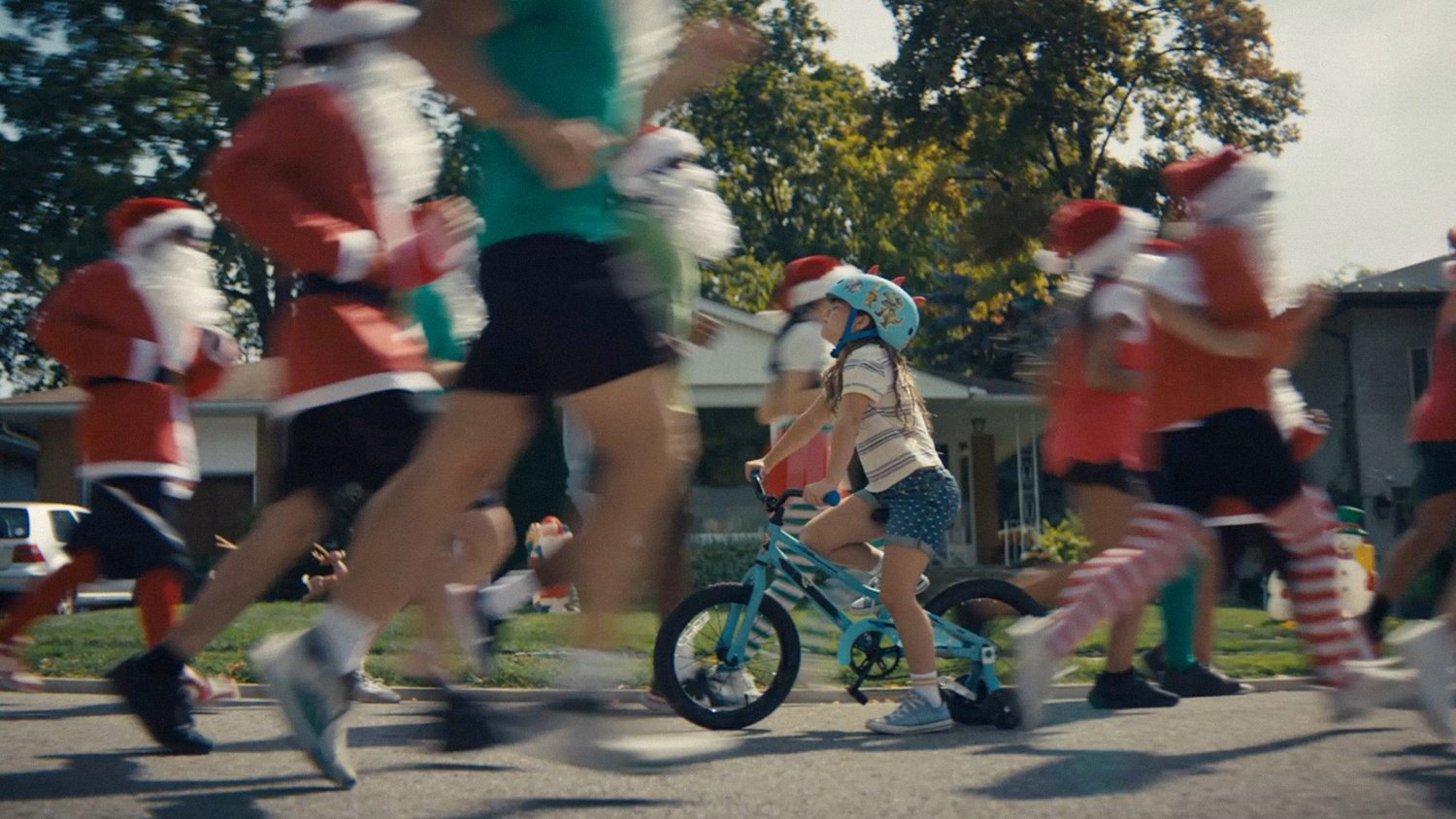
Publix was the more dramatic signal. The supermarket had worked with its previous agency for 33 years. Its first holiday campaign with FIG, “Merry Birthday,” focused on people born on Christmas Day, whose celebration is routinely swallowed by the larger occasion. The idea escaped the film: Publix bakeries sold the cake, cards were created, and families welcoming babies on Christmas received deliveries. This is FIG's favorite kind of story, one that does not end at the edge of the screen.
Adweek reported that FIG grew revenue 30% in 2025 and named Figliulo to its Innovator 50. In 2026, the agency appointed veteran advertising-technology executive Richard Bush as chief platform officer, charged with accelerating StoryData and expanding StoryData Labs. The title matters. It suggests the platform is moving from founder-led invention toward a business with dedicated technical stewardship.
The part worth stealing
The easy lesson would be “add AI.” It is also the least useful. FIG's more portable move is to identify the object everyone discusses but nobody has structured. In its case, that object was the creative. In a restaurant it might be the choreography of service. In software it might be the sequence of small frustrations before cancellation. The missing dataset is often hiding at the center of the business, disguised as taste or craft.
The second lesson is organizational. Put the people with enough experience to make a decision near the decision. Use specialists when the work calls for them, not because the org chart must be filled. This will not work if senior people merely attend the kickoff and disappear, or if “lean” becomes a pleasant word for exhausted. The model depends on genuine access, controlled growth and clients who want participation rather than ceremony.
And the third is to make the instrument serve the argument. StoryData is compelling because it reinforces FIG's oldest belief: that the story matters. A tool detached from a point of view is a dashboard looking for a wall. FIG built its machine around an opinion strong enough to annoy a media planner - a better story should require less repetition. That is a claim a client can test.
The advertising business will continue to count nearly everything. FIG's contribution is to ask whether it has been counting around the thing that matters. A child on a bicycle, a can of paint, a bottle of juice: each contains choices. Choices become patterns. Patterns can inform the next choice. The spreadsheet, surprisingly, may be one way to protect the story.