Jamie Siminoff’s garage had an acoustic problem. He could work there, think there, and build things there. He could not reliably hear someone ringing the bell at the front of his Los Angeles home. In 2011, with an iPhone in hand and projects on the go, he wanted the visitor to appear on his phone. A modest request. It would eventually require rather a lot of doorbells.
He assembled a camera and the necessary connections into a contraption he called Doorbot. The name promised a small domestic robot, which was roughly the spirit of the thing: let the gadget handle the interruption. Siminoff put it by his front door. His wife, Erin, supplied the observation that would give the project a different future. Being able to see who was outside made her feel safer.
That response changed the question. A device made to save a walk from the garage could offer reassurance to someone alone at home, or away from it. The convenience had been easy to imagine. The emotional value needed another pair of eyes.
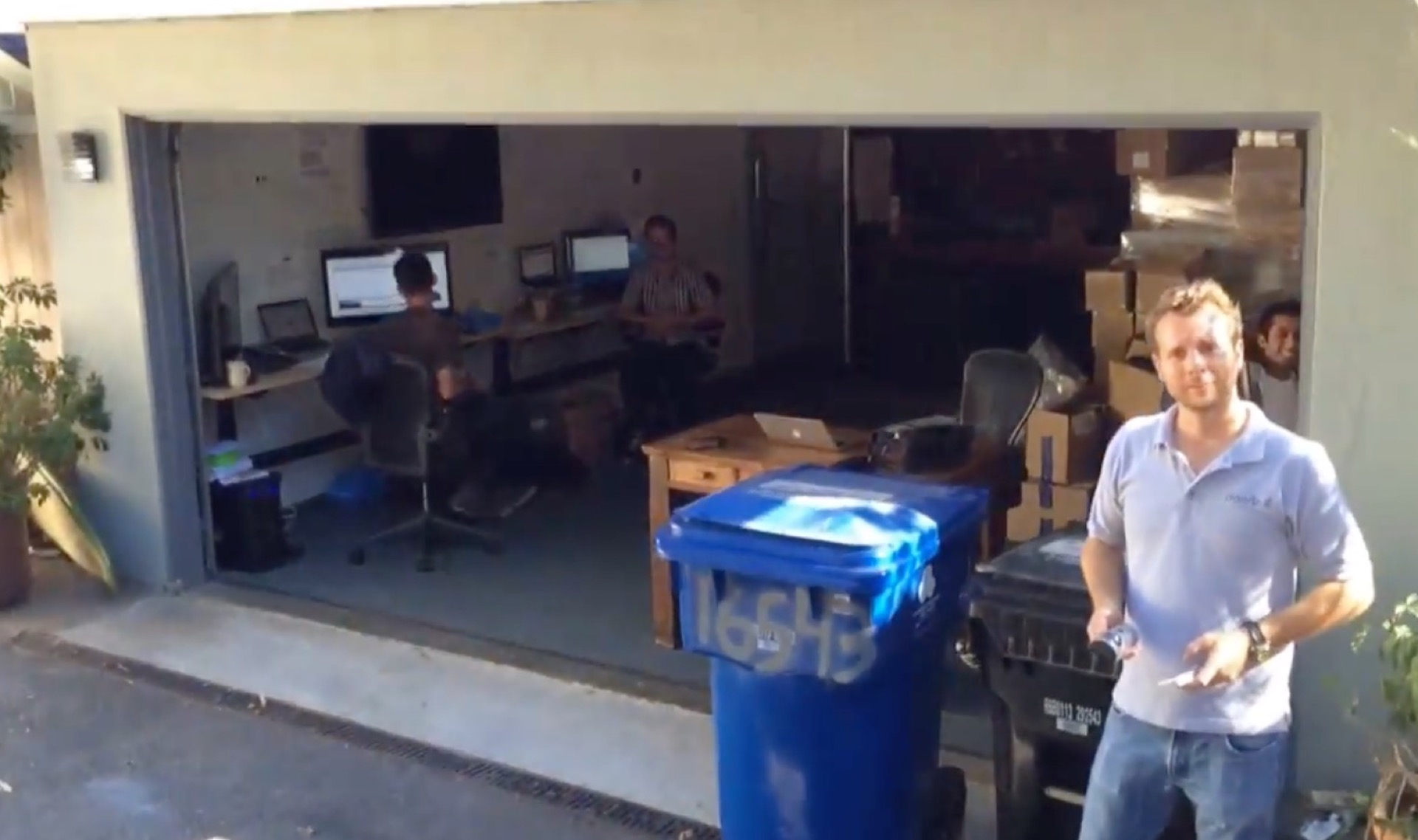
Before the doorbell, the inbox
Siminoff grew up in Chester, New Jersey, and arrived at Babson College already inclined to find something useful to sell. His campus business, Gadget Tronics, dealt in televisions and stereos. He and friends took odd jobs, too. Entrepreneurship was something he practiced between classes, with customers who could presumably find him afterward.
He graduated in 1999. There followed a run of companies, including PhoneTag, which transcribed voicemail, and Unsubscribe.com, which helped people clear unwanted commercial email. He sold those businesses in 2009 and 2011 respectively. Long before the doorbell, he was working on the irritating little obstacles between people and the information they wanted.
The exits did not resolve his restlessness. In his mid-thirties, he retreated into the garage to invent rather than immediately turn each idea into a company. That distinction mattered to him. The business could become an obligation before he had discovered whether the thing itself deserved to exist.
He has described the pleasure more plainly: “When I invent and fix a problem, and then see other people benefiting from that, that’s what makes me excited.” A customer actually using something offered a kind of satisfaction that incorporation paperwork could not reasonably be expected to provide.
One relationship survived those early experiments. Stephen Spinelli, a former professor who became Babson’s president, invested in Siminoff’s ventures. When Siminoff called about Ring, Spinelli initially mistook the request for a search for guidance. He spent roughly twenty minutes offering advice before his former student clarified that he needed money. Spinelli wrote a check. Years later, after meeting Jeff Bezos, Siminoff left him a voice message suggesting he would want to call back. The exchange has the rhythm of a long acquaintance: the teacher still teaching, the student still interrupting, and an investment that eventually gave both something to laugh about.
The investors passed. The audience ordered.
By 2013, Doorbot needed money and attention. Siminoff secured a place on Shark Tank and prepared with the earnestness of someone who understood that a television pitch had several ways to go wrong. He built a rehearsal set in his backyard, brought neighbors over to question him, and studied episodes. A functioning invention was only one requirement. The encounter also had to be watchable.
He asked for $700,000 in exchange for 10 percent of the company. Kevin O’Leary made an offer; Siminoff declined it. He left without a deal. The distinction tends to disappear when the episode gets compressed into a motivational anecdote. Both sides had made a decision.
Leaving the studio did not produce an instant reversal. There was a factory bill, arriving inventory, and uncertainty about when the segment would air. A show taped months before broadcast was an awkward thing to rely on for working capital. Siminoff could prepare his website. He could not schedule the television audience.
“Inventory is not a problem. My garage is full of Doorbots.”
Jamie Siminoff, recalling the wait for broadcast
The segment aired that November. His later account of the response gives the story its useful grain: about $100,000 in purchases the first day, then $150,000, then $175,000. The opening day worried him. The orders kept arriving, allowing the business to pay the factory and hire engineers. The people on the other side of the television had become customers.
The episode is usually remembered for the investment that did not happen. For the company, the orders that did happen were more immediately helpful. Siminoff remained grateful to the show. In 2018, he returned as a guest Shark, taking the seat on the other side of the pitch.
Four letters, a larger circle
In 2014, Doorbot became Ring, accompanied by redesigned hardware. The new name was short enough to say without explaining a robot. It also allowed the business to grow beyond the button beside the door. Cameras, alarms, and the area around a home could sit comfortably inside that circle.
Siminoff pursued the Ring.com domain with a conviction that could sound alarming to anyone guarding the company’s cash. He later resisted turning the purchase into universal advice. A risky decision that works out can become a seductive lesson for people whose circumstances are different. He compared that reasoning to recommending lottery tickets after winning.
That qualification is revealing. His story is often presented as proof that persistence settles every argument. His own account allows luck and risk into the room. A founder can be certain enough to make a bet while remaining a poor guide to whether someone else should make it.
Richard Branson invested in 2015. Shaquille O’Neal became an investor and a recognizable presence in Ring’s marketing. Then, in 2018, Amazon acquired the business for more than $1 billion. A project assembled to deal with missed visitors had become a company with a place inside a much larger one.
- 2011A garage prototype
- 2013Doorbot on Shark Tank
- 2014A new name: Ring
- 2018Amazon acquisition
- 2025A founder returns
A detour with coffee and sidewalks
Success broadened Siminoff’s geography. An investment in the meat-delivery company Moink through Shark Tank brought him to La Belle, Missouri. He bought a farm there. The visit grew into an involvement with the town, including paying for sidewalks and opening a Handlebar café. He already owned a Handlebar in Nantucket.
The farm acquired a 300-foot water slide. Four miniature donkeys lived on the property. These details complicate the tidy picture of a founder whose interests fit into a product roadmap. A rural town, a place to get coffee, and a hillside with recreational potential could all attract his attention.
La Belle also gave him another setting in which to test an assumption. Would people gather for something the town did not already offer? A dinner with chef Gabriel Lewis sold out despite local skepticism. Later, the café gave residents a more regular place to meet. Some experiments require a factory; others need tables.
His corporate detour was less leisurely. Latch acquired his residential services company Honest Day’s Work in July 2023, and he became its CEO later that year. The company cut staff as it tried to reduce costs and rebuild. Siminoff moved into an advisory role effective January 2025. Another chief executive job had brought another set of obligations.
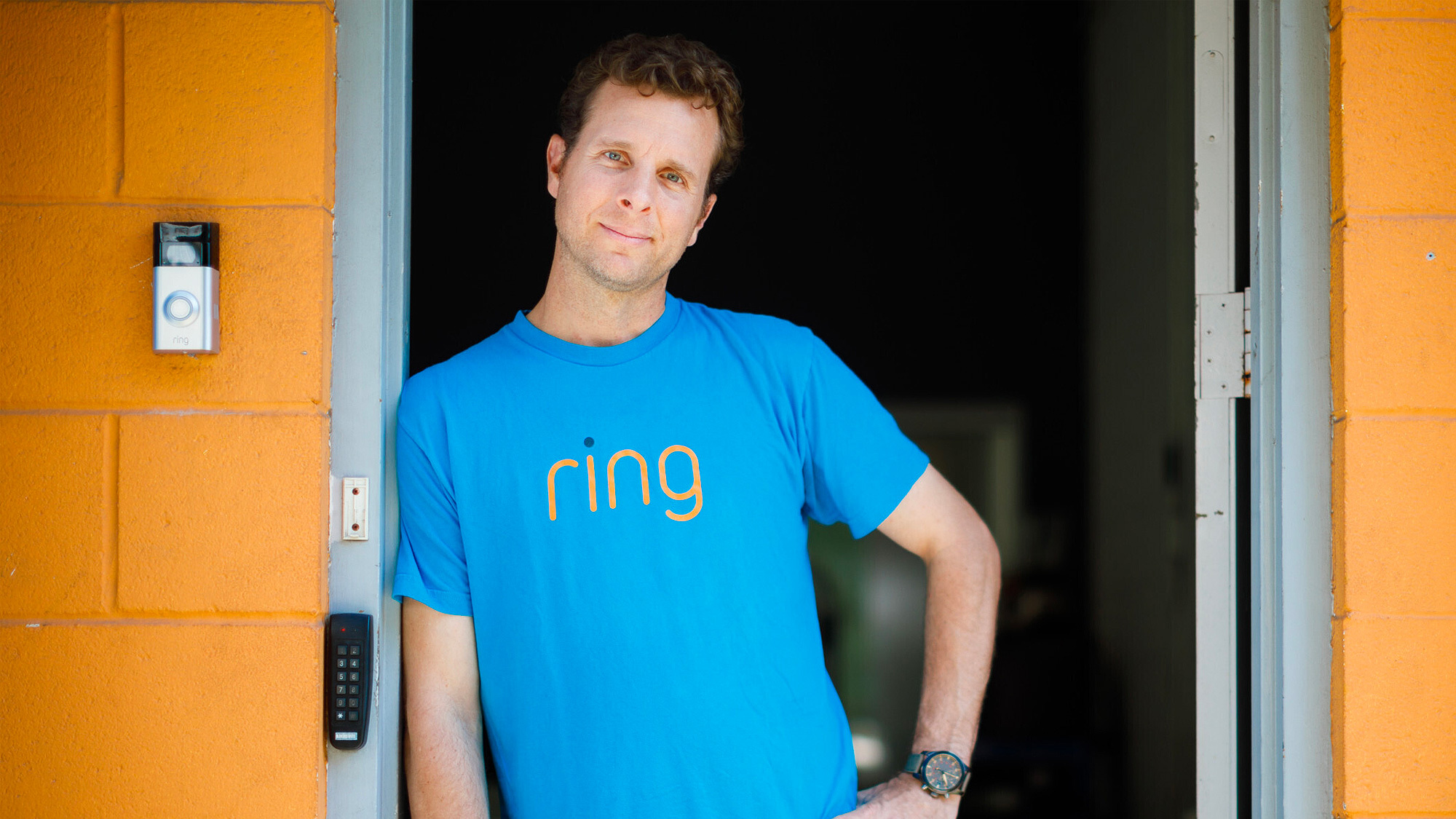
Back at the front door
By April 2025, he was back at Amazon, working with Ring, Blink, Amazon Key, and Sidewalk. He spoke about customers wanting to feel at home while thousands of miles away, and about devices that work better together. Artificial intelligence gave him fresh ways to approach the problem that had kept him busy for years.
There was continuity in his method, too. Early at Ring, he joined customer service representatives each month to answer calls. He put his email address on packaging and sometimes became pen pals with buyers. Those conversations supplied product feedback with an inconvenient advantage over a presentation: the person describing the problem had actually experienced it.
In November 2025, he published Ding Dong, written with Andrew Postman. The title preserved his fondness for plain household language. The book revisited the early uncertainty, the televised pitch, and the work that a neat acquisition headline tends to leave outside the frame.
The next Ring chapter has been harder to explain in a single cheerful demonstration. Its 2026 Super Bowl advertisement promoted Search Party, which uses cameras and AI to help locate lost dogs. The advertisement drew privacy criticism. Siminoff appeared in interviews to defend the approach. A helpful neighborhood network can look different depending on whether you own the camera or walk past it.
He has argued that customers control their video. Critics have questioned the broader implications of connected cameras and capable software. His ambition to make neighborhoods safer carries an ongoing obligation to answer those questions. A good intention cannot supply every answer about access, consent, and what a system may eventually do.
Other work returned him to a more personal starting point. The garage where Ring began was lost in the 2025 Palisades fire. In January 2026, Ring and Watch Duty announced Fire Watch, combining wildfire information with alerts and voluntary contributions from camera owners. Ring also donated $1 million to the nonprofit. The place where he had tried to see the front door had become part of the reason to look farther.
In October 2026, Ring announced a smart lock planned for early 2027. Its answer to a dead battery includes a dial that the user can turn to generate power. After years of cloud services and increasingly elaborate software, a small manual action still has a place at the entrance. Siminoff remains occupied with what can go wrong while someone is standing outside a door.