$21.6M
Total Funding Raised
Profile
The Buyer's Advocate
Sellers have had Salesforce since 1999. For 25 years, the CRM has given sellers a complete map of every deal, every contact, every conversation. Buyers got a spreadsheet.
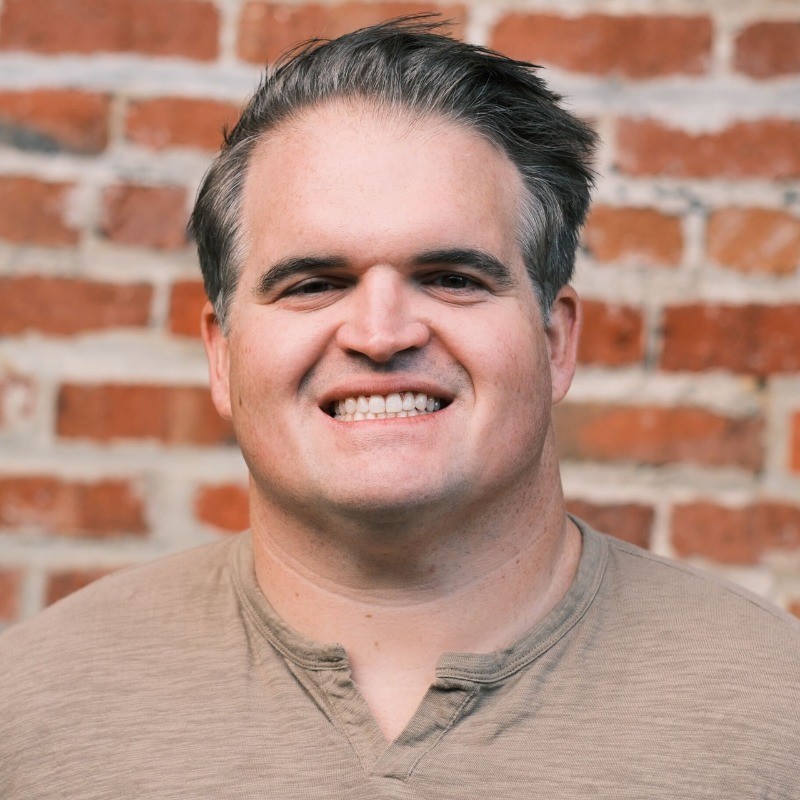
James McGillicuddy - known as "Cuddy" in the circles he runs - decided that was long enough. In May 2022, he co-founded BRM: Buyer Relationship Management. Not a clever acronym. A declaration of intent.
The company sits at 188 King Street in San Francisco, staffed by 46 people, and backed by $21.6M from investors including Caffeinated Capital, Base10 Partners, Sequoia Capital, and Original Capital. Its AI SuperAgents comb through vendor contracts, extract renewal dates, flag compliance gaps, spot duplicate tools, and - increasingly - negotiate directly with vendors on behalf of buyers. Customers include Deel, Cadence, and Public.
McGillicuddy's insight is deceptively simple: identity. Sellers know exactly who they're selling to. Buyers have no equivalent system for the companies they're buying from. A vendor exists in your accounting software as one name, in your email as another, in your contract as a third. BRM resolves that into a single vendor identity - and builds everything else on top.
Identity is the unlock for B2B.
- James McGillicuddy, CEO of BRM
Background
Three Exits, Then His Own
Before BRM, McGillicuddy had a front-row seat at three companies that shaped how Silicon Valley thinks about B2B software.
He was the first go-to-market hire at RelateIQ - a company that reimagined the CRM around relationships rather than pipelines. Salesforce bought it for $390M in 2014. McGillicuddy learned what the sales side of B2B software could look like when the data was truly organized.
He then moved to Sourcegraph as Chief Operating Officer, helping scale a developer tools company that would eventually reach a $2.6 billion valuation. Two-plus years of building ops infrastructure for a technical product - the kind of experience that teaches you how fast companies buy software when they don't have a system for it.
Then came Carta. He joined as Head of Strategy in 2018 and pivoted within two years to building CartaX - a new business line focused on private market liquidity. It was frontier territory: creating a marketplace for something that had never had one. The parallels to what he'd eventually do at BRM are hard to miss.
By May 2022, he'd seen enough. The procurement problem was everywhere - at RelateIQ, at Sourcegraph, at Carta - and nobody had solved it. He co-founded BRM with Alexis Teixeira.
RelateIQ
First GTM hire / Sales Executive (2012-2015)
$390M Exit to Salesforce
Sourcegraph
Chief Operating Officer (2015-2018)
$2.6B Valuation
Carta
Head of Strategy + Head of CartaX (2018-2022)
$7B+ Valuation
BRM
CEO & Co-Founder (2022 - Present)
$21.6M Raised
We think about our world actually as buying, which is something that every company does.
- James McGillicuddy, Sacra Research Interview
The Product
AI SuperAgents for Every Vendor Relationship
BRM calls its AI automations "SuperAgents" - and the naming is deliberate. This is not workflow software with an AI tab. The platform deploys agents to do specific jobs: one agent discovers all your vendors (including shadow IT and shadow AI tools nobody knows about), another extracts key terms from contracts, a third monitors compliance obligations, and the newest one negotiates directly with vendors on renewal and pricing.
The market BRM targets is the gap between "spreadsheet chaos" and "fully implemented procurement platform." Most companies buy dozens or hundreds of software tools before they ever hire a VP of Procurement. Nobody is tracking renewal dates or checking whether three teams are paying for the same tool in three different ways. BRM calls this the "little P" problem - lowercase procurement, the reality most companies live in before they've built formal buying infrastructure.
McGillicuddy's pricing model reflects his conviction that BRM should win when buyers win. Instead of charging per user (the dominant SaaS model, which favors sellers who want big logos), BRM charges per vendor under management - up to $200 per vendor per year. The incentive is aligned: BRM makes more money only as the number of managed vendor relationships grows, not by extracting rents from individual seats.
BRM Funding History
Seed Round - Base10 Partners
$6M
Series A - Caffeinated Capital (Dec 2024)
$15M
Also backed by
Sequoia Capital · Original Capital · Definition
The Person
Stanford Football and T.A.P.E.
McGillicuddy studied Science, Technology, and Society at Stanford from 2005 to 2009, then stayed for a master's in Communication and Media Studies. He was on the Stanford Football Team - and that thread runs through how he talks about building companies.
BRM's internal values framework is called T.A.P.E. - a reference to football tape, the athletic kind that holds bodies together through hard games. He wrote about it on the company blog in November 2024. The name says something about how he thinks about culture: not as a mission statement to post on a wall, but as something that holds people together when the work gets hard.
His Twitter/X handle is @jpmcuddy - the "Cuddy" nickname following him from Stanford through every company he's worked at. He's also built a Delphi AI digital clone at delphi.ai/cuddy, which suggests either a genuine interest in AI as a medium, or an operator's instinct for what comes next.
What makes his career unusual is the consistency of the bet: he has joined companies early, helped them scale, and then moved toward something more frontier. RelateIQ when the CRM space was about to be disrupted. Sourcegraph when developer tools were still niche. CartaX when private markets had no liquidity infrastructure. BRM when nobody had built the buyer's equivalent of Salesforce.
Quotes
If this is doing the work that a human could do, why wouldn't we just price it based on the work?
If you are opportunistically purchasing bottom-up from within the company, you might not have any idea that you need to go through legal and compliance and IT and InfoSec.
Identity is the unlock for B2B.
We think about our world actually as buying, which is something that every company does.
■ ■ ■
Looking Forward
The Buyer's System of Record
McGillicuddy's stated ambition is for BRM to become what Salesforce is for sellers - but for every company's relationship with its vendors. The $21.6M in funding gives BRM the runway to build out the SuperAgent platform, grow its enterprise customer base, and expand into new automation categories.
The May 2025 launch of the AI Negotiator SuperAgent is the clearest signal yet of where BRM is heading: not just organizing vendor data, but acting on it. An AI that can negotiate a SaaS renewal on your behalf - checking current market rates, flagging unused seats, and pushing back on auto-renewal terms - is a fundamentally different kind of product than a vendor database.
For a company that was founded on the premise that buyers deserve the same data advantages as sellers, deploying AI agents to negotiate is the logical conclusion. Sellers have had trained sales reps, CRM tools, and conversation intelligence for years. Now buyers have BRM's SuperAgent.
Cuddy has been betting on what's next for over a decade. The track record suggests he's early again.