Consider the restaurant delivery truck. Its most interesting feature may be the time it leaves the depot. A battery, a charging cable, a transformer and a software schedule must cooperate before the driver can do anything useful. Electrification turns that ordinary departure into a coordination problem. Somebody has to own the whole problem.
- Infrastructure, software and service together.
- A $20 million lesson in power.
- The test: ready for the next shift.
InCharge Energy has made that somebody its business. It designs and installs commercial charging infrastructure, supplies equipment, manages charging through its InControl software and sends technicians when equipment needs attention. Customers include commercial fleets, school districts, municipalities, dealerships and property operators. Increasingly, the assignment extends behind the charger, into electrical distribution, solar, batteries and microgrids.
The appealing part is the continuity. An installer can finish a project; a software vendor can display an alarm. InCharge sells a relationship that stretches from the site assessment through years of operation. Whether that relationship earns its keep depends on something pleasingly concrete: does the customer's equipment work when needed?
A $20 million lesson in electricity
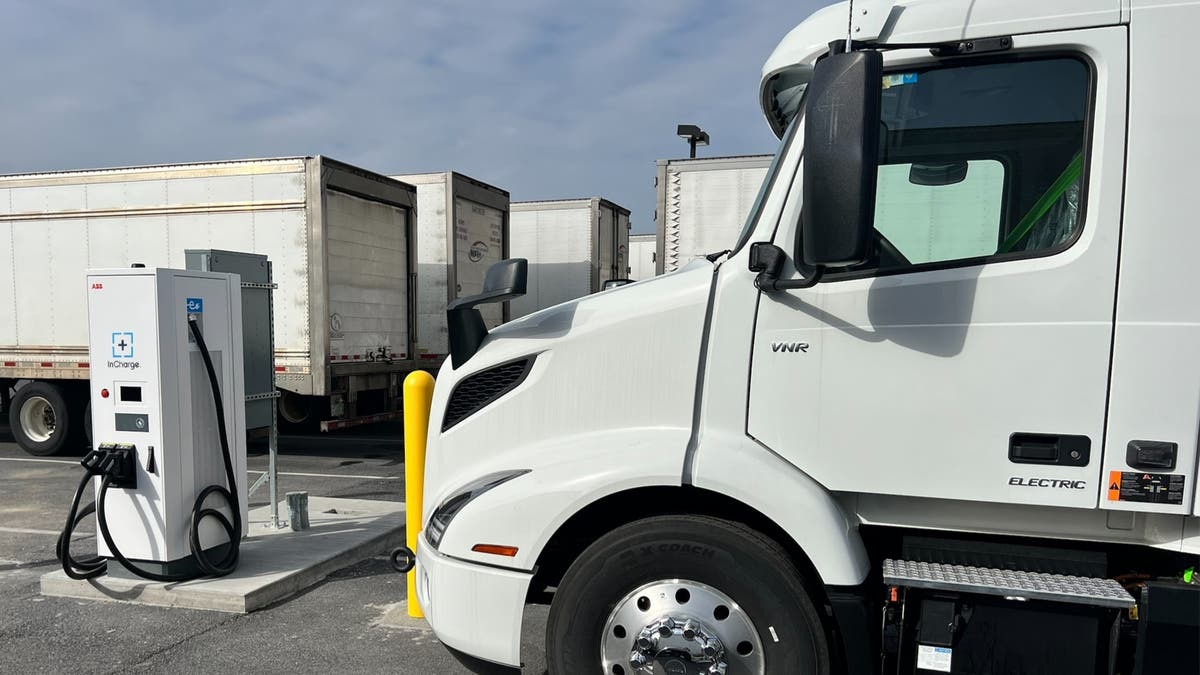
In May 2022, Quality Custom Distribution announced a $20 million electrification project with InCharge and Scale Microgrid Solutions at its La Puente, California, operation. The plan covered 30 Volvo VNR Electric trucks, 16 chargers and a microgrid. That price described the whole project, including vehicles. It was never a price tag for InCharge's chargers alone.
The division of labor matters. InCharge would engineer, install and commission the charging infrastructure. Scale would develop the microgrid. The announced energy mix included rooftop and carport solar, three megawatt-hours of battery storage and backup generation. Grants and incentives would cover part of the investment.
Here, the constraint was time as well as power: the announcement said a Southern California utility upgrade could take upwards of two years to initiate. The microgrid offered another route. This was an announced design, not evidence that every fleet should buy its own miniature power system. The useful lesson is to investigate electricity supply before committing to a vehicle rollout.
Whole project, including vehicles.
The clock inside the charger
There is another way to make electricity go further: decide when to use it. InCharge's load-management guide gives wonderfully plain examples. Start charging at 1 a.m. Keep chargers inactive between 4 p.m. and 8 p.m. Put a 150-kilowatt ceiling on a site. These are examples of configurable rules, not universal recommendations.
A fleet operator can copy the method immediately. List departure times, available charging windows and the site's power limit; then design charging rules around those constraints. The arithmetic has to close. A schedule that saves money but leaves a bus short of energy at departure has failed its most important test.
InControl also connects asset records, service history and maintenance workflows. Its current offering distinguishes a service connection for energy assets from a charger management and maintenance system with operational controls. Direct OCPP connections, APIs, proxy integrations and manufacturer portals provide different connection routes. Compatibility still deserves a site-specific check; a list of integration methods cannot establish that every charger and vehicle combination will cooperate.
- 01The routeEnergy needed + return time
- 02The windowHours available to charge
- 03The sitePower, equipment + service
A service call can be the business
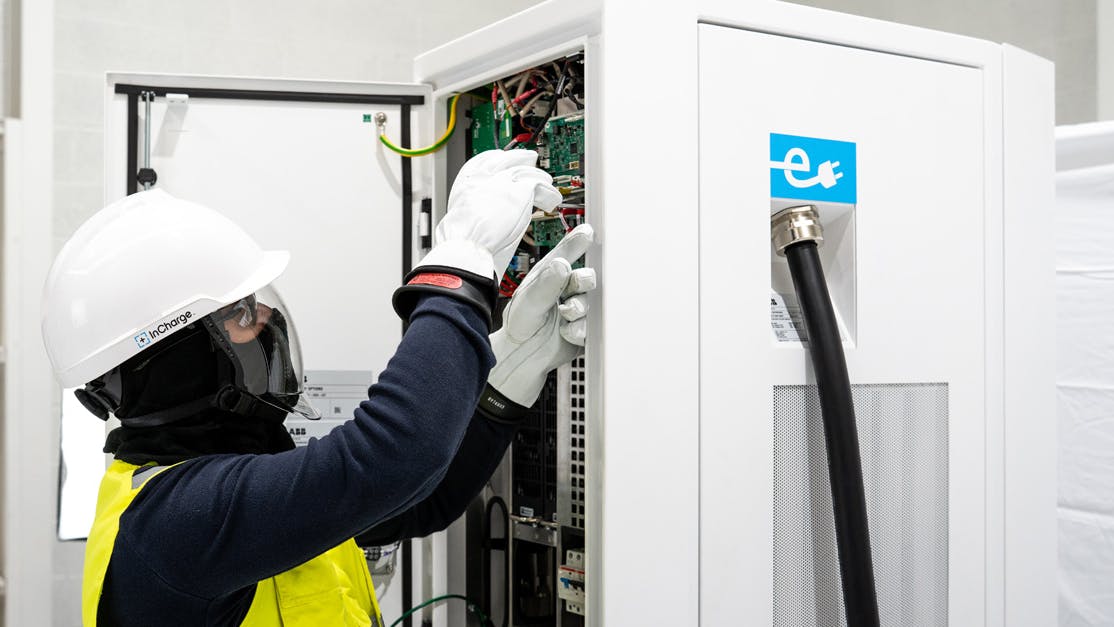
InCharge reports more than 24,000 support cases completed in 2025 and says roughly 80 percent of charger issues were resolved remotely. Those figures make the maintenance proposition tangible. They also demand careful reading: a remotely resolved issue is not necessarily a broken physical component, and platform uptime is a different measurement from charger availability.
Its InService plans include preventive maintenance, remote diagnostics, labor coverage and a round-the-clock phone service line. The commercial logic is straightforward. Equipment sales and construction bring a site into existence; software and service keep the relationship going. Charging-as-a-Service adds another purchasing route, bundling design, hardware, installation, software and maintenance into a predictable monthly payment. The actual economics depend on the contract and site.
Buyers have alternatives. Volvo Trucks' Turnkey Solutions program names both InCharge and Gilbarco Veeder-Root as full-service partners and lets customers obtain quotes from either. InCharge's pitch therefore has to survive comparison on installation scope, supported equipment, response commitments and lifetime cost. A larger bundle is valuable when it removes real coordination work.
The company followed the maintenance problem
Founded in 2018, InCharge grew from the experience of Cameron Funk and Terry O'Day, whose backgrounds included charging infrastructure and transportation policy. The current leadership page also identifies Van Wilkins as a founder. Rich Mohr, previously an executive at ChargePoint and Ryder, became CEO in January 2025.
The ownership story took a turn, too. ABB acquired a 60 percent controlling interest in 2022. A share transfer completed in November 2024 reduced its holding to approximately 46 percent; InCharge announced the majority buyback the following January. ABB stayed involved, including through a multi-year InControl licensing agreement. Independence did not mean ending the commercial relationship.
By June 2026, InCharge had announced a $46 million investment led by S2G Investments to expand software, field services and broader energy infrastructure. Mohr supplied the succinct explanation: “EV charging was the entry point”. The company's stated direction follows customers beyond charging into the equipment that supplies and supports it.
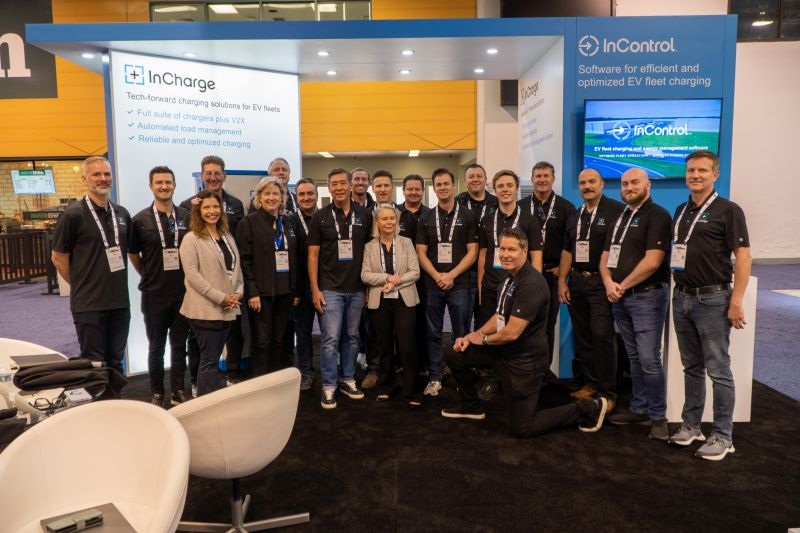
That direction requires people. In August 2025, InCharge and the Anti-Recidivism Coalition celebrated nine graduates of a 12-week vehicle and charger technician program. Six weeks covered vehicles; six covered chargers. It is a useful glimpse of a service company's culture through an actual activity: teaching people to diagnose equipment across brands.
“EV charging was the entry point”Rich Mohr / June 2026
Follow the wire back to the building
The newer partnerships make the expansion visible. In July 2026, Voltpost named InCharge its preferred installation and maintenance partner, with initial lamppost-charging deployments in New York, Connecticut and California. Voltpost Care would use InControl. In September, an Otovo service partnership brought solar, storage and charging maintenance together, initially in four states.
The limits are practical. Load management cannot supply energy that a site cannot obtain within its operating window. A microgrid needs engineering, space and capital. Bidirectional charging needs compatible vehicles, equipment and an eligible utility arrangement. Buyers should establish those conditions before counting savings or grid revenue.
What readers can borrow is an order of operations: begin with the departure, work backward through charging and power, and assign responsibility for the years after installation. InCharge's wager is that the person who answers the alarm will matter as much as the person who sold the charger. For a fleet with tomorrow's deliveries waiting, that is a sensible place to look.