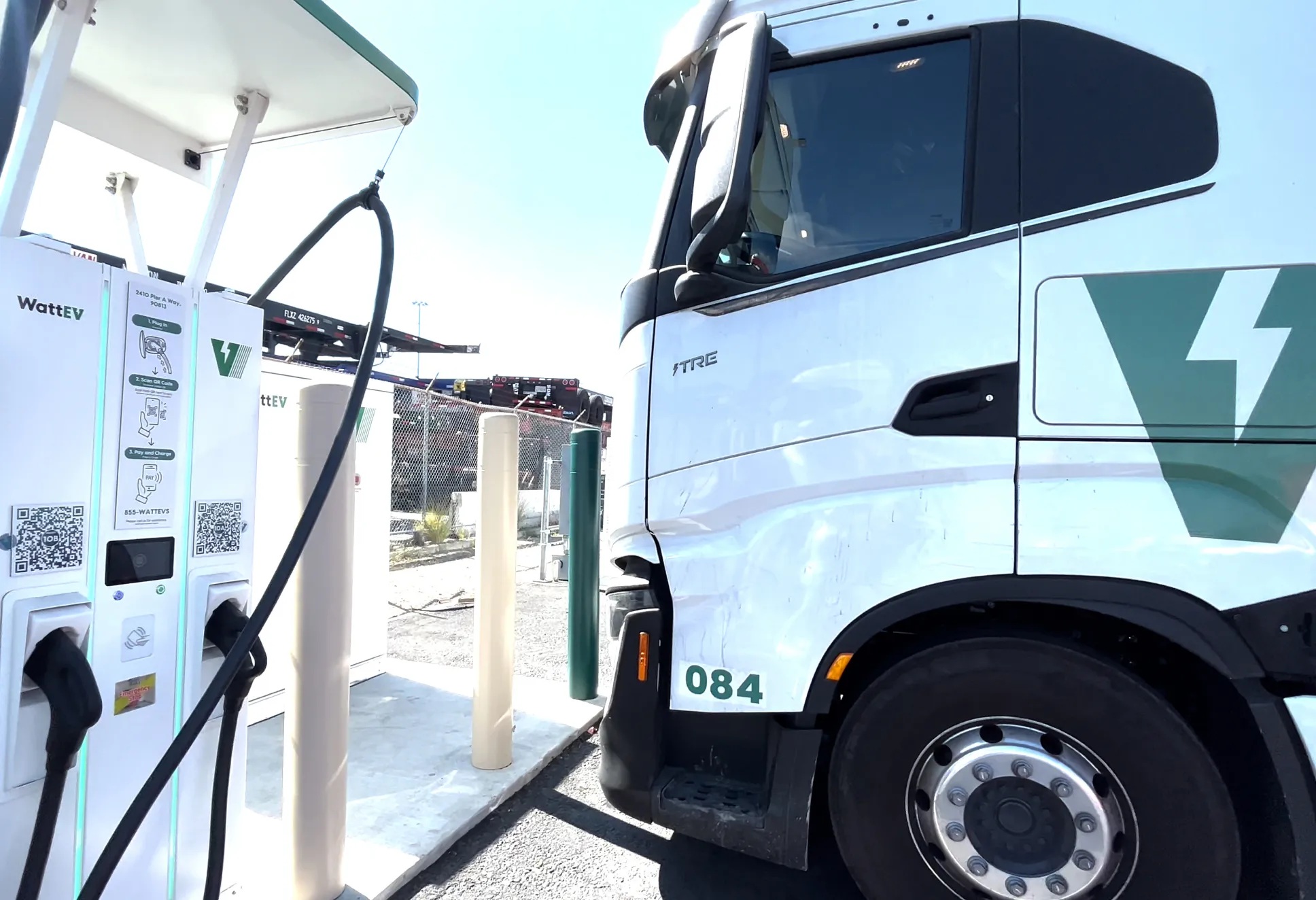
In Fresno, the trucks arrived before the grid was ready. WattEV opened its heavy-duty charging depot on June 30, 2026, with a permanent power upgrade still expected in mid-2028. About one megawatt was guaranteed. The operation could access up to 3.6 megawatts during most hours, provided it adjusted its appetite when the utility required it.
Ampcontrol supplied the energy management system. Its account of the project describes a depot opening roughly two years early through PG&E’s Flex Connect program. The trick was understanding when extra power was available, then keeping the chargers within that limit. Electricity, it turns out, can reward good manners.
- The job: coordinate fleet charging with routes, tariffs and site power.
- The machinery: cloud software plus AmpEdge, an on-site controller.
- The stakes: cheaper electricity, working chargers and vehicles ready to leave.
01A power limit with a timetable
Ordinarily, a depot’s power connection sounds like a fixed number. Flexible interconnection makes it a schedule. Capacity that cannot be promised around the clock may still be available much of the time. The operator agrees to reduce demand when instructed; software turns that agreement into charging commands.
This distinction matters to Ampcontrol’s place in the market. It sells commercial fleet charging and energy management: the coordination layer between transport schedules and electrical equipment. The same fleet must satisfy two authorities. Dispatch wants trucks moving. The utility wants demand kept inside its limits. Neither is much impressed by a handsome dashboard.
02The electricity bill has its own rush hour
Founder and CEO Joachim Lohse encountered the problem while consulting for energy companies and utilities at PwC. In a 2023 interview, he described an EV market advancing faster than the intelligence of the software managing its chargers. Ampcontrol’s company history dates its founding to 2019 and its cloud platform to 2020.
Consider two parked vehicles. One leaves soon with a depleted battery. Another has hours to spare. Giving both maximum power can create an avoidable demand spike. Ampcontrol combines vehicle data, departure schedules and energy prices to decide which charging can move. A parked truck becomes an appointment with some room for negotiation.
The products extend that idea across a site: charger monitoring, fleet telematics, alerts, remote diagnostics and energy management. Solar panels, stationary batteries and building consumption enter the calculation too. A warehouse refrigerator cannot politely stop refrigerating because several trucks have just plugged in.
03The cloud gets a pair of boots
The platform communicates with chargers through OCPP, the Open Charge Point Protocol, and offers APIs for other operating systems. Geotab and Webfleet integrations bring vehicle information into the charging plan. Hardware choice still requires practical testing; sharing a protocol does not make every piece of equipment behave identically.
Ampcontrol introduced AmpEdge in 2024. The local controller manages site power during internet interruptions and connects charging with other energy assets. Cloud optimization and local control therefore have different responsibilities: one plans across the operation; the other can keep handling power at the depot when connectivity disappears.
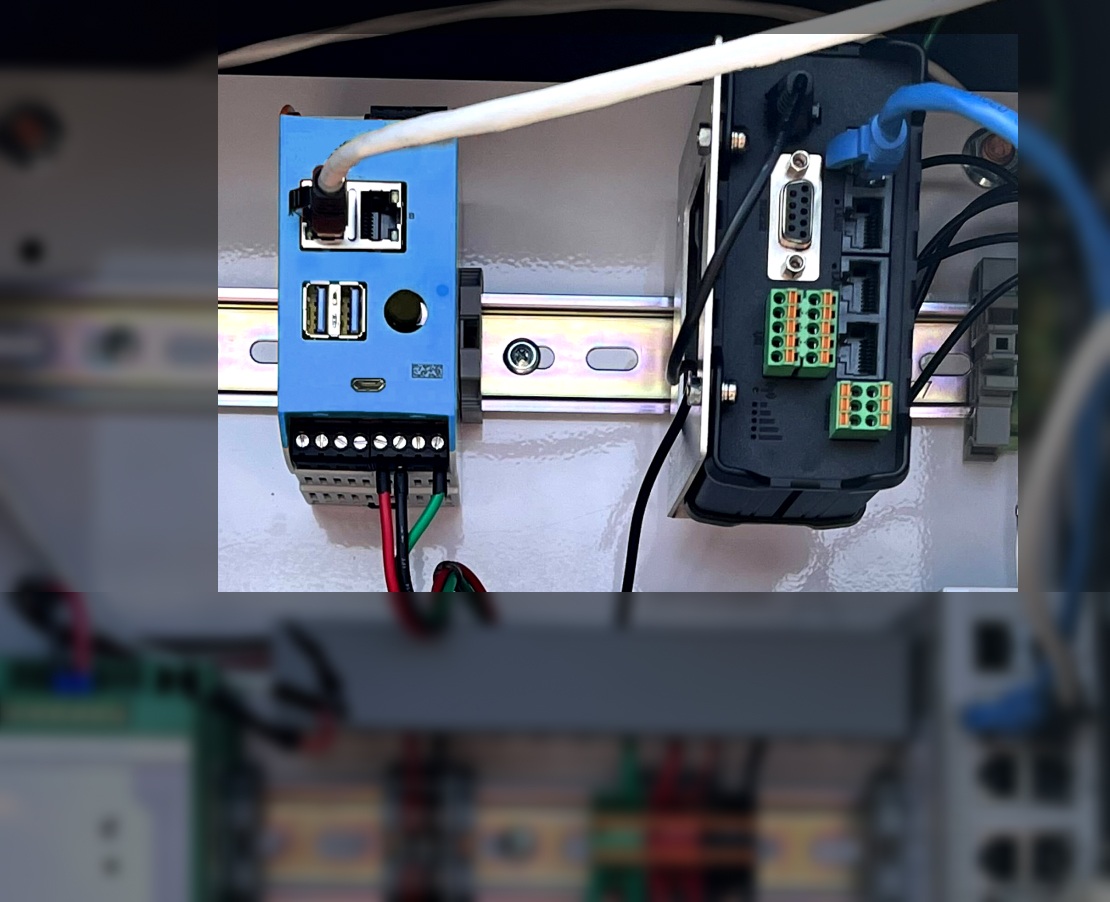
The company’s Erlangen test lab, operational since late 2024, evaluates its platform and controllers with AC and DC chargers from more than 30 brands. In August 2026, Ampcontrol announced OCPP 2.0.1 certification following independent conformance testing at DEKRA. These details suggest that interoperability is a continuing engineering job.
04A percentage needs a proper label
Revel supplies a useful case. Its published customer story describes more than 500 fleet vehicles and four New York charging locations also serving the public. That creates competing demands: fleet readiness, public access and an electricity bill sensitive to how charging is coordinated.
Ampcontrol’s case study labels one result a 45% reduction in power demand. Separately, it describes electricity-cost savings of 30% or more in some instances. Those numbers measure different things. Neither should become a promise that every customer will save the same amount.
“The standout feature that brought us to Ampcontrol was the dynamic load management capabilities that the platform offers.”
Hart Uhl / Revel charging operations
Lohse described the business as a SaaS license model. The company raised a $10 million Series A in July 2023, led by The Westly Group with AngelPad and Lorimer Ventures participating. Buyers request a quote. The worthwhile calculation is site-specific: software, integration and support costs weighed against operating savings and avoided infrastructure spending.
05The morning bell is a service-level agreement
First Student makes the scheduling stakes particularly clear. Ampcontrol’s customer story reports more than 700 electric buses across 34 sites, with charging coordinated around routes and drivers. A school bus has little freedom to reschedule its morning because electricity happened to become expensive.
Lidl Netherlands presents another version of the puzzle. At selected distribution centers, Ampcontrol coordinates truck charging, rooftop solar, battery storage and cooling-warehouse demand. Its August 2026 announcement reports 22% higher solar self-consumption and 32% higher available charging power. Those gains concern those sites, rather than Lidl’s entire delivery network.


06Borrow the question before buying the software
Other charging-management suppliers, including AMPECO, Driivz, ChargeLab and EV Connect, offer overlapping capabilities. Ampcontrol’s distinctive emphasis is fleet operations joined to site energy control. The buying question is whether those particular constraints match your depot.
Start with vehicle dwell time, required departure charge, the tariff and the connection limit. Test actual chargers. Optimization needs usable data, working equipment and enough energy within the available window. A rigid departure schedule leaves less room to shift charging; a flat tariff may offer less financial reward. Flexible interconnection also needs an applicable utility agreement.
The lesson readers can copy is modest and useful: investigate the schedule before assuming you need more hardware. Sometimes the scarce resource is power at a particular hour. Sometimes a truck can wait. Ampcontrol makes a business of knowing the difference.