A company can spend years learning how to put thousands of people in a virtual world and still face a stubbornly ordinary question: who pays? Improbable has approached that question through multiplayer games, entertainment events and, increasingly, the companies it builds and sells. The avatars are still there. So are the accountants.
In December 2023, Keywords Studios bought Improbable’s The Multiplayer Group for £76.5 million. Two years later, Improbable announced another sale: Imporium, the studio contributing to Yuga Labs’ Otherside, would join its customer. These transactions explain the London company’s evolution more clearly than a fresh promise about the future of the internet. Improbable has learned that a specialised team can become a product with a buyer of its own.
That is the organising idea of Improbable today. It builds and backs ventures in AI, Web3 and virtual worlds, bringing technical expertise and operating help alongside capital. For founders, it offers a route from experiment to independent business. For brands and developers, its ventures supply ways to create shared digital experiences. For investors, the question is whether this arrangement can repeatedly turn difficult engineering into valuable companies.
The half-billion-dollar head start
Improbable began in 2012 with Herman Narula and Rob Whitehead, who had studied computer science at Cambridge; Peter Lipka joined the founding team. The early ambition was to make complex virtual worlds work at a scale conventional approaches struggled to support. SpatialOS became its signature platform, distributing the work of a simulation across cloud machines.
The distinction mattered. A persistent world has to remember what happened and keep its inhabitants’ views consistent. More machines can provide more computing power, but coordinating them is its own problem. In a 2017 Google Cloud podcast, Whitehead explained the company’s approach to spreading simulations across infrastructure. This was software for the machinery behind a world, not simply a prettier way to draw one.
Money arrived in unusually large quantities. In May 2017, Improbable raised $502 million in a Series B led by SoftBank, with Andreessen Horowitz and Horizons Ventures participating. That gave the company room to pursue a technically demanding idea. It also raised the commercial stakes: the eventual market had to justify an investment on that scale.
The world worked. The game did not last.
An early warning came from Worlds Adrift, Bossa Studios’ ambitious multiplayer game of floating islands and player-built ships. In May 2019, Bossa announced its closure. The explanation was unusually candid: technical challenges had absorbed effort that should have gone into making the desired player experience, and the game had not attracted enough people to remain commercially viable.
Bossa’s account does not establish that SpatialOS alone caused the failure. It does expose the gap between enabling a world and making a game people want to inhabit. A system can solve a difficult engineering problem while its customer’s product struggles. The audience does not award points for the elegance of the infrastructure.
By 2023, Narula was describing a shift toward shorter, game-like experiences. In an interview with The Block, he attributed the move to adoption and argued that many NFT communities would be better served by shipping frequent experiences than attempting vast worlds. Customers, in his account, were interested in the activity more than the label.
“They just want to build interactive experiences for people that scale.”Herman Narula · The Block · October 2023
A crowd is a different computing problem
Morpheus, now associated with MSquared’s platform, tackles the dense end of multiplayer: many participants sharing an experience at once. MSquared describes a combination of networking, crowd rendering and spatial audio. Its engineers have documented the progression from early replication delays and simple animated stand-ins toward more capable live events. The interesting challenge is not merely counting connected accounts; it is making their presence intelligible to one another.
MSquared’s March 2025 platform announcement described two routes for creators: high-fidelity experiences through Morpheus and lighter Web Worlds that run in a browser. It also set out the ambition of connected worlds whose operators retain control over their audiences and economies. That is a useful distinction for a brand deciding how much of its digital relationship it wants to own.
Make the crowd feel present
Conceptual illustration of the problem, not a benchmark or a claim that every participant receives every update.
Alternatives depend on the job. A creator can publish inside Fortnite using Epic’s UEFN, or build in Roblox. An independently operated experience makes a different demand: the operator must consider distribution, hosting and a reason for people to return. MSquared’s appeal is strongest when control and a shared crowd serve the experience. A small gathering with ordinary video and chat needs may gain little from the additional production work.
Take me out to the browser
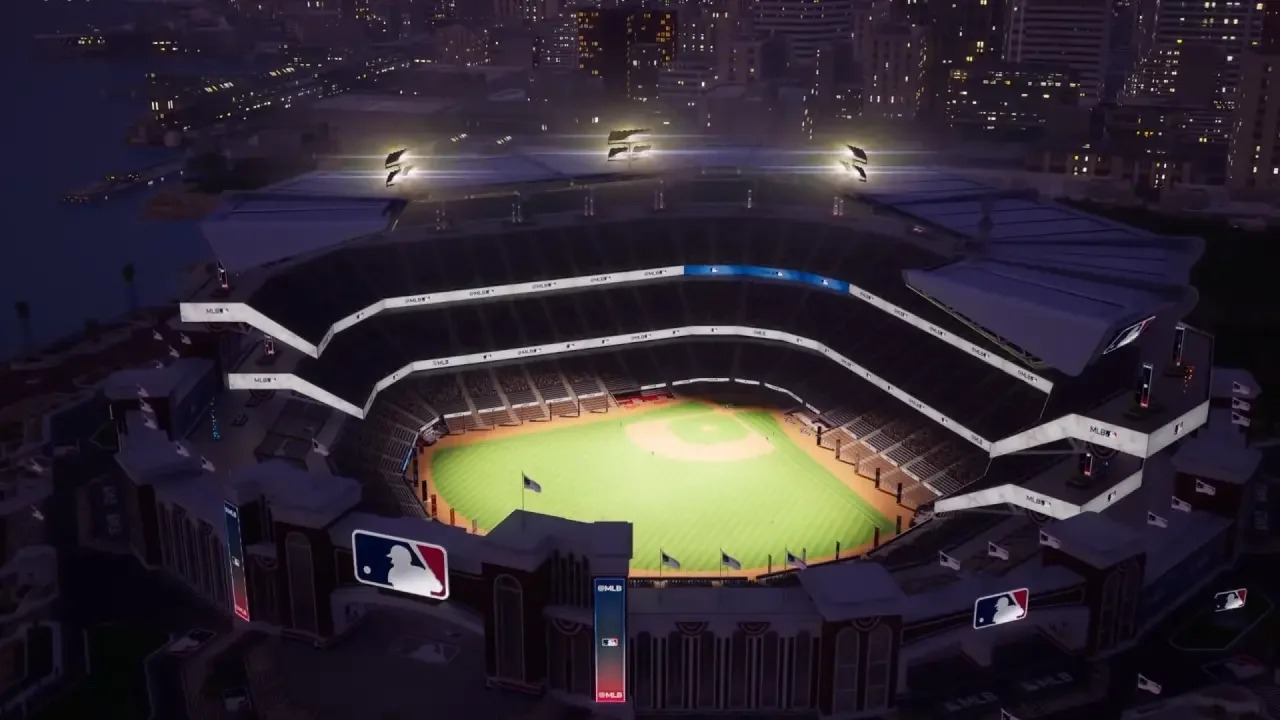
Major League Baseball provides a concrete example. Its Virtual Ballpark, launched with Improbable in 2023, returned for selected September 2024 games with watch parties combining a broadcast and a synchronised Gameday 3D representation. Friends could form voice parties; visitors could earn points for digital jerseys. The product gave an existing audience something to do together around an existing event.
The BBC Philharmonic tried another approach on November 23, 2024. A concert of video-game music ran alongside an MSquared-powered virtual experience developed with BBC research teams through the MAX-R consortium. Remote visitors could explore, collect items and encounter a motion-captured version of conductor Eímear Noone. The orchestra supplied the occasion; the virtual space supplied another way to participate.
These projects suggest a more practical starting point than “build a metaverse”. Begin with people who already care about baseball, an artist or a game. Give them a shared activity worth the extra click. The technical scale then has a purpose. Without that purpose, a beautifully modelled venue can be an expensive waiting room.
The exit became part of the design
Improbable formalised its venture-building transition in September 2023. Its model includes investment and help with engineering, finance, hiring, legal work and fundraising. It takes an ownership stake, and its capital programme also allows token holdings. This is a different purchase from buying access to a software tool: founders are choosing a business partner and negotiating the economics of that relationship.
The MPG transaction offered a visible result. Improbable had acquired the studio for £30 million in 2019; Keywords paid £76.5 million in 2023. The price comparison alone is not an investment return. It omits subsequent funding, operating performance and transaction costs. It nevertheless shows that a specialised multiplayer business could attract a strategic buyer beyond the parent’s original market thesis.
The MPG price tags
Reported transaction values. The difference is not net profit or a calculated investment return.
The financial reset needs equally careful reading. Improbable reported £66 million of revenue and £11 million of total profit for 2023, its first profitable year, with divestments contributing. Its November 2025 update reported £10 million of consolidated revenue for 2024 and £162.8 million in year-end cash. The accounts describe a business whose composition changed; they do not support a simple story of uninterrupted software-sales growth.
The December 2025 Imporium announcement sharpened the approach further. Yuga Labs would acquire the studio and Unreal Creator Platform, while obtaining an ongoing licence to Improbable’s metaverse technology. Otherside would continue using MSquared’s interoperability framework. Selling a delivery team could therefore coexist with a continuing technical relationship. A customer became an owner without every commercial connection disappearing.
The next experiment is smaller than a universe
Improbable’s current reach extends beyond entertainment. Somnia, built under contract for the independent Somnia Foundation, launched its blockchain mainnet in September 2025. Its aim is to support applications such as games and social services that need frequent transactions. Here the company is applying experience in distributed systems to another coordination problem.
The numbers require care. Improbable’s November 2025 announcement highlighted a Somnia token fully diluted valuation above $1 billion at a stated October snapshot. That is a token-market measure, not Improbable’s equity valuation, revenue or cash. Nor does transaction volume establish how many people are using a service repeatedly. The commercial test remains demand for applications built on the infrastructure.
In February 2026, Improbable announced a sharper AI and Web3 focus and appointed Irina Scarlat, formerly of Revolut and Bitpanda, as chief marketing officer. In May it invested $2 million in Otomato, a DeFi monitoring product that began as a Telegram bot. Improbable reported more than 2,000 users. The investment makes its new emphasis tangible: a specific tool addressing a recurring customer problem.
For founders, the part worth copying is the discipline of narrowing the experiment. Identify an audience, ship a useful interaction and observe whether anyone returns before expanding the infrastructure. Shared services can help when they remove work a young team would otherwise repeat. They help less when the team already has those capabilities or the proposed technology does not fit its customers.
Improbable’s history puts those conditions in unusually clear view. Capital bought time to solve hard problems. Games exposed the distance between technical capability and demand. Partnerships created specific uses, and buyers put prices on specialised teams. The next venture will still need its own answer to the question that started it all: who pays, and why do they come back?