Herman Narula has spent much of his working life trying to get more people into the same imaginary place. Then comes the awkward part: giving them a reason to care. A computer can count a crowd. It has rather less to say about whether anybody had a good evening.
That distinction has followed the co-founder of Improbable through funding rounds, multiplayer experiments, a book and several changes of business model. He wants digital places to acquire the weight of ordinary life: somewhere to make things, form attachments and do something that has consequences. The ambition sounds expansive. Its test is intimate. Would you miss the place if it disappeared?
“Really, I’m just a nerd who loves video games, and that’s always been my passion,” he said in 2025. By then, he had been running Improbable for more than a decade. A company could change shape several times while its founder kept returning to the same unfinished question.
A barn, with advantages
Narula was born in Delhi in 1988 and moved to Britain as a young child. His father, Harpinder Singh Narula, worked in construction; his mother, Surina Narula, became known for philanthropy. He attended Haberdashers’ Aske’s Boys’ School and studied computer science at Girton College, Cambridge. The family background made the language of building familiar long before he had a software company.
The early Improbable team worked in a barn at the family home in Hertfordshire. Narula’s family and relatives helped finance the beginning. This was a startup with advantages, which he acknowledged. Choosing technology also meant choosing a career outside the family construction business. The materials changed; the interest in making places remained.
He met Rob Whitehead at Cambridge. Their shared enthusiasm for multiplayer games came with a shared dissatisfaction: the worlds available to them felt smaller and more constrained than the ones they wanted. Improbable began in 2012. Peter Lipka, who had studied at Imperial College London and worked at Goldman Sachs, joined the founding team.
The three brought different experience to a problem that quickly outgrew designing a single game. If the underlying software restricted the world, they would have to work on the underlying software. It was an expensive way to pursue a gaming preference, but it also gave the company a purpose beyond one title.
SpatialOS emerged from that effort. It offered developers infrastructure for large, persistent simulations, distributing work across machines. In ordinary terms, Narula wanted a world to keep accommodating what people did inside it. A game could have more activity, more interacting systems and more opportunities for something its designers had not explicitly scripted.
Once the software can hold a world, what makes that world worth inhabiting?
The crowd arrives
Investment put the idea on a much larger stage. Improbable secured $20 million in 2015, with Andreessen Horowitz among its backers. In May 2017 came a $502 million round led by SoftBank. The company’s valuation passed $1 billion. Narula was 29, leading a business whose name now invited a fairly predictable sort of headline.
The money supported a technical ambition rather than a finished consumer habit. Improbable was offering the means to build things that were difficult to make with existing tools. Turning that capability into a place people wanted to visit remained work for developers, designers and, eventually, the people arriving through the door.
May 2017
First Trip, July 2022
In July 2022, Improbable helped power Otherside’s First Trip for Yuga Labs. About 4,500 participants occupied a shared virtual space. Narula talked through the demonstration with the pleasure of someone showing that a difficult piece of machinery actually runs. People could see each other, move through the environment and experience the gathering together.
He explained that collisions had been softened so participants could crowd together without simply blocking one another. That is a wonderfully practical detail in a discussion often conducted at the altitude of civilisation. Before a virtual society can develop customs and an economy, somebody has to make sure the queue does not become a wall.
For Narula, the attraction was the range of experiences a crowd could have: fans sharing an encounter with a performer, communities gathering around something they cared about, people taking part rather than watching alone. The number mattered because it changed the possibilities of the event. It could open a door; it could not decide what happened next.
Why a world should notice you
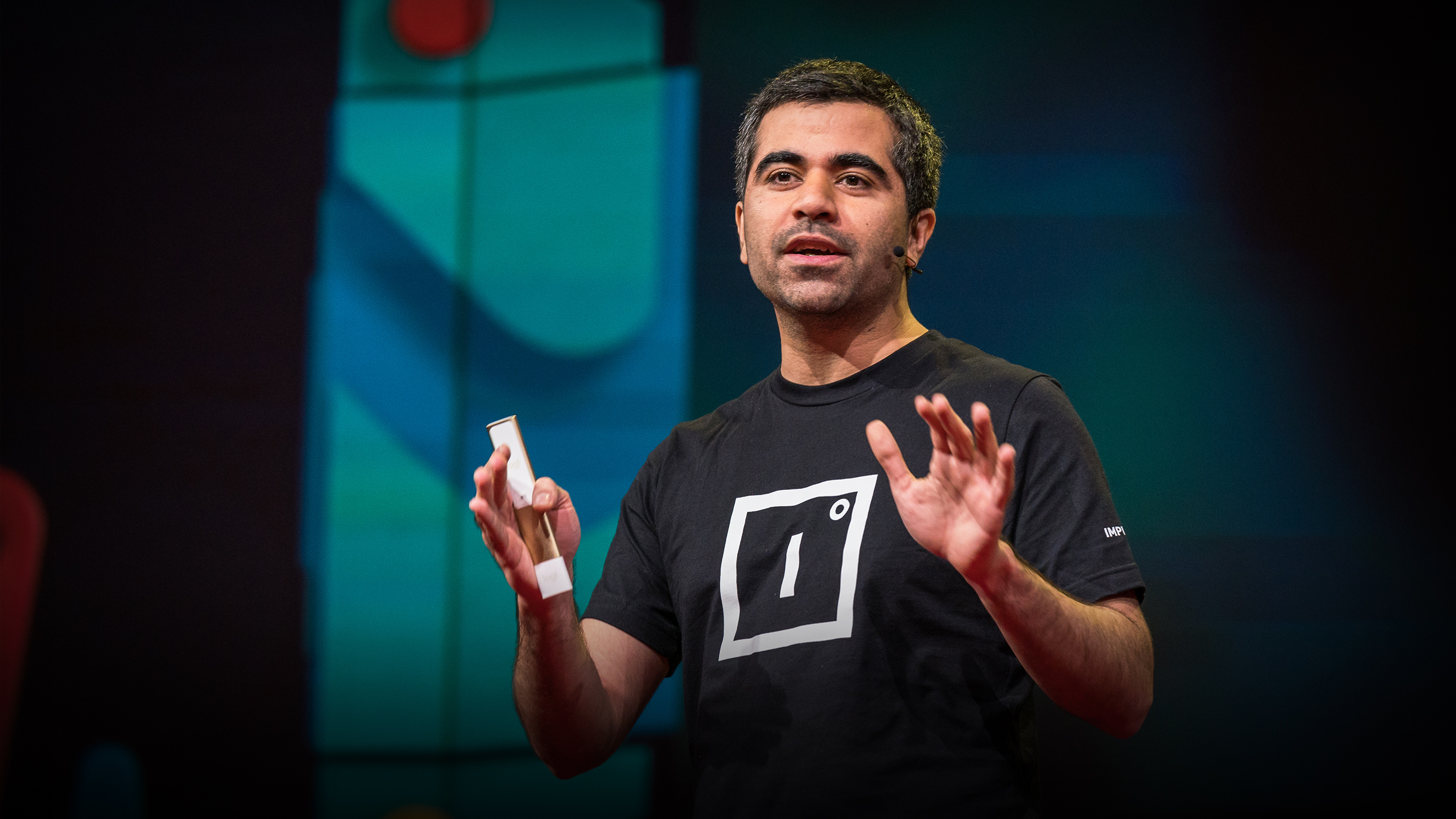
His public argument had already reached TED in 2019, when he spoke about the transformative power of video games. Gaming, in his account, deserved attention as a form of social and economic activity. People were doing things together inside these systems, building relationships and finding reasons to participate that extended beyond passing the time.
In October 2022, Narula published Virtual Society: The Metaverse and the New Frontiers of Human Experience. The 288-page book placed his work inside a longer human history of worldbuilding. People have always invested shared stories, rituals and imagined places with meaning. Software offered another medium for that activity, with ways to act inside it.
It is an argument that gives a technology founder a rather different reading list. The book draws on history and psychology, moving the discussion beyond the question of which device somebody might wear. Narula’s concern is what a world allows its inhabitants to experience and what those experiences carry back into their lives.
In a 2023 interview, he laid out three ingredients for meaningful virtual participation: presence, autonomy and a connection to the real world. Presence means being able to affect the people and environment around you. Autonomy gives you room to choose. The connection outside the world allows relationships, reputation, goods or work to retain significance after a session ends.
- 01PresenceYour participation affects the world.
- 02AutonomyYou can choose your own course.
- 03ConnectionSomething carries into life outside it.
These criteria put an obligation on the builder. A beautiful setting is only part of the job. If a person cannot make a consequential choice, the scenery has limited work to do. His ambition for connected worlds, including the MSquared network, rests on people being able to create and exchange things that others value.
The education after Cambridge
Narula’s interviews can be buoyant. In 2019, he smiled through a conversation about the technology and the games being developed with it. He is comfortable describing possibilities at length. Later, another register became especially revealing: the founder explaining what experience had taught him about the distance between an engineering achievement and a successful product.
“We were kids who were just entering into an industry,” he said in July 2025. Discussing the early years, he acknowledged that the team had been learning as it went. The company’s technical progress had not made gameplay design or commercial adoption automatic. He remained frustrated that Improbable had yet to produce the major hit he wanted.
That admission gives the funding story a necessary second dimension. By his own account, building something people loved remained unfinished business. Years of work could produce capability and experience without settling what would bring an audience back. His continued appetite for experiments existed alongside an awareness of their cost and uncertainty.
Improbable changed its organisation around that problem. In 2023 it moved to a venture builder model, combining investment with technology and operating support for other businesses. It reported its first annual profit for that year: £11 million. Growth, cost discipline and asset divestments contributed. The figure belongs to a particular year and a changing business, rather than resolving every question about the market.
For Narula, the model offered more routes to finding useful applications. Improbable could help several teams pursue different ideas, retain stakes in their businesses and put its accumulated engineering to work. The founder who had begun by trying to improve multiplayer worlds was now also trying to improve the conditions under which new companies could be built.
Back at the keyboard
By September 2026, one of those ventures had brought him back to a personal coding project. Bolter, an AI messaging platform, emerged from stealth with $10 million of Improbable’s own capital. It launched in invite-only beta. Narula said he had begun making it because he wanted the tool to exist; colleagues persuaded him to turn it into a business.
“I started Bolter as a personal project that I coded myself, because I wanted it to exist.”
Herman Narula · September 2026
The proposed workspace brings humans and AI agents together around processes described in ordinary language. An agent can operate with its own computer, browser and memory. The company presents its experience running fleets of machines for virtual worlds as part of the foundation for running agents. The setting has changed from an event to a working day.
There is a recognisable continuity in that move. Narula keeps returning to software that lets participants do things together, supported by machinery they should not have to manage themselves. Bolter is early in its public life. Whether people make a habit of using it will provide a more useful verdict than its founder’s enthusiasm alone.
His career now includes a barn, a large financing, a book about invented worlds and a tool he started coding for himself. Through each version runs the same practical difficulty. The world can be built. The servers can be made to cooperate. Then people arrive, carrying their own interests and expectations, and the builder has to discover what makes them want to stay.