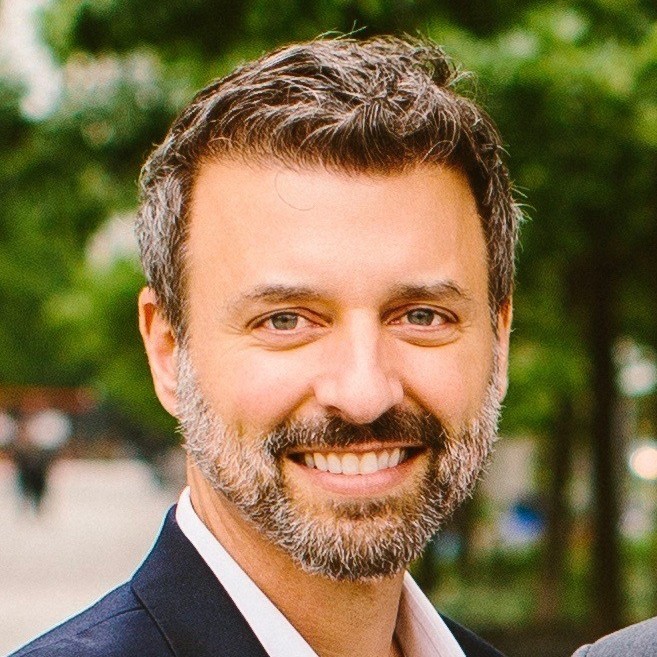
His avatar name in Second Life is "Oberwolf Linden." He actually logs in. While other tech executives announced metaverse strategies and then quietly dismantled them, Bradford Oberwager has been inside the world he runs, listening to residents, watching the economy tick, and planning the next decade of a platform that launched in 2003 - six years before Instagram existed.
When Oberwager and investor Randy Waterfield acquired Linden Lab in 2020, the conversation in tech was already moving toward "metaverse" - a word Second Life had been living for seventeen years. Oberwager arrived not as a tech visionary parachuting in with grand declarations, but as someone who had built and sold three companies and understood the fundamentals: community, unit economics, and what happens when you stop listening to users.
His vision for Second Life is deliberately non-utopian. No grand declarations about changing human consciousness. No breathless promises about living inside computers. Oberwager's pitch is quieter and, frankly, more radical: Second Life has a real economy, real creative output, and real people who have built livelihoods inside it. His job is not to disrupt it but to protect it, expand it, and make sure it survives the tech hype cycles that come and go while Second Life keeps running.
The proof of that philosophy is a seven-year, $35 million commitment most people never hear about. While other platforms ran from financial regulation, Oberwager went straight toward it - securing money transmitter licenses in all 50 U.S. states and internationally. The result: Second Life residents can now legally convert Linden dollars into real-world currency. That's not a feature. That's infrastructure for an economy.
"It is a moral imperative that Second Life continues on," he said in 2024. That's an unusual sentence for a tech CEO. It's also, given the context, an accurate one.
By 2025, Second Life had 600,000 monthly active users - up from 500,000 the prior year. The platform generates more revenue per user than YouTube or Facebook, funded not through behavioral targeting or surveillance advertising, but through land fees and transaction costs. The model is old-fashioned in the best sense: you pay for what you use, and the platform stays solvent without treating users as the product.