In Zambia, the interesting thing about a solar power plant was the paperwork. The country had sunshine. It had developers interested in renewable energy. What it needed was a way to turn that interest into a contract someone would finance. That distinction explains a surprising amount about the International Finance Corporation.
- IFC invests in private businesses and brings other investors into the transaction.
- Its tools include loans, equity, project preparation, and risk management.
- Zambia shows what preparation can unlock. Mundra shows what inadequate oversight can leave behind.
Six cents, twenty-five years
In 2015, Zambia joined Scaling Solar, a World Bank Group program with an unusually practical proposition. Assemble standardized documents, procurement advice, financing options, and guarantees. Then invite developers to compete. Instead of negotiating every uncertainty separately, bidders could price a more clearly defined project.
The auction attracted 48 developers; seven submitted final proposals. Neoen and First Solar won one project with a tariff of 6.015 US cents per kilowatt-hour, fixed for 25 years. The number was striking because it attached a price to something previously stuck in the realm of investor interest.
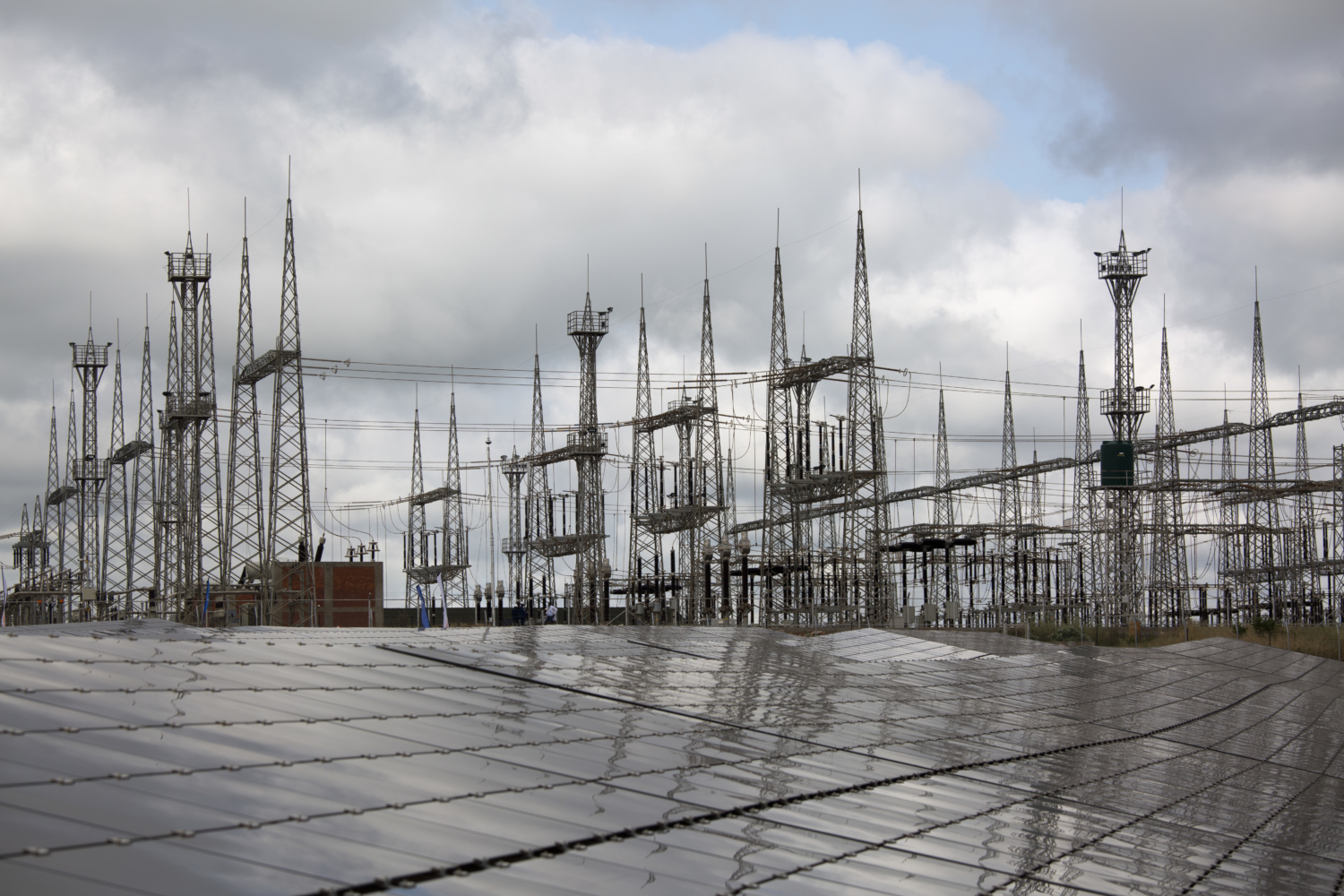
Bangweulu, the winning project, was inaugurated in March 2019. Its reported project cost was $56 million, excluding financing costs. IFC, OPIC, and the IFC-Canada Climate Change Program supplied $39 million in financing. The tariff was what the electricity buyer paid for power; the $56 million was the cost of building the project. Confusing those numbers obscures the deal.
Andrew Chipwende, then chief executive of Zambia’s Industrial Development Corporation, described the earlier problem plainly: “We haven’t had the coherent structure within which to implement this.” IFC’s contribution was partly that structure. A good project needed an organized route from possibility to purchase.
A bank with a second audience
IFC was established in 1956 to support private enterprise in developing countries. Robert L. Garner, its first president, helped shape the institution. Its first investment, in 1957, was a $2 million loan to a Siemens affiliate making electrical equipment in Brazil. By 1959, it was already bringing other banks into a syndicated loan.
That second audience matters. IFC serves companies that need capital, but it also serves investors who need a workable way to participate. Its Managed Co-Lending Portfolio Program lets institutional investors commit capital to eligible loan portfolios alongside IFC. Allianz Global Investors and Swiss Re appear among its participants. The institution organizes participation as well as supplying money.
A good project needed an organized route from possibility to purchase.
The product shelf is broad. Loans typically run seven to twelve years. Equity investments generally represent 5 to 20 percent of a company’s ownership. Treasury services address currency and interest-rate risks. Advisory teams help prepare projects and improve business practices. Intermediary banks extend its reach to smaller borrowers.
There is a useful difference between lending to a project and helping create a market for projects. A commercial lender can assess a finished transaction. IFC can also help prepare the procurement and assemble institutions around it. The Zambia example makes that distinction tangible: advice, documents, and risk allocation came together with the financing. That combination is the offer a borrower or government agency has to evaluate.
Its customers include power developers, manufacturers, agribusinesses, financial institutions, and fund managers across more than 100 countries. Governments use transaction advice, too. IFC occupies the space between commercial finance and public development policy, often working alongside institutions that might otherwise look like competitors.
Member-country capital and retained earnings support its balance sheet; bond issuance helps fund lending. Interest, fees, dividends, and investment results shape its finances. In June 2025, IFC priced a $2 billion five-year bond with a 3.875 percent coupon. Its borrowing cost and a client’s financing terms are separate things.
FY2026 commitments, including over $73.6bn in private capital mobilized from other investors. A financing measure, not sales revenue.
The buyer still has to pay
Zambia also supplies a useful complication. IFC’s account of Scaling Solar says a later procurement was put on hold because of the financial standing of ZESCO, the national electricity utility and buyer. Standardized documents could simplify a transaction. They could not make the customer solvent.
That is the condition behind the lesson. Competitive procurement needs credible institutions, workable payment arrangements, and projects that can actually be delivered. Copying the auction while ignoring the electricity buyer’s finances would copy the visible ceremony and miss the mechanism.

The risk that stayed onshore
In India, the Mundra coal power project exposed another weakness. IFC committed a $450 million loan toward a project then estimated to cost $4.14 billion. Fishing communities complained about effects on their livelihoods and environment. The Compliance Advisor Ombudsman’s 2013 audit found IFC’s environmental and social review inadequate for the risks.
Here, the early failure was risk assessment, including attention to vulnerable communities. Supervision also had gaps. The borrower repaid IFC in 2018. In October 2025, CAO closed monitoring while community concerns remained unresolved. Repayment had ended the commercial relationship without settling the development questions.
Institutional changes followed broader accountability work. In April 2025, IFC and MIGA approved a three-year interim Remedial Action Framework after public consultation. It covers prevention, preparedness, access to remedy, and contributions to remedial action. Approval establishes an approach; whether it delivers effective remedies has to be judged in practice.
Bring a business case
A company can approach IFC with an investment proposal; there is no standard application form. The requested material is concrete: sponsors, market demand, technical feasibility, financing requirements, expected returns, and environmental risks. The process rewards a project someone can examine. A description of social benefits belongs beside the financial assumptions, not in place of them. Investors still need to understand the customer, the operating costs, and the timetable for completing the work.
The proposal also has to identify what IFC financing is being requested: a loan, equity, quasi-equity, or a combination. IFC may then request a detailed feasibility study or business plan before deciding whether to appraise it. For an applicant, that is a useful discipline: explain who pays, why demand exists, what could go wrong, and how the numbers hold together.
For everyone else, the transferable idea is preparation. Identify the uncertainty keeping the next participant away. Make obligations explicit. Test the buyer’s ability to pay. Give affected communities a place in the assessment before money moves. Zambia and Mundra belong in the same conversation because both ask what a financing agreement has actually made possible.