Consider the aqueduct. A river needs to cross a flood channel, so engineers build a passage that lets water travel over water. Near Fargo, North Dakota, the problem comes with an extra complication: winter. The aqueducts in the Fargo-Moorhead diversion project are designed to be heated, helping water keep moving and fish keep passing. Somewhere between the concrete and the heating bill lies an explanation of Shikun & Binui.
- It builds the essentials: homes, roads, bridges, water infrastructure and power facilities.
- It can stay involved: financing, construction and decades of maintenance can sit inside one project agreement.
- The revealing question: who pays when a long-term plan changes?
The Israeli group, שיכון ובינוי, is easy to describe as a construction company. Its more interesting work begins when construction becomes somebody’s continuing responsibility. A road has to carry traffic. A channel has to handle a flood. A bridge has to remain available long after the opening ceremony. Shikun & Binui’s concessions business sells governments a way to organize those obligations, alongside its conventional contracting and property businesses.
01 / A building site with a thirty-year tail
At Fargo-Moorhead, the group participates through its American operations, S&B USA. Its partners are building a 30-mile diversion channel and associated structures. The company puts the channel’s construction value at $1.2 billion. That figure covers its project component; it should not be mistaken for the entire regional flood-protection system.
S&B USA reports a 42.5% equity interest in the concession company, Red River Valley Alliance, and participation in the construction joint venture. Following construction, the alliance has a 30-year operations and maintenance commitment. The same corporate family therefore has reasons to care about what happens after the excavators leave.
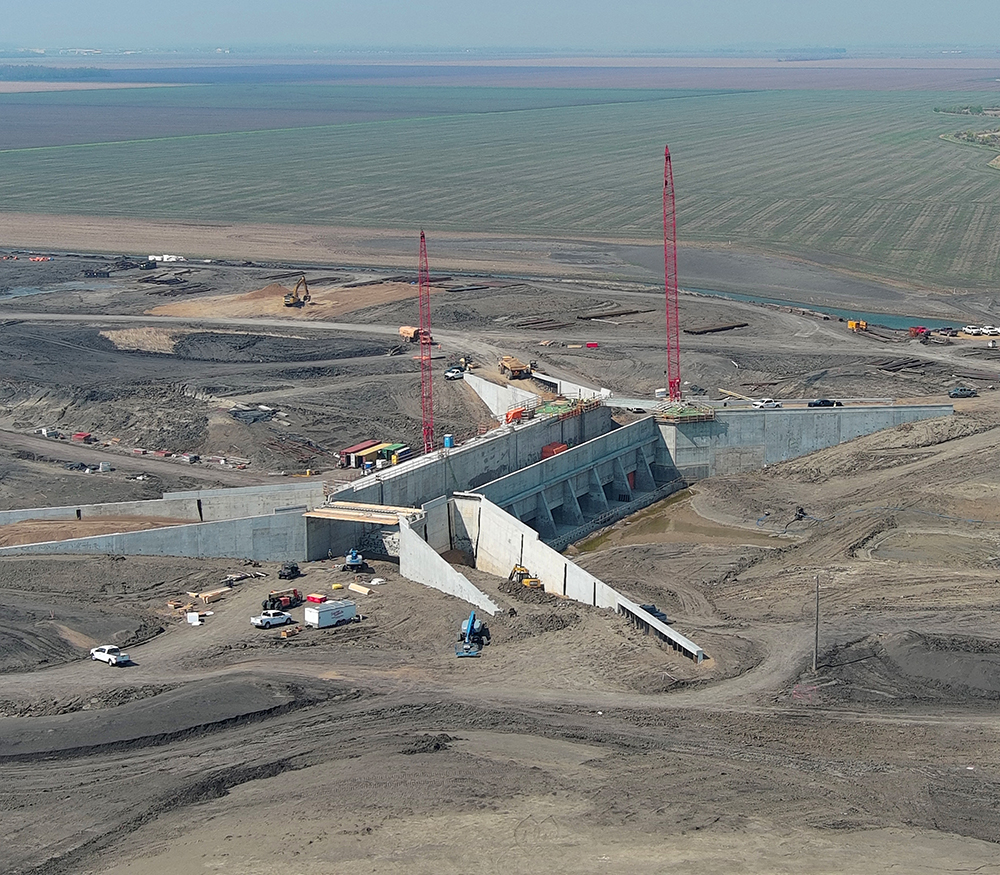
The intended beneficiaries extend well beyond the client signing the contract. The public authority describes a system designed to reduce flood risk for nearly 260,000 people across 70 square miles. Its September 2026 update targeted operation in spring 2027. These are planned protections, rather than a claim that the unfinished system has already passed its defining test.
“We actually don’t know when the project will be used.”
Luke Chenery, Red River Valley Alliance CEO, discussing the diversion channel in a public-authority interview, November 2025.
That uncertainty is the product’s peculiar feature. Residents buy protection against an event whose arrival nobody can schedule.
02 / The invoice survives the ribbon-cutting
A public-private partnership, usually shortened to P3, bundles jobs that governments can also procure separately. Private participants may arrange finance, design the asset, build it and maintain it. Their compensation follows the contract. Sometimes users pay tolls. Sometimes the public owner pays for an asset’s availability, with deductions when performance falls short.
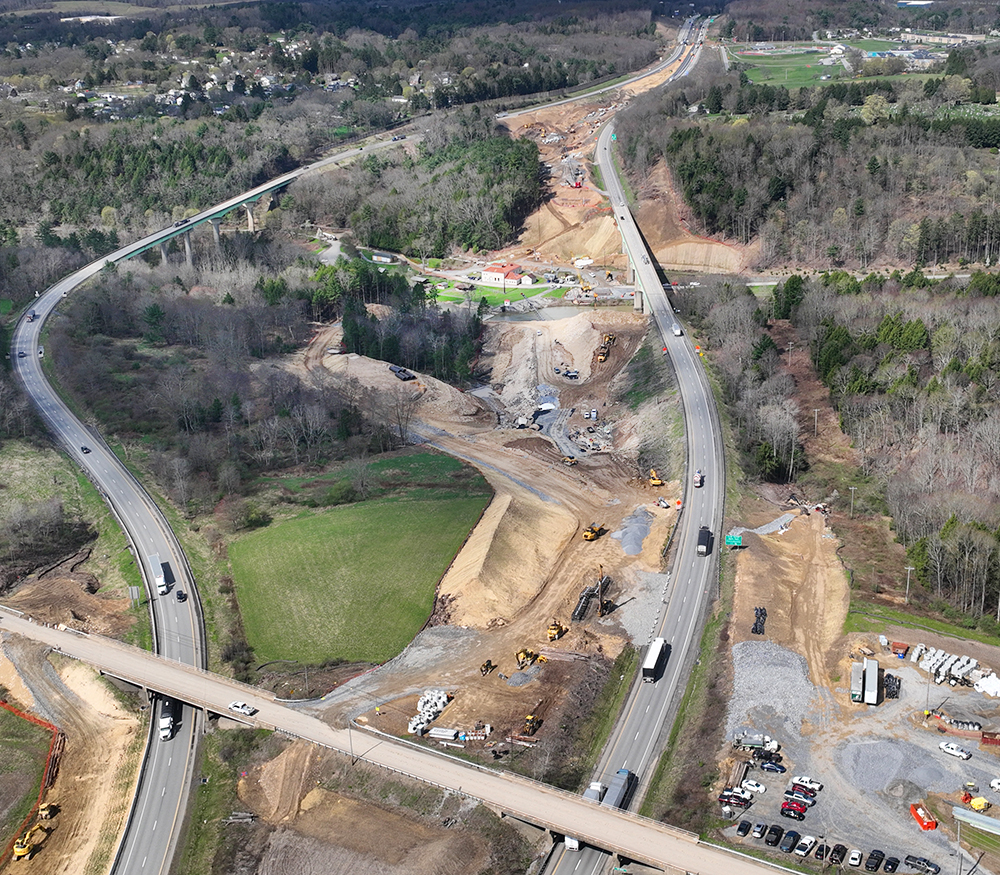
Pennsylvania offers a particularly useful example. Shikun & Binui and Macquarie Capital lead the development partnership behind a package covering six interstate bridge locations. PennDOT estimates design and construction at about $1.5 billion before financing. The developer will maintain the assets for 35 years after substantial completion, scheduled for June 2028.
Those distinctions matter. Construction cost, financing cost and decades of service payments describe different things. Calling them all the “price” makes an expensive commitment look deceptively simple. For a public buyer, the useful comparison is the total obligation, the condition required of the asset and the risks each party actually accepts.
03 / Pennsylvania changed the payment plan
The bridge program originally contemplated mandatory tolling. Then Act 84 of 2022 changed Pennsylvania’s P3 law, eliminating mandatory tolling of existing free lanes. In August 2022, PennDOT decided to proceed without tolls, using existing funds. The eventual package relies on state and federal money for availability payments, subject to performance deductions.
Here is a documented change of mind with practical consequences. The original funding mechanism became untenable; the infrastructure still needed replacing. The revised arrangement preserved a route to delivery while changing who would pay. A private financing structure cannot make that political choice disappear.
04 / A workers’ organization learns to assemble capital
The group traces its roots to Solel Boneh, founded by the Histadrut labor federation in 1924. Its history includes construction of the Knesset and participation in Highway 6. An organization that once assembled workers came to assemble lenders, engineers, operators and public authorities around projects too complicated for a straightforward building order.
The portfolio also reaches into homes and commercial property. At Hadera’s desalination plant, completed in 2009, Solel Boneh carried out civil engineering and marine works on a facility with stated production capacity of 130 million cubic meters annually. This is applied civil engineering: foundations, structures and systems that make everyday services possible.
Its breadth puts the group alongside contractors and developers such as Shapir, Electra and Danya in Israel, with international competition varying by tender. The distinctive proposition is the combination of construction capability and concession development. In America, buying Fay’s parent in 2019 added local construction expertise to an operation that had entered the market in 2012.
05 / Long horizons need short feedback loops
The record includes a serious governance failure. In July 2024, prosecutors closed the bribery case against the parent company. A subsidiary plea arrangement involved a proposed NIS 10 million fine and forfeiture of NIS 250 million held from a Swiss subsidiary. The distinction between parent and subsidiaries matters; so does the total financial consequence.
The portfolio is changing, too. In July 2026, Shikun & Binui signed an agreement for Generation Capital’s energy subsidiary to acquire Shikun & Binui Energy for NIS 4.45 billion. Regulatory approvals remained necessary when announced. A sale agreement is a milestone, not proof of completion.
What can a reader copy? Put future maintenance into today’s design conversation. Develop local execution capacity before chasing larger contracts. Spell out how payments change when policy changes. These lessons require capable public oversight, credible financing and enforceable performance measures. Without those conditions, bundling responsibilities can simply bundle problems. The heated aqueduct makes the point rather neatly: every elegant plan eventually meets February.
Follow the work
Projects, company updates and a look behind the construction fence.